School of Dentistry, Immunology and Molecular Genetics, University of California, Los Angeles, CA 90095, USA.
J Microbiol. 2012 Apr;50(2):241-8. doi: 10.1007/s12275-012-1349-5. Epub 2012 Apr 27.
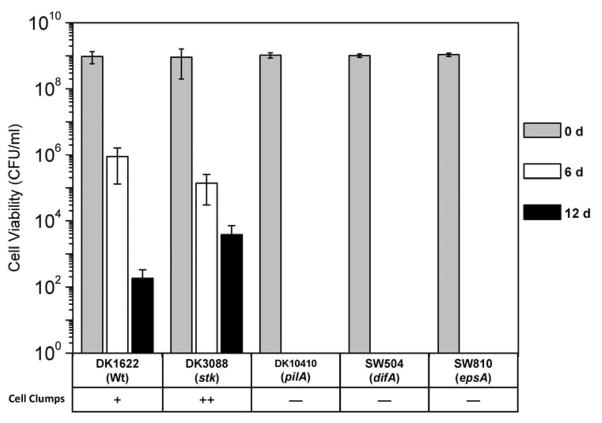
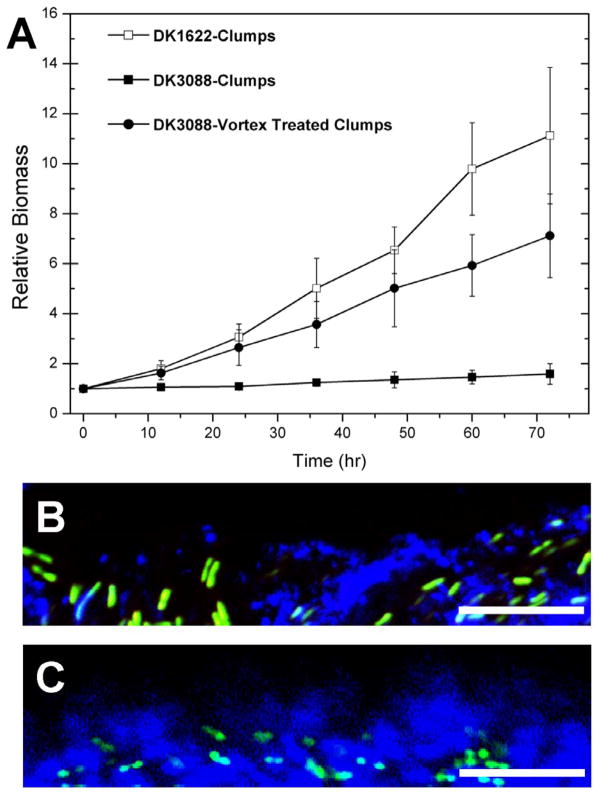
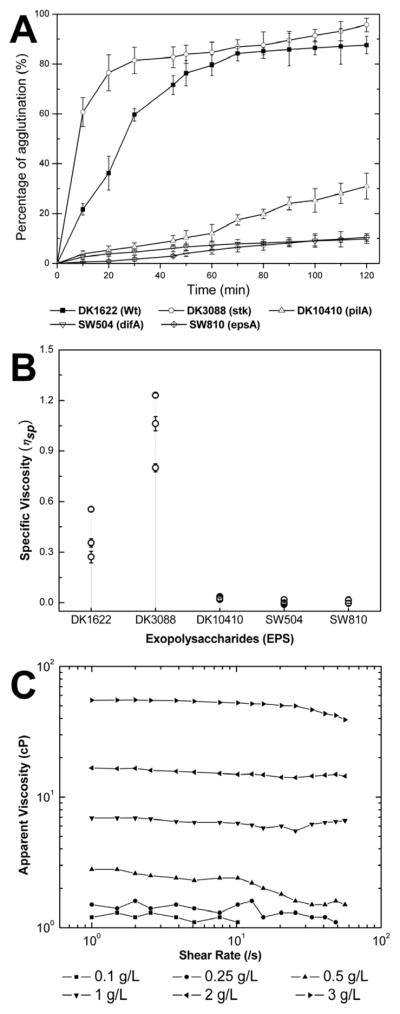
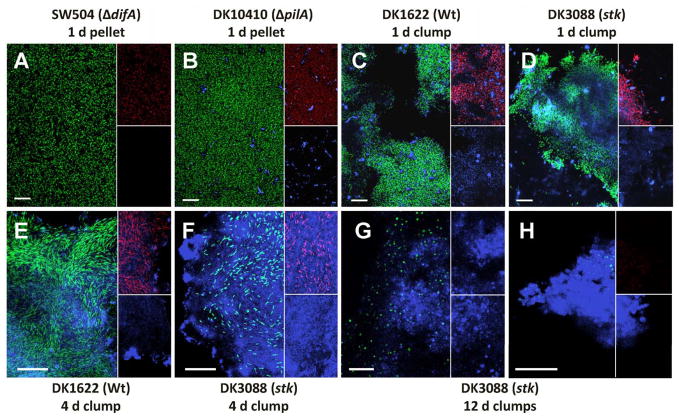
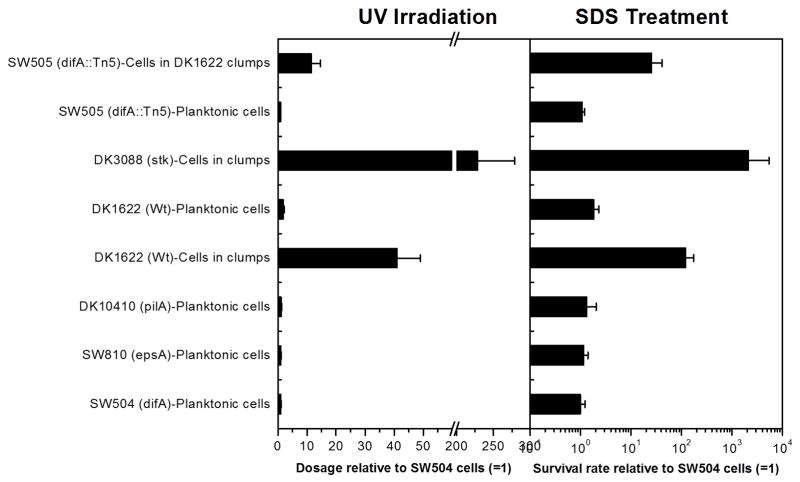
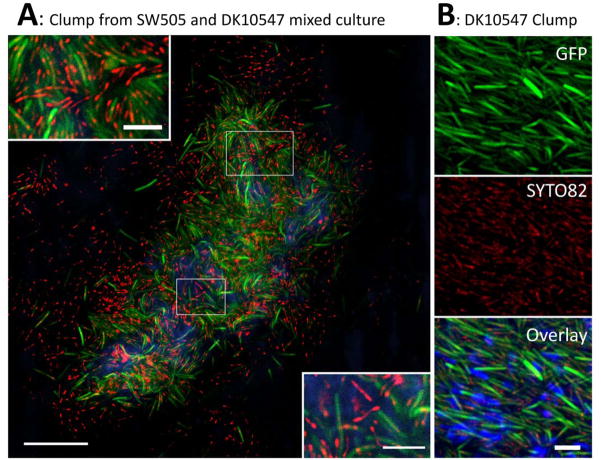
Exopolysaccharide (EPS) of Myxococcus xanthus is a well-regulated cell surface component. In addition to its known functions for social motility and fruiting body formation on solid surfaces, EPS has also been proposed to play a role in multi-cellular clumping in liquid medium, though this phenomenon has not been well studied. In this report, we confirmed that M. xanthus clumps formed in liquid were correlated with EPS levels and demonstrated that the EPS encased cell clumps exhibited biofilm-like structures. The clumps protected the cells at physiologically relevant EPS concentrations, while cells lacking EPS exhibited significant reduction in long-term viability and resistance to stressful conditions. However, excess EPS production was counterproductive to vegetative growth and viable cell recovery declined in extended late stationary phase as cells became trapped in the matrix of clumps. Therefore, optimal EPS production by M. xanthus is important for normal physiological functions in liquid.
粘细菌的胞外多糖(EPS)是一种受严格调控的细胞表面成分。除了其在固体表面上进行群体感应运动和形成子实体的已知功能外,EPS 也被认为在液体培养基中发挥多细胞聚集的作用,尽管这一现象尚未得到很好的研究。在本报告中,我们证实了在液体中形成的粘细菌聚集体与 EPS 水平相关,并表明包裹细胞的 EPS 聚集体表现出类似生物膜的结构。在生理相关的 EPS 浓度下,聚集体保护了细胞,而缺乏 EPS 的细胞在长期存活和抵抗应激条件方面表现出显著降低。然而,EPS 的过度产生不利于营养生长,并且在延长的晚对数期,由于细胞被困在聚集体的基质中,活细胞的恢复能力下降。因此,粘细菌 EPS 的最佳产生对液体中的正常生理功能很重要。