Department of Psychiatry and Behavioral Sciences, and Center for Therapeutic Innovation, University of Miami Miller School of Medicine, Miami, FL 33136, USA.
Trends Genet. 2012 Aug;28(8):389-96. doi: 10.1016/j.tig.2012.03.013. Epub 2012 Apr 26.
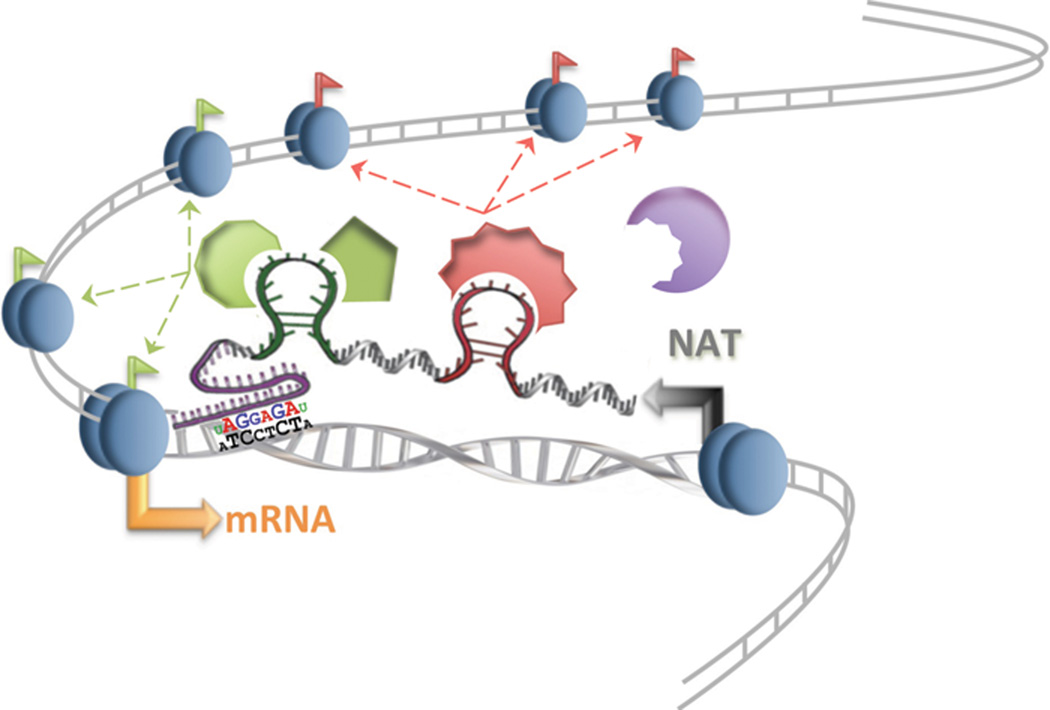
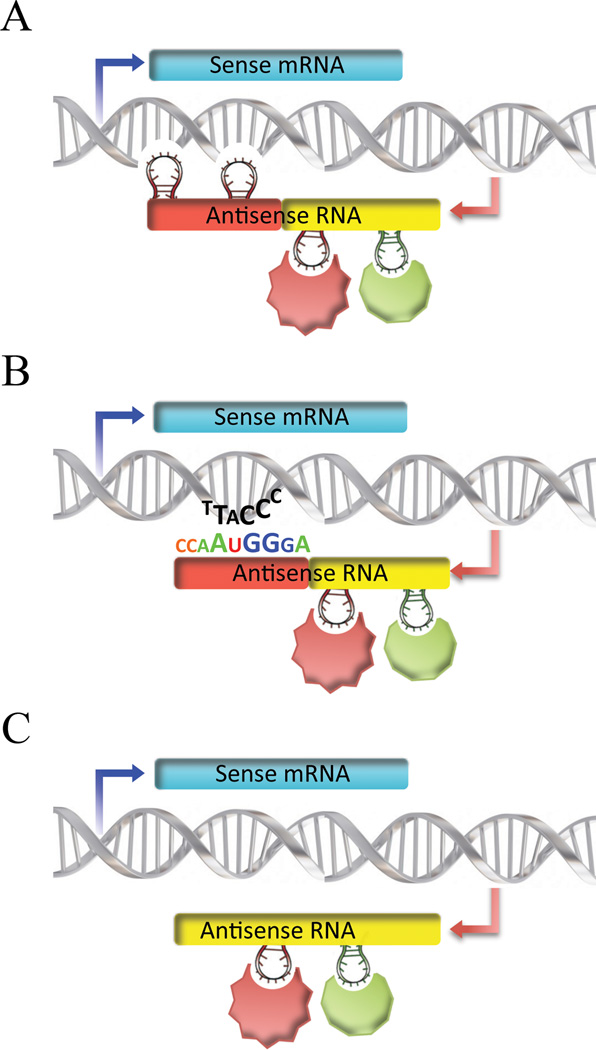
In the decade following the publication of the Human Genome, noncoding RNAs (ncRNAs) have reshaped our understanding of the broad landscape of genome regulation. During this period, natural antisense transcripts (NATs), which are transcribed from the opposite strand of either protein or non-protein coding genes, have vaulted to prominence. Recent findings have shown that NATs can exert their regulatory functions by acting as epigenetic regulators of gene expression and chromatin remodeling. Here, we review recent work on the mechanisms of epigenetic modifications by NATs and their emerging role as master regulators of chromatin states. Unlike other long ncRNAs, antisense RNAs usually regulate their counterpart sense mRNA in cis by bridging epigenetic effectors and regulatory complexes at specific genomic loci. Understanding the broad range of effects of NATs will shed light on the complex mechanisms that regulate chromatin remodeling and gene expression in development and disease.
在人类基因组发表后的十年中,非编码 RNA(ncRNA)彻底改变了我们对基因组调控广阔领域的理解。在此期间,从蛋白质或非蛋白质编码基因的相反链转录的自然反义转录本(NAT)一跃成为焦点。最近的研究结果表明,NAT 可以通过作为基因表达和染色质重塑的表观遗传调节剂来发挥其调节功能。在这里,我们综述了 NAT 对表观遗传修饰的机制及其作为染色质状态主要调节剂的新兴作用的最新研究进展。与其他长 ncRNA 不同,反义 RNA 通常通过在特定基因组位点桥接表观遗传效应因子和调节复合物,在顺式中调节其对应的有义 mRNA。了解 NAT 的广泛影响将揭示调控染色质重塑和发育及疾病中基因表达的复杂机制。