University of British Columbia, UBC iCapture Centre for CardioPulmonary Research, St Paul's Hospital, 1081 Burrard Street, Vancouver, BC, Canada.
Thorax. 2012 Aug;67(8):718-26. doi: 10.1136/thoraxjnl-2011-201445. Epub 2012 Apr 29.
Criteria for a clinically significant bronchodilator response (BDR) are mainly based on studies in patients with obstructive lung diseases. Little is known about the BDR in healthy general populations, and even less about the worldwide patterns.
10 360 adults aged 40 years and older from 14 countries in North America, Europe, Africa and Asia participated in the Burden of Obstructive Lung Disease study. Spirometry was used before and after an inhaled bronchodilator to determine the distribution of the BDR in population-based samples of healthy non-smokers and individuals with airflow obstruction.
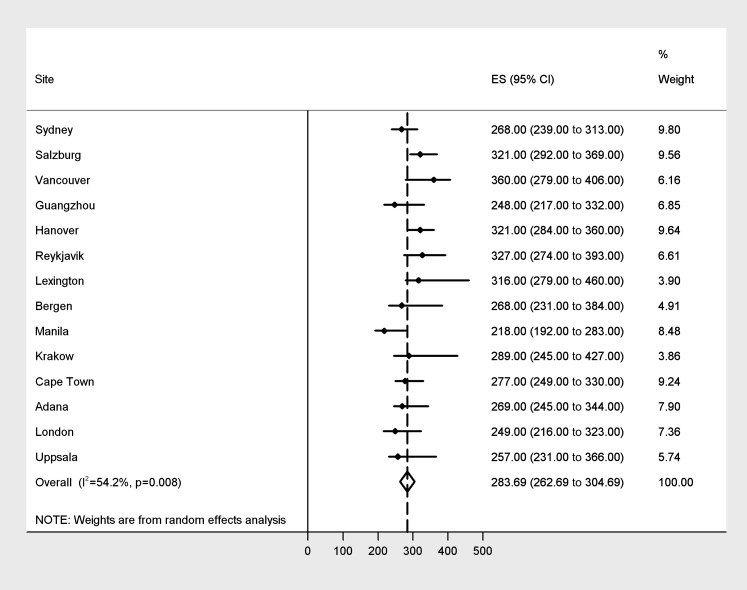
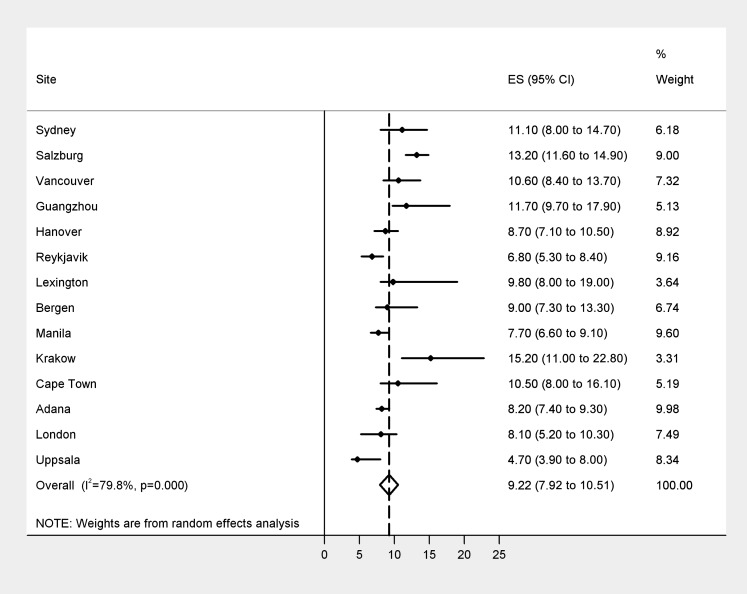
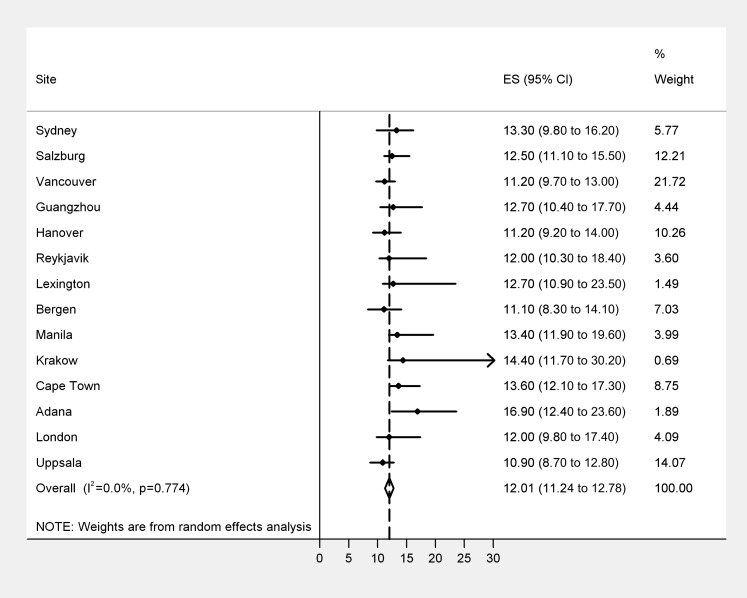
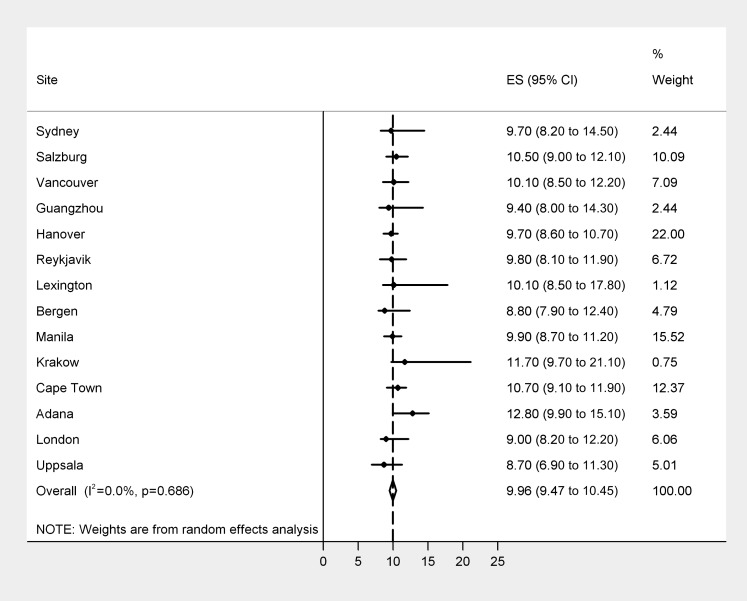
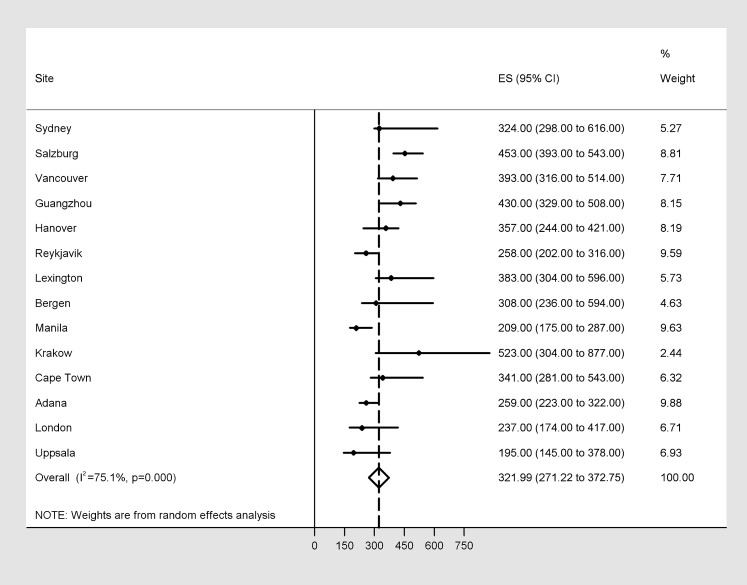
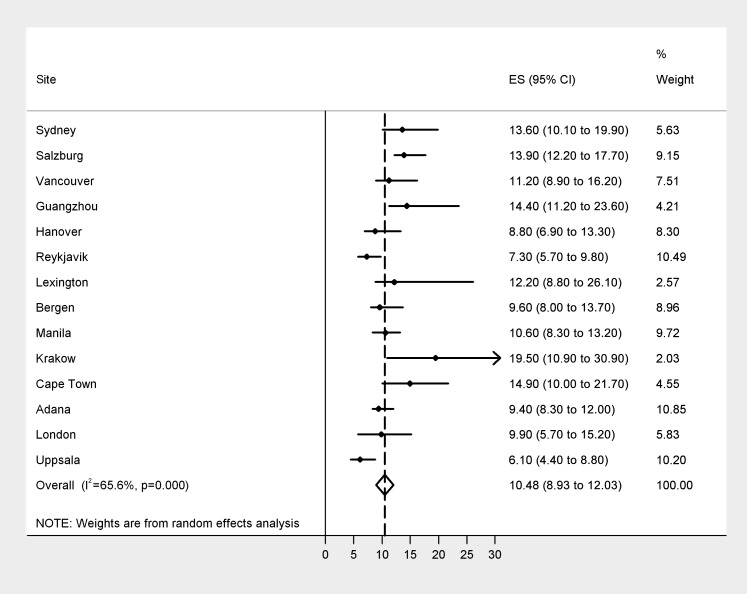
In 3922 healthy never smokers, the weighted pooled estimate of the 95th percentiles (95% CI) for bronchodilator response were 284 ml (263 to 305) absolute change in forced expiratory volume in 1 s from baseline (ΔFEV(1)); 12.0% (11.2% to 12.8%) change relative to initial value (%ΔFEV(1i)); and 10.0% (9.5% to 10.5%) change relative to predicted value (%ΔFEV(1p)). The corresponding mean changes in forced vital capacity (FVC) were 322 ml (271 to 373) absolute change from baseline (ΔFVC); 10.5% (8.9% to 12.0%) change relative to initial value (ΔFVC(i)); and 9.2% (7.9% to 10.5%) change relative to predicted value (ΔFVC(p)). The proportion who exceeded the above threshold values in the subgroup with spirometrically defined Global Initiative for Chronic Obstructive Lung Disease (GOLD) stage 2 and higher (FEV(1)/FVC <0.7 and FEV(1)% predicted <80%) were 11.1%, 30.8% and 12.9% respectively for the FEV(1)-based thresholds and 22.6%, 28.6% and 22.1% respectively for the FVC-based thresholds.
The results provide reference values for bronchodilator responses worldwide that confirm guideline estimates for a clinically significant level of BDR in bronchodilator testing.
临床上有意义的支气管扩张剂反应(BDR)的标准主要基于阻塞性肺疾病患者的研究。关于健康人群中 BDR 的情况知之甚少,而全球范围内的模式则更少。
北美、欧洲、非洲和亚洲 14 个国家的 10360 名年龄在 40 岁及以上的成年人参加了负担性阻塞性肺病研究。在使用吸入性支气管扩张剂前后进行肺量测定,以确定基于人群的健康非吸烟者和气流阻塞个体中 BDR 的分布。
在 3922 名健康的从不吸烟者中,用力呼气量 1 秒(FEV1)从基线的 95%百分位(95%CI)的加权总体估计值为 284ml(263 至 305)绝对变化量;与初始值相比的 12.0%(11.2%至 12.8%)变化量(%ΔFEV1i);与预测值相比的 10.0%(9.5%至 10.5%)变化量(%ΔFEV1p)。用力肺活量(FVC)的相应平均变化量为 322ml(271 至 373)绝对变化量,与基线相比(ΔFVC);与初始值相比的 10.5%(8.9%至 12.0%)变化量(ΔFVCi);与预测值相比的 9.2%(7.9%至 10.5%)变化量(ΔFVCp)。在以 spirometrically 定义的全球倡议慢性阻塞性肺疾病(GOLD)阶段 2 及更高阶段(FEV1/FVC<0.7 和 FEV1%预测值<80%)为亚组中,超过上述阈值的比例分别为 11.1%、30.8%和 12.9%,用于 FEV1 为基础的阈值,分别为 22.6%、28.6%和 22.1%,用于 FVC 为基础的阈值。
这些结果为全球范围内的支气管扩张剂反应提供了参考值,证实了指南中关于支气管扩张剂检测中具有临床意义的 BDR 水平的估计值。