Department of Microbiology and the Host-Microbe Systems Theme of the Institute for Genomic Biology, University of Illinois at Urbana-Champaign, Urbana, IL 61801, USA.
Curr Top Microbiol Immunol. 2012;361:93-111. doi: 10.1007/82_2012_219.
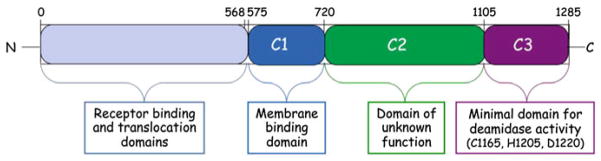
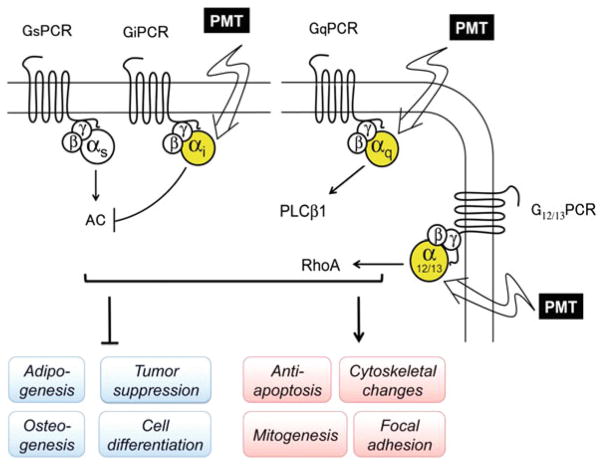
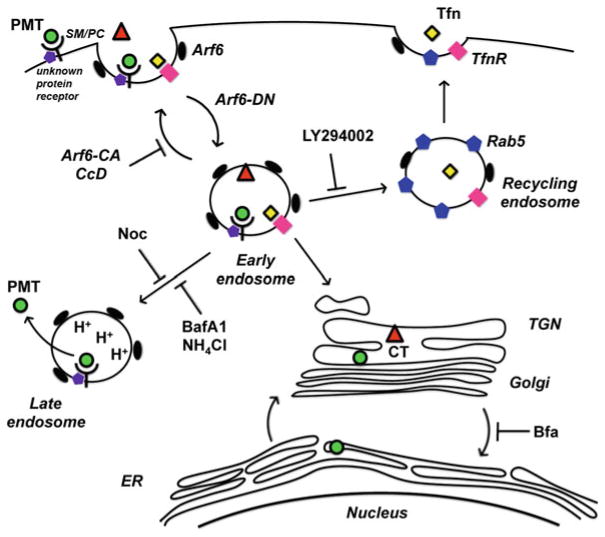
The mitogenic dermonecrotic toxin from Pasteurella multocida (PMT) is a 1285-residue multipartite protein that belongs to the A-B family of bacterial protein toxins. Through its G-protein-deamidating activity on the α subunits of heterotrimeric G(q)-, G(i)- and G(12/13)-proteins, PMT potently stimulates downstream mitogenic, calcium, and cytoskeletal signaling pathways. These activities lead to pleiotropic effects in different cell types, which ultimately result in cellular proliferation, while inhibiting cellular differentiation, and account for the myriad of physiological outcomes observed during infection with toxinogenic strains of P. multocida.
多杀巴斯德氏菌(Pasteurella multocida)的有丝分裂细胞坏死毒素(mitogenic dermonecrotic toxin from Pasteurella multocida,PMT)是一种由 1285 个残基组成的多组分蛋白,属于细菌蛋白毒素的 A-B 家族。通过对异三聚体 G(q)-、G(i)-和 G(12/13)-蛋白的 α 亚基进行 G 蛋白脱酰胺作用,PMT 可强烈刺激下游有丝分裂、钙和细胞骨架信号通路。这些活性在不同细胞类型中导致多效性效应,最终导致细胞增殖,同时抑制细胞分化,并解释了在感染产毒多杀巴斯德氏菌菌株时观察到的众多生理结果。