Department of Otolaryngology-Head and Neck Surgery, Tongji Hospital, Tongji Medical College, Huazhong University of Science and Technology, Wuhan, People's Republic of China.
PLoS One. 2012;7(4):e35960. doi: 10.1371/journal.pone.0035960. Epub 2012 Apr 25.
Clara cell 10-kDa protein (CC10) is a multifunctional protein with anti-inflammatory and immunomodulatory effects. Induction of CC10 expression by gene transfection may possess potential therapeutic effect. Nuclear factor κB (NF-κB) plays a key role in the inflammatory processes of airway diseases.
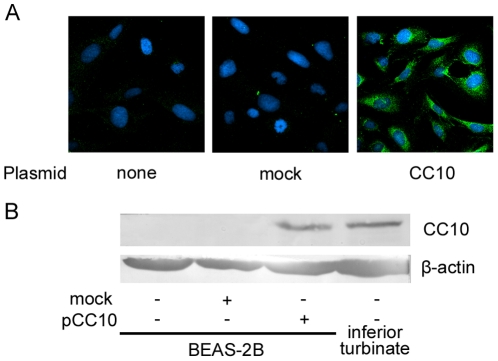
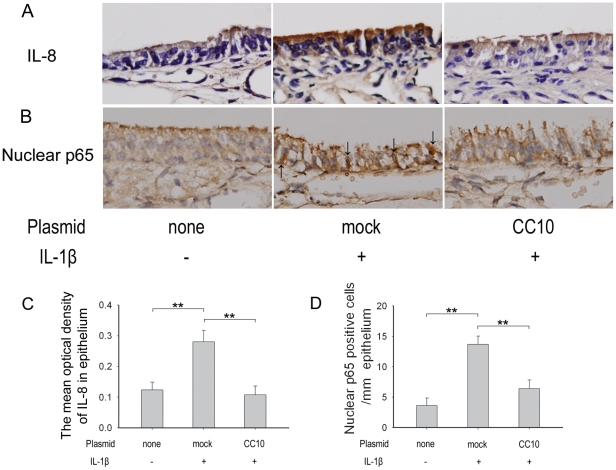
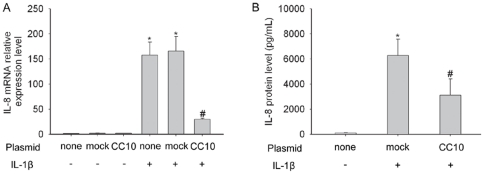
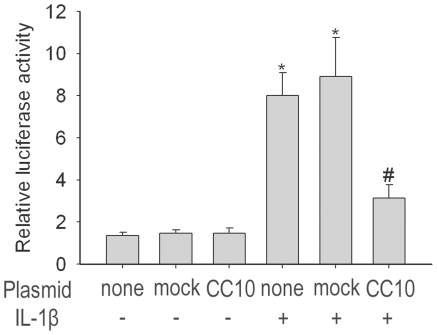
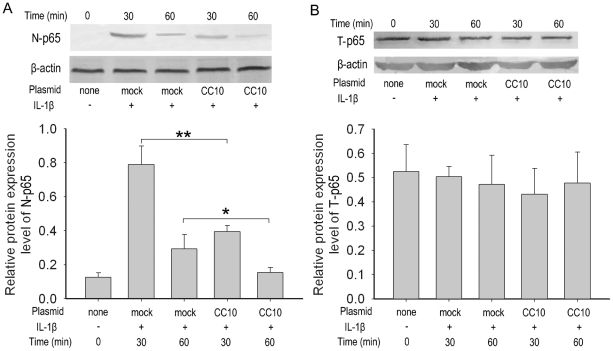
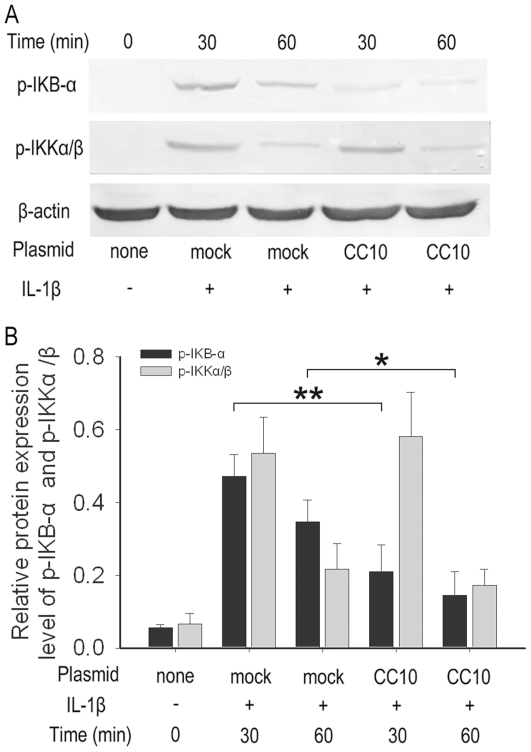
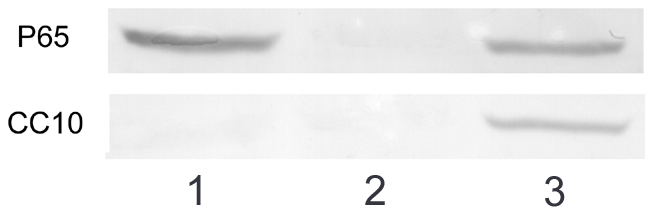
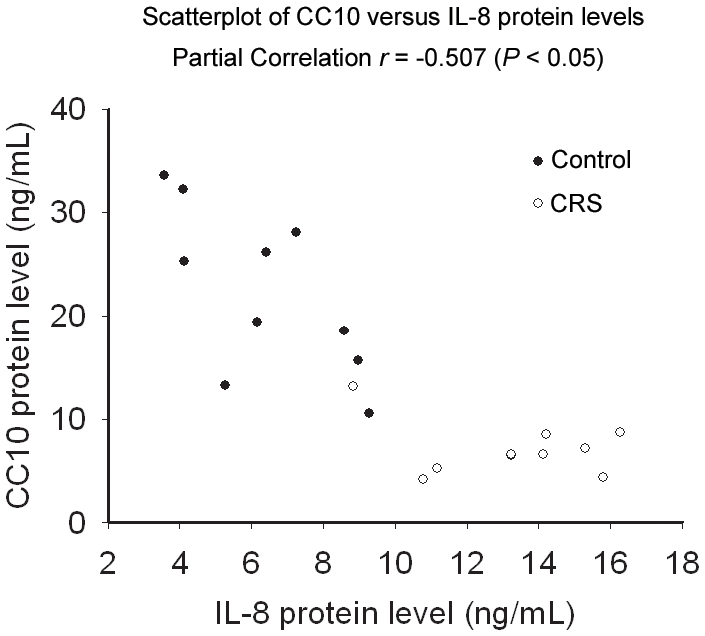
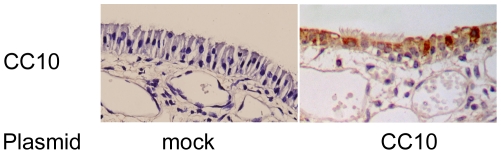
METHOD/RESULTS: To investigate potential therapeutic effect of CC10 gene transfection in controlling airway inflammation and the underlying intracellular mechanisms, in this study, we constructed CC10 plasmid and transfected it into bronchial epithelial cell line BEAS-2B cells and CC10 knockout mice. In BEAS-2B cells, CC10's effect on interleukin (IL)-1β induced IL-8 expression was explored by means of RT-PCR and ELISA and its effect on NF-κB classical signaling pathway was studied by luciferase reporter, western blot, and immunoprecipitation assay. The effect of endogenous CC10 on IL-1β evoked IL-8 expression was studied by means of nasal explant culture. In mice, CC10's effect on IL-1β induced IL-8 and nuclear p65 expression was examined by immunohistochemistry. First, we found that the CC10 gene transfer could inhibit IL-1β induced IL-8 expression in BEAS-2B cells. Furthermore, we found that CC10 repressed IL-1β induced NF-κB activation by inhibiting the phosphorylation of IκB-α but not IκB kinase-α/β in BEAS-2B cells. Nevertheless, we did not observe a direct interaction between CC10 and p65 subunit in BEAS-2B cells. In nasal explant culture, we found that IL-1β induced IL-8 expression was inversely correlated with CC10 levels in human sinonasal mucosa. In vivo study revealed that CC10 gene transfer could attenuate the increase of IL-8 and nuclear p65 staining in nasal epithelial cells in CC10 knockout mice evoked by IL-1β administration.
These results indicate that CC10 gene transfer may inhibit airway inflammation through suppressing the activation of NF-κB, which may provide us a new consideration in the therapy of airway inflammation.
克拉拉细胞 10kDa 蛋白(CC10)是一种具有抗炎和免疫调节作用的多功能蛋白。通过基因转染诱导 CC10 表达可能具有潜在的治疗作用。核因子-κB(NF-κB)在气道疾病的炎症过程中发挥关键作用。
方法/结果:为了研究 CC10 基因转染在控制气道炎症中的潜在治疗作用及其内在的细胞内机制,本研究构建了 CC10 质粒并转染至支气管上皮细胞系 BEAS-2B 细胞和 CC10 敲除小鼠。在 BEAS-2B 细胞中,通过 RT-PCR 和 ELISA 研究了 CC10 对白细胞介素(IL)-1β诱导的 IL-8 表达的影响,并通过荧光素酶报告、Western blot 和免疫沉淀实验研究了其对 NF-κB 经典信号通路的影响。通过鼻外植体培养研究了内源性 CC10 对 IL-1β 诱导的 IL-8 表达的影响。在小鼠中,通过免疫组织化学研究了 CC10 对 IL-1β 诱导的 IL-8 和核 p65 表达的影响。首先,我们发现 CC10 基因转移可抑制 BEAS-2B 细胞中 IL-1β 诱导的 IL-8 表达。此外,我们发现 CC10 通过抑制 IκB-α而非 IκB 激酶-α/β的磷酸化来抑制 IL-1β 诱导的 NF-κB 激活。然而,我们在 BEAS-2B 细胞中没有观察到 CC10 与 p65 亚基之间的直接相互作用。在鼻外植体培养中,我们发现人鼻黏膜中 IL-1β 诱导的 IL-8 表达与 CC10 水平呈负相关。体内研究显示,CC10 基因转移可减轻 CC10 敲除小鼠鼻上皮细胞中 IL-1β 给药引起的 IL-8 和核 p65 染色增加。
这些结果表明,CC10 基因转染可能通过抑制 NF-κB 的激活来抑制气道炎症,这为气道炎症的治疗提供了新的思路。