Wellcome Trust Centre for Stem Cell Research, University of Cambridge, Tennis Court Road, Cambridge CB2 1QR, UK.
Cell Stem Cell. 2012 May 4;10(5):583-94. doi: 10.1016/j.stem.2012.02.020.
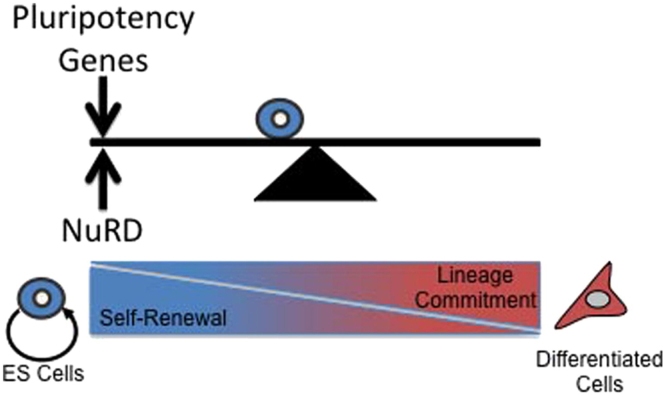
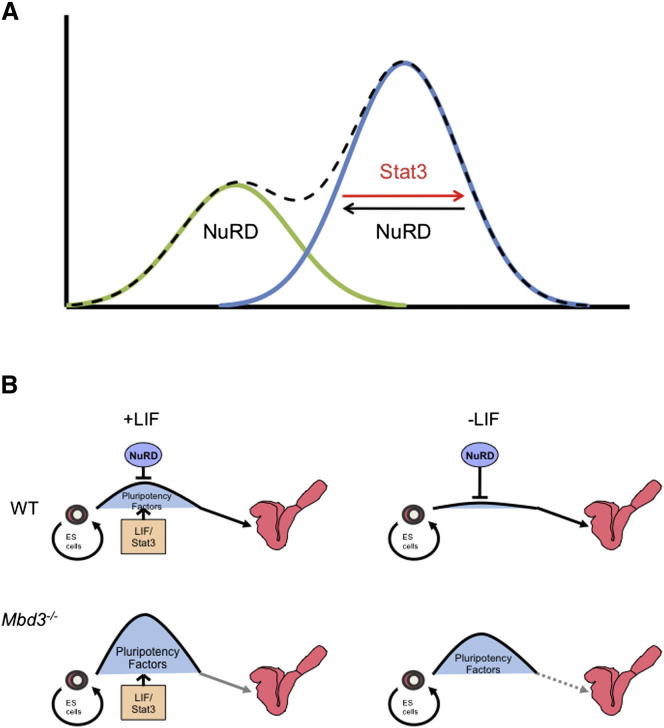
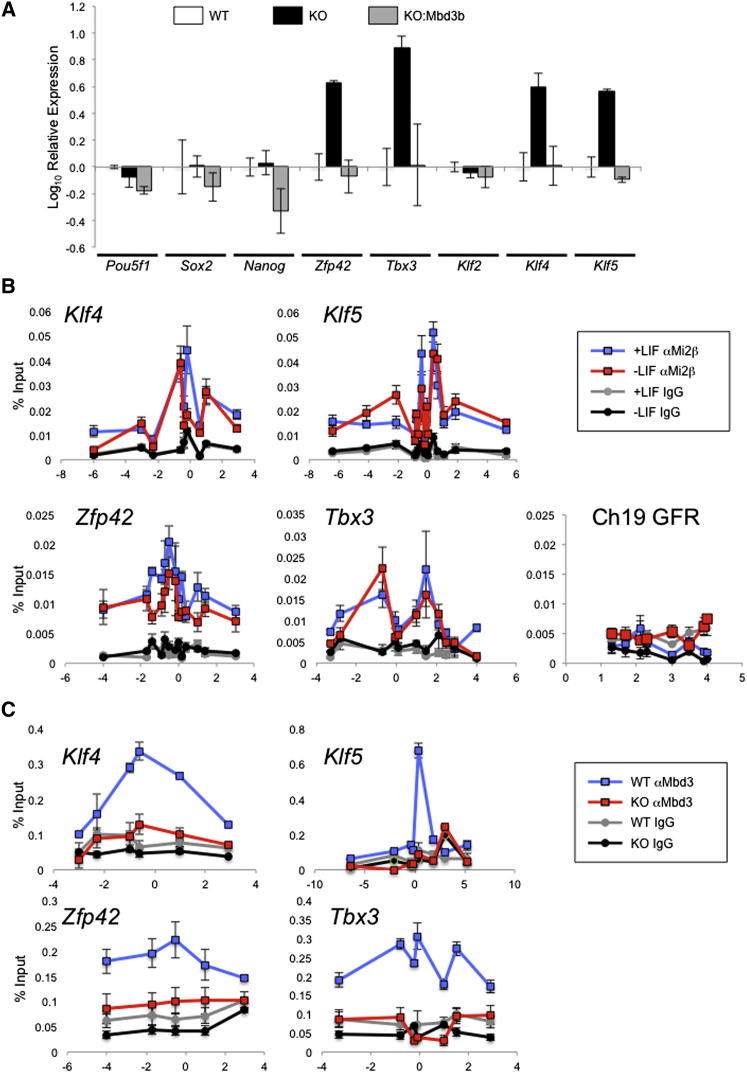
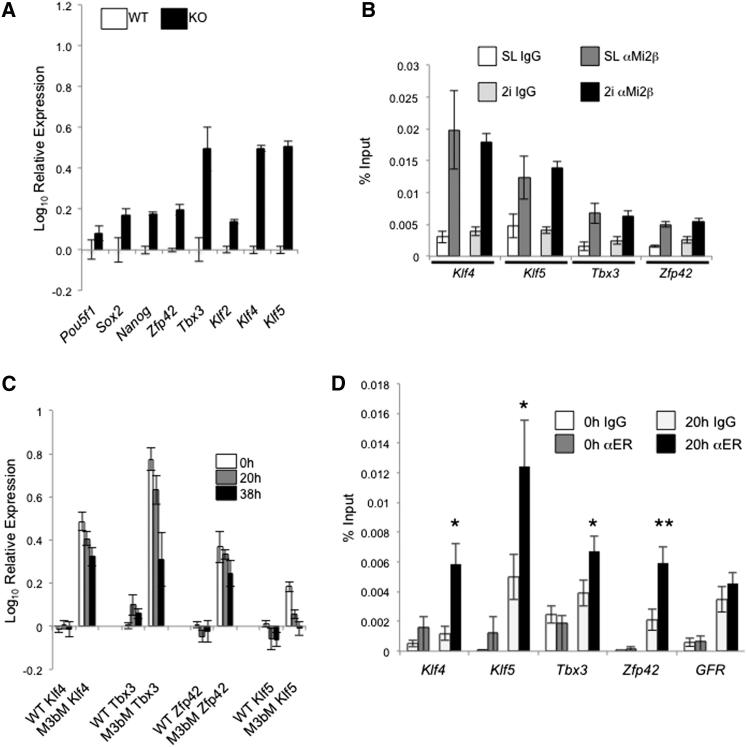
Transcriptional heterogeneity within embryonic stem cell (ESC) populations has been suggested as a mechanism by which a seemingly homogeneous cell population can initiate differentiation into an array of different cell types. Chromatin remodeling proteins have been shown to control transcriptional variability in yeast and to be important for mammalian ESC lineage commitment. Here we show that the Nucleosome Remodeling and Deacetylation (NuRD) complex, which is required for ESC lineage commitment, modulates both transcriptional heterogeneity and the dynamic range of a set of pluripotency genes in ESCs. In self-renewing conditions, the influence of NuRD at these genes is balanced by the opposing action of self-renewal factors. Upon loss of self-renewal factors, the action of NuRD is sufficient to silence transcription of these pluripotency genes, allowing cells to exit self-renewal. We propose that modulation of transcription levels by NuRD is key to maintaining the differentiation responsiveness of pluripotent cells.
胚胎干细胞(ESC)群体中的转录异质性被认为是一种机制,通过这种机制,看似同质的细胞群体可以启动分化为一系列不同的细胞类型。染色质重塑蛋白已被证明可以控制酵母中的转录变异性,并且对于哺乳动物 ESC 谱系的决定很重要。在这里,我们表明,核小体重塑和去乙酰化(NuRD)复合物是 ESC 谱系决定所必需的,它调节 ESC 中一组多能性基因的转录异质性和动态范围。在自我更新条件下,NuRD 在这些基因上的影响受到自我更新因子的拮抗作用的平衡。当失去自我更新因子时,NuRD 的作用足以沉默这些多能性基因的转录,从而使细胞退出自我更新。我们提出,NuRD 对转录水平的调节是维持多能细胞分化反应性的关键。