Department of Pharmaceutical and Biomedical Sciences, California Northstate University College of Pharmacy, Rancho Cordova, CA, USA.
Dis Model Mech. 2012 Nov;5(6):914-20. doi: 10.1242/dmm.008995. Epub 2012 Apr 12.
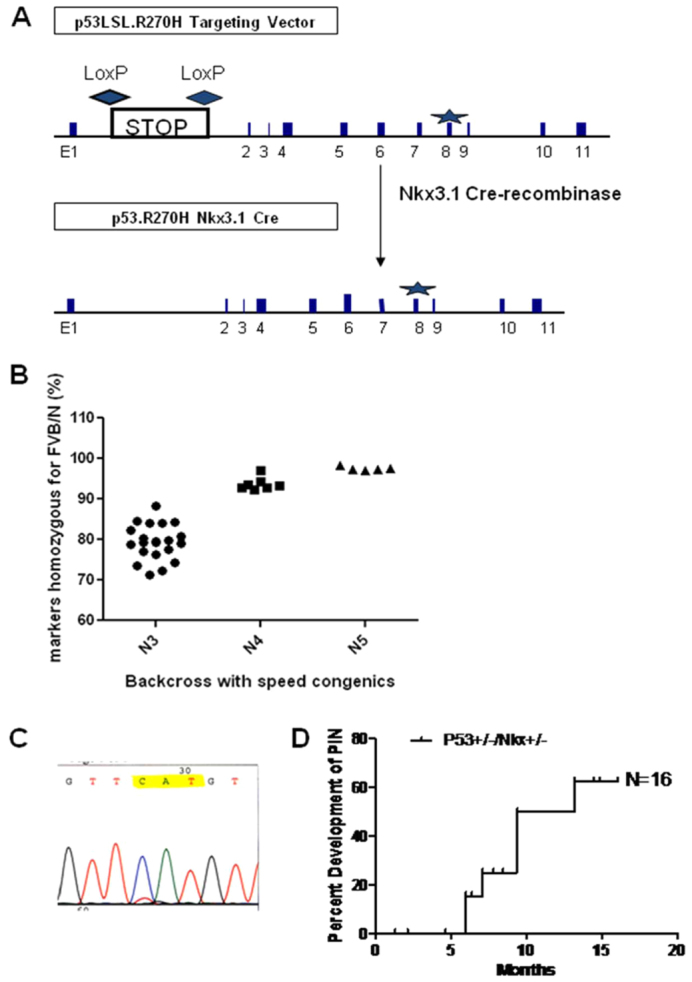
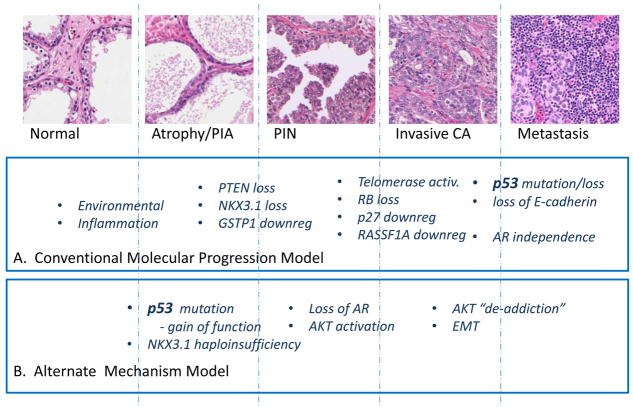
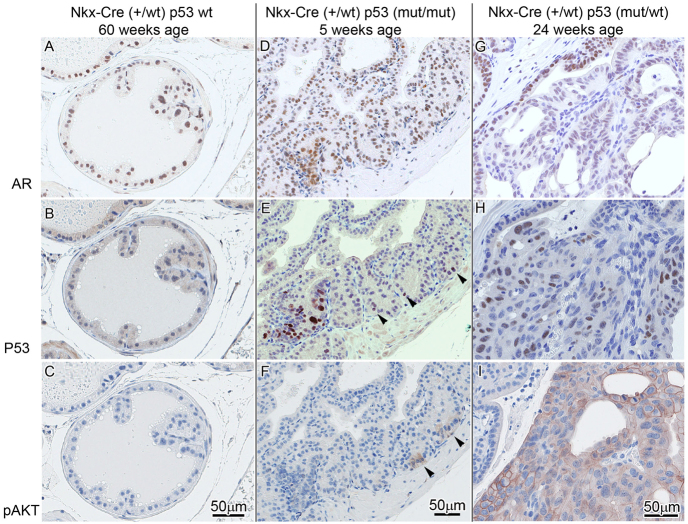
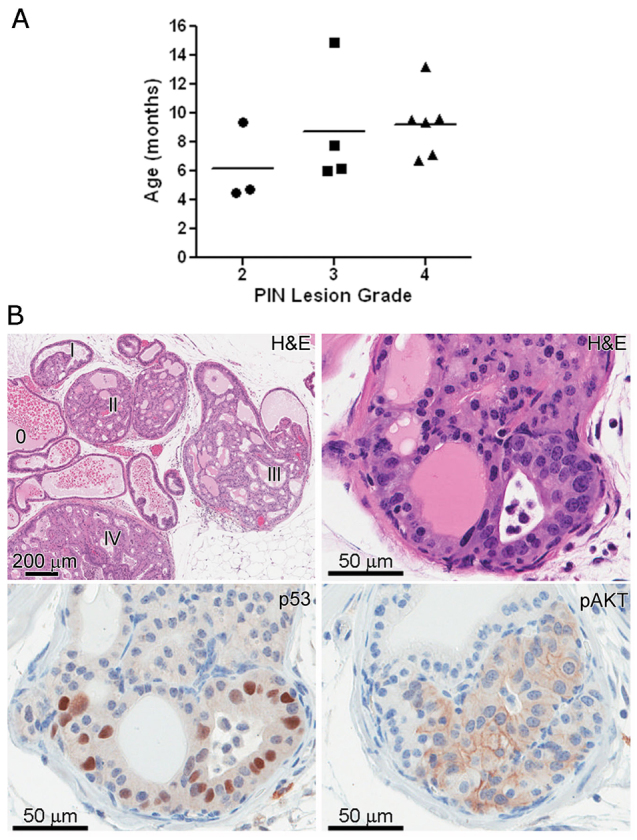
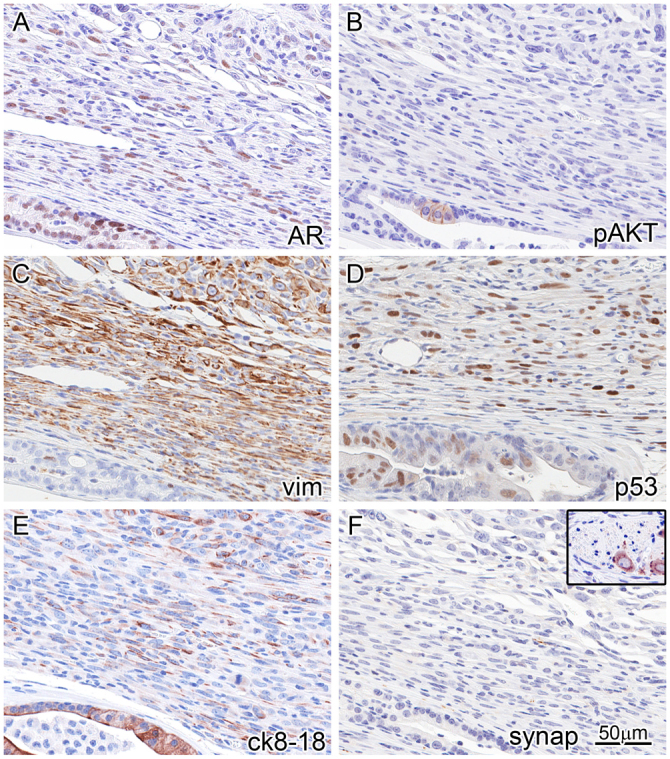
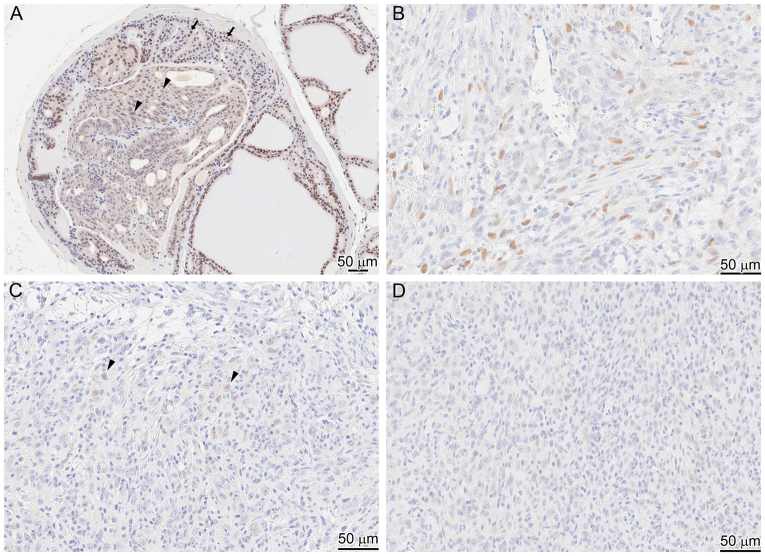
Tp53 mutations are common in human prostate cancer (CaP), occurring with a frequency of ∼30% and ∼70% in localized and metastatic disease, respectively. In vitro studies have determined several common mutations of Tp53 that have specific gain-of-function properties in addition to loss of function, including the ability to promote castration-resistant (CR) growth of CaP cells in some contexts. To date, a lack of suitable mouse models has prohibited investigation of the role played by Tp53 mutations in mediating CaP progression in vivo. Here, we describe the effects of conditional expression of a mutant Tp53 (Tp53(R270H); equivalent to the human hotspot mutant R273H) in the prostate epithelium of mice. Heterozygous "Tp53(LSL-R270H/+)" [129S4(Trp53(tm3Tyj))] and "Nkx3.1-Cre" [129S(Nkx3-1(tm3(cre)Mms))] mice with prostate-specific expression of the Tp53(R270H) mutation (p53(R270H/+) Nkx3.1-Cre mice) were bred onto an FVB/N background via speed congenesis to produce strain FVB.129S4(Trp53(tm3Tyj/wt)); FVB.129S(Nkx3-1(tm3(cre)Mms/wt)) and littermate genotype negative control mice. These mutant mice had significantly increased incidences of prostatic intraepithelial neoplasia (PIN) lesions, and these appeared earlier, compared with the Nkx3.1 haploinsufficient (Nkx3.1-Cre het) littermate mice, which did not express the Tp53 mutation. PIN lesions in these mice showed consistent progression and some developed into invasive adenocarcinoma with a high grade, sarcomatoid or epithelial-mesenchymal transition (EMT) phenotype. PIN lesions were similar to those seen in PTEN conditional knockout mice, with evidence of AKT activation concomitant with neoplastic proliferation. However, the invasive tumor phenotype is rarely seen in previously described mouse models of prostatic neoplasia. These data indicate that the Tp53(R270H) mutation plays a role in CaP initiation. This finding has not previously been reported. Further characterization of this model, particularly in a setting of androgen deprivation, should allow further insight into the mechanisms by which the Tp53(R270H) mutation mediates CaP progression.
Tp53 基因突变在人类前列腺癌(CaP)中很常见,分别在局限性和转移性疾病中发生频率约为 30%和 70%。体外研究已经确定了 Tp53 的几种常见突变,这些突变除了丧失功能外,还具有特定的获得性功能,包括在某些情况下促进前列腺癌细胞的去势抵抗(CR)生长的能力。迄今为止,缺乏合适的小鼠模型阻碍了对 Tp53 突变在体内介导 CaP 进展中所起作用的研究。在这里,我们描述了在小鼠前列腺上皮细胞中条件表达突变型 Tp53(Tp53(R270H);相当于人类热点突变 R273H)的影响。杂合子“Tp53(LSL-R270H/+)”[129S4(Trp53(tm3Tyj))]和“Nkx3.1-Cre”[129S(Nkx3-1(tm3(cre)Mms))]小鼠具有前列腺特异性表达 Tp53(R270H)突变(p53(R270H/+)Nkx3.1-Cre 小鼠)通过速度同源性繁殖到 FVB/N 背景上,产生 FVB。129S4(Trp53(tm3Tyj/wt));FVB.129S(Nkx3-1(tm3(cre)Mms/wt))和同窝基因型阴性对照小鼠。这些突变小鼠前列腺上皮内肿瘤(PIN)病变的发生率显著增加,与 Nkx3.1 半不足(Nkx3.1-Cre het)同窝小鼠相比,这些病变出现更早,Nkx3.1-Cre het 同窝小鼠不表达 Tp53 突变。这些小鼠的 PIN 病变持续进展,一些发展为高级别、肉瘤样或上皮-间充质转化(EMT)表型的浸润性腺癌。PIN 病变与以前描述的前列腺肿瘤的小鼠模型相似,有证据表明 AKT 激活伴随着肿瘤增殖。然而,在以前描述的前列腺肿瘤的小鼠模型中很少见到侵袭性肿瘤表型。这些数据表明,Tp53(R270H)突变在 CaP 起始中起作用。这一发现以前没有报道过。进一步对该模型进行特征描述,特别是在去势剥夺的情况下,应能进一步深入了解 Tp53(R270H)突变介导 CaP 进展的机制。