Department of Zoology, Panjab University, Chandigarh, India.
PLoS Negl Trop Dis. 2012;6(5):e1629. doi: 10.1371/journal.pntd.0001629. Epub 2012 May 1.
Most available drugs against visceral leishmaniasis are toxic, and growing limitations in available chemotherapeutic strategies due to emerging resistant strains and lack of an effective vaccine against visceral leishmaniasis deepens the crisis. Antineoplastic drugs like miltefosine have in the past been effective against the parasitic infections. An antineoplastic drug, cisplatin (cis-diamminedichloroplatinum II; CDDP), is recognized as a DNA-damaging drug which also induces alteration of cell-cycle in both promastigotes and amastigotes leading to cell death. First in vivo reports from our laboratory revealed the leishmanicidal potential of cisplatin. However, high doses of cisplatin produce impairment of kidney, which can be reduced by the administration of antioxidants.
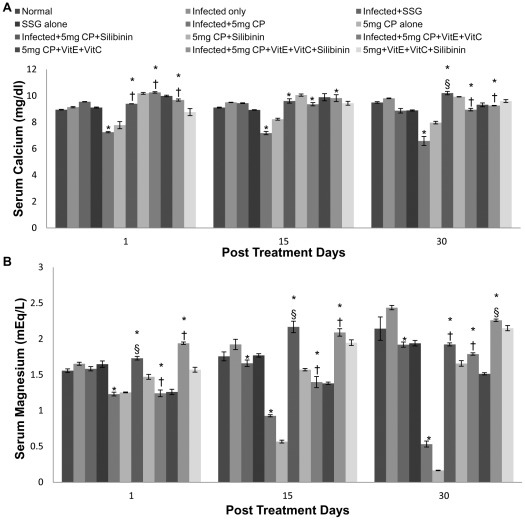
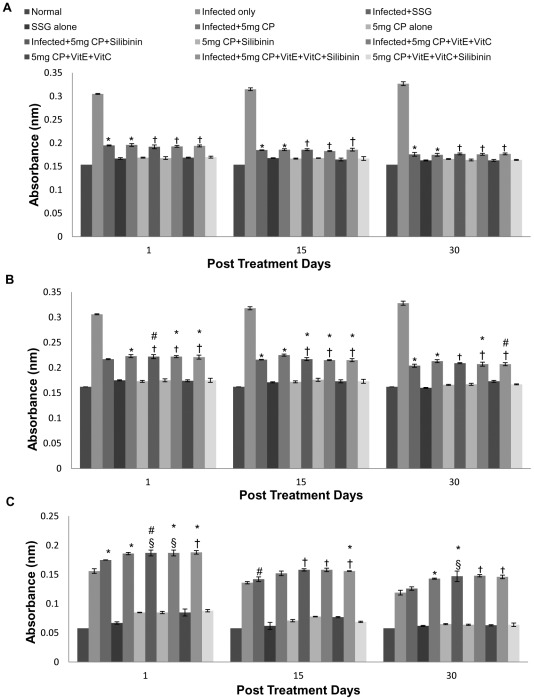
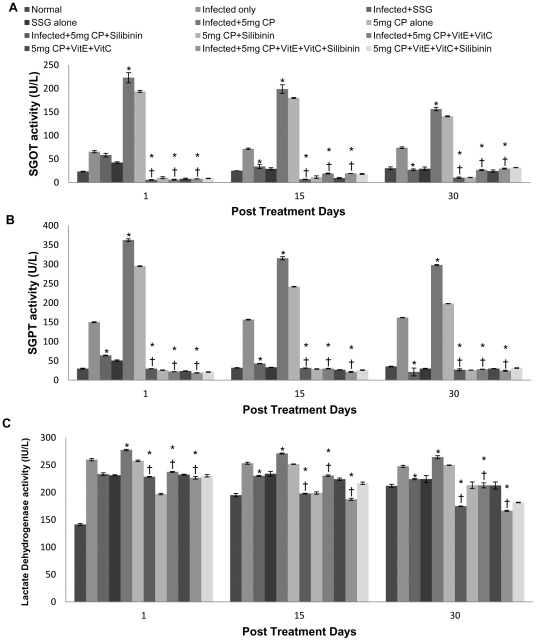
METHODOLOGY/PRINCIPAL FINDINGS: The present study was designed to evaluate the antileishmanial effect of cisplatin at higher doses (5 mg and 2.5 mg/kg body weight) and its combination with different antioxidants (vitamin C, vitamin E and silibinin) so as to eliminate the parasite completely and reduce the toxicity. In addition, various immunological, hematological and biochemical changes induced by it in uninfected and Leishmania donovani infected BALB/c mice were investigated.
CONCLUSION/SIGNIFICANCE: A significant reduction in parasite load, higher IgG2a and lower IgG1 levels, enhanced DTH responses, and greater concentration of Th1 cytokines (IFN-γ, IL-2) with a concomitant down regulation of IL-10 and IL-4 pointed towards the generation of the protective Th1 type of immune response. A combination of cisplatin with antioxidants resulted in successful reduction of nephrotoxicity by normalizing the enzymatic levels of various liver and kidney function tests. Reduction in parasite load, increase in Th1 type of immune responses, and normalization of various biochemical parameters occurred in animals treated with cisplatin in combination with various antioxidants as compared to those treated with the drug only. The above results are promising as antioxidants reduced the potential toxicity of high doses of cisplatin, making the combination a potential anti-leishmanial therapy, especially in resistant cases.
大多数用于治疗内脏利什曼病的药物都具有毒性,而由于耐药菌株的出现以及缺乏有效的内脏利什曼病疫苗,现有的化疗策略受到了越来越多的限制,这使得情况更加恶化。米替福新等抗肿瘤药物过去曾对寄生虫感染有效。一种抗肿瘤药物顺铂(顺式二氨二氯铂 II;CDDP)被认为是一种 DNA 损伤药物,它还能诱导前鞭毛体和无鞭毛体的细胞周期改变,导致细胞死亡。我们实验室的首例体内报告显示了顺铂的杀利什曼原虫作用。然而,高剂量的顺铂会导致肾脏损伤,而抗氧化剂的给药可以减轻这种损伤。
方法/主要发现:本研究旨在评估高剂量(5mg 和 2.5mg/kg 体重)顺铂及其与不同抗氧化剂(维生素 C、维生素 E 和水飞蓟素)联合使用的抗利什曼原虫作用,以彻底消除寄生虫并减轻毒性。此外,还研究了它在未感染和感染利什曼原虫的 BALB/c 小鼠体内引起的各种免疫、血液和生化变化。
结论/意义:寄生虫载量显著减少,IgG2a 水平升高,IgG1 水平降低,DTH 反应增强,Th1 细胞因子(IFN-γ、IL-2)浓度增加,同时 IL-10 和 IL-4 下调,表明产生了保护性 Th1 型免疫反应。顺铂与抗氧化剂联合使用可通过使各种肝肾功能试验的酶水平正常化来成功降低肾毒性。与单独使用该药物的动物相比,用顺铂联合各种抗氧化剂治疗的动物的寄生虫载量减少,Th1 型免疫反应增强,各种生化参数正常化。这些结果很有希望,因为抗氧化剂降低了高剂量顺铂的潜在毒性,使该联合疗法成为一种有潜力的抗利什曼病疗法,特别是在耐药病例中。