CoRPS, Center of Research on Psychology in Somatic disease, Department of Medical Psychology, Tilburg University, Postbox 90153, 5000 LE, Tilburg, The Netherlands.
J Behav Med. 2013 Aug;36(4):361-70. doi: 10.1007/s10865-012-9431-3. Epub 2012 May 15.
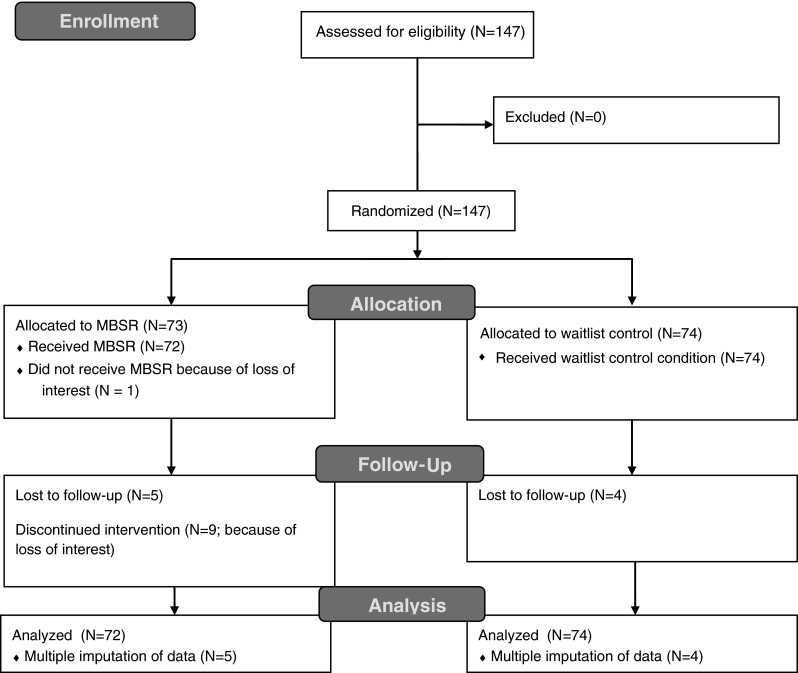
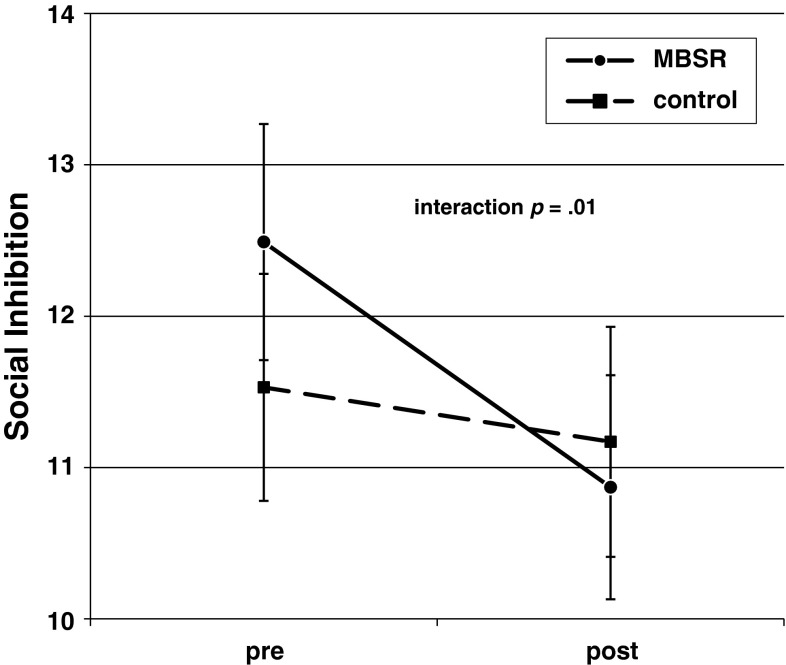
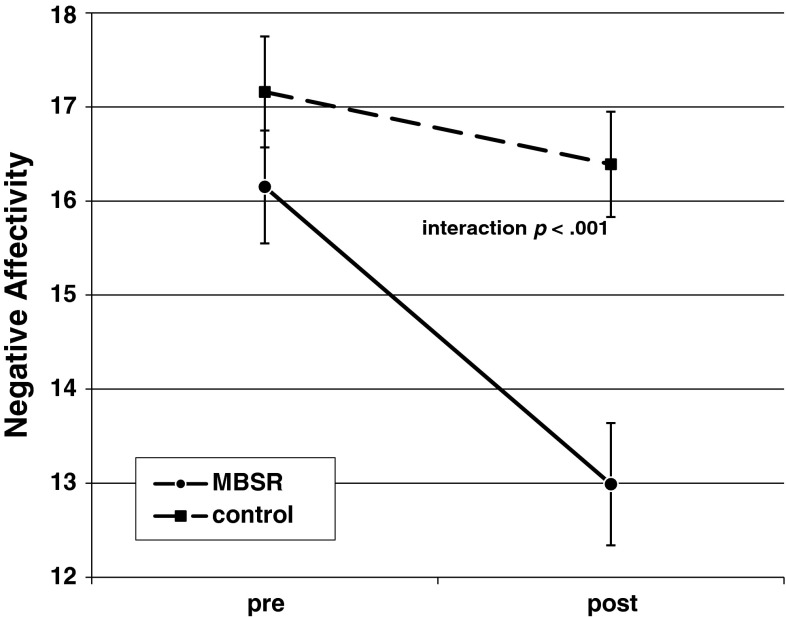
Distressed ('Type D') personality, the combination of negative affectivity (NA) and social inhibition (SI), has been associated with adverse health outcomes. The purpose of this study was to examine if an 8-week mindfulness-based stress reduction (MBSR) program could reduce Type D personality characteristics. Distressed individuals from the Dutch general population (N = 146; mean age = 46.07; 69 % female) participated in a randomized trial comparing the mindfulness intervention with waitlist control. Although change in Type D caseness did not differ between groups, the intervention group showed stronger reductions for both NA (p < .001) and SI (p < .05) dimensions, even when change in state negative affect was statistically controlled. These effects were mediated by change in self-reported mindfulness. In conclusion, MBSR may reduce characteristics of the distressed personality type, likely through the mechanism of increased mindfulness.
苦恼型(“D 型”)人格是负性情感(NA)和社交抑制(SI)的组合,与不良健康结果相关。本研究旨在检验 8 周正念减压(MBSR)方案是否能降低 D 型人格特征。来自荷兰普通人群的苦恼个体(N=146;平均年龄 46.07 岁;69%为女性)参加了一项随机试验,比较正念干预与候补名单对照。尽管两组间 D 型病例变化无差异,但干预组在 NA(p<.001)和 SI(p<.05)维度上的降幅更强,即使在统计学上控制了状态负性情感的变化也是如此。这些影响通过自我报告的正念变化来介导。结论:MBSR 可能通过提高正念的机制降低苦恼人格类型的特征。