Department of Psychological and Brain Sciences, Indiana University, Bloomington, Indiana, United States of America.
PLoS One. 2012;7(5):e36800. doi: 10.1371/journal.pone.0036800. Epub 2012 May 14.
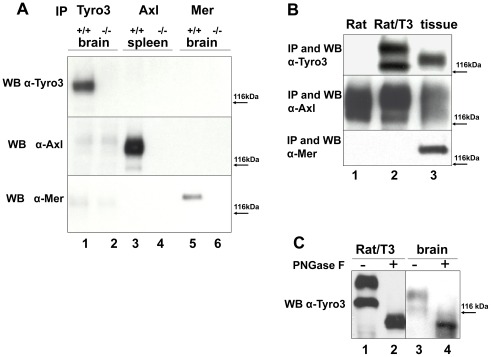
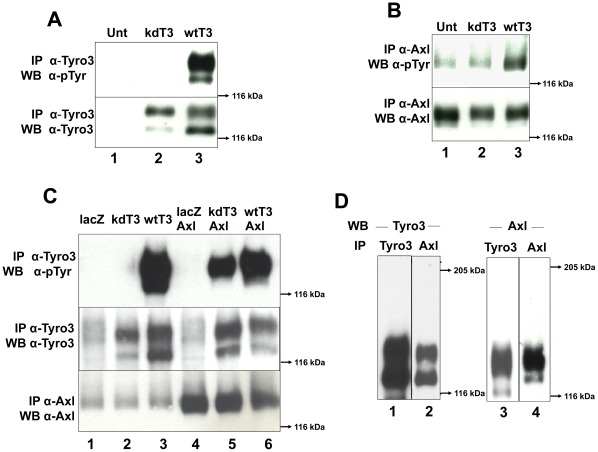
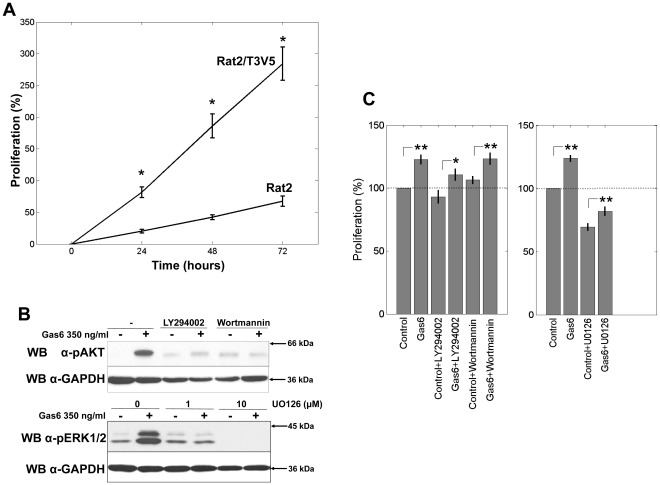
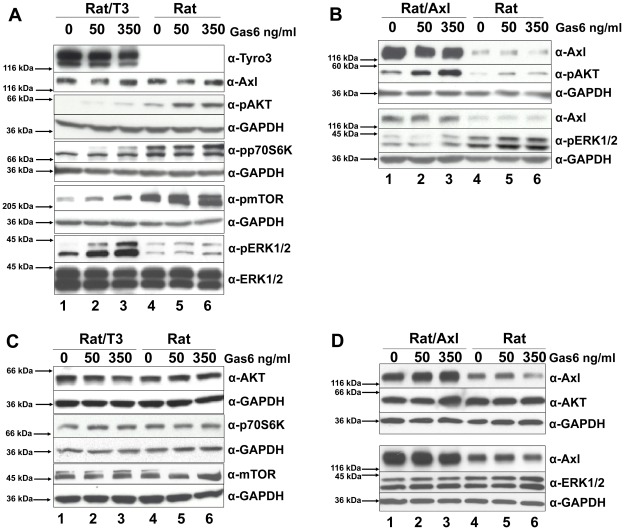
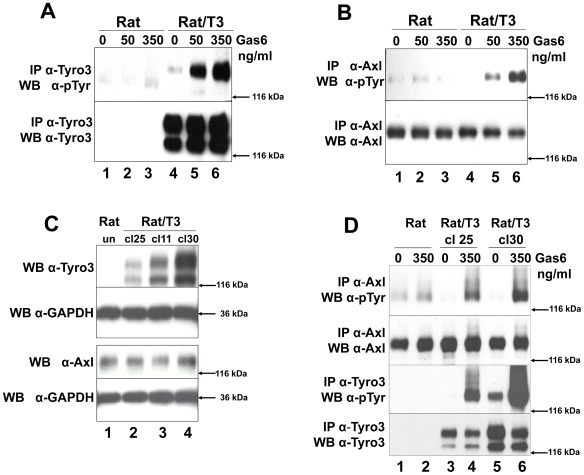
The dysregulation of receptor protein tyrosine kinase (RPTK) function can result in changes in cell proliferation, cell growth and metastasis leading to malignant transformation. Among RPTKs, the TAM receptor family composed of three members Tyro3, Axl, and Mer has been recognized to have a prominent role in cell transformation. In this study we analyzed the consequences of Tyro3 overexpression on cell proliferation, activation of signaling pathways and its functional interactions with Axl. Overexpression of Tyro3 in the Rat2 cell line that expresses Axl, but not Mer or Tyro3, resulted in a 5 fold increase in cell proliferation. This increase was partially blocked by inhibitors of the mitogen-activated protein kinase (MAPK) signaling pathway but not by inhibitors of the phosphatidylinositol 3-kinase (PI(3)K) signaling pathway. Consistent with these findings, an increase in ERK1/2 phosphorylation was detected with Tyro3 but not with Axl overexpression. In contrast, activation of Axl stimulated the PI(3)K pathway, which was mitigated by co-expression of Tyro3. The overexpression of Tyro3 enhanced Gas6-mediated Axl phosphorylation, which was not detected upon overexpression of a "kinase dead" form of Tyro3 (kdTyro3). In addition, the overexpression of Axl induced kdTyro3 phosphorylation. Co-immunoprecipitation experiments confirmed that the Axl and Tyro3 receptors are closely associated. These findings show that overexpression of Tyro3 in the presence of Axl promotes cell proliferation, and that co-expression of Axl and Tyro3 can affect the outcome of Gas6-initiated signaling. Furthermore, they demonstrate a functional interaction between the members of the TAM receptor family which can shed light on the molecular mechanisms underlying the functional consequences of TAM receptor activation in cell transformation, neural function, immune function, and reproductive function among others.
受体酪氨酸激酶(RPTK)功能失调可导致细胞增殖、细胞生长和转移的改变,从而导致恶性转化。在 RPTKs 中,由三个成员 Tyro3、Axl 和 Mer 组成的 TAM 受体家族已被认为在细胞转化中具有重要作用。在这项研究中,我们分析了 Tyro3 过表达对细胞增殖、信号通路激活及其与 Axl 功能相互作用的影响。在表达 Axl 但不表达 Mer 或 Tyro3 的 Rat2 细胞系中过表达 Tyro3 可使细胞增殖增加 5 倍。这种增加部分被丝裂原活化蛋白激酶(MAPK)信号通路抑制剂阻断,但不被磷脂酰肌醇 3-激酶(PI(3)K)信号通路抑制剂阻断。与这些发现一致,在用 Tyro3 过表达而不是 Axl 过表达时检测到 ERK1/2 磷酸化增加。相反,Axl 的激活刺激了 PI(3)K 途径,而 Tyro3 的共表达减轻了这种途径。Tyro3 的过表达增强了 Gas6 介导的 Axl 磷酸化,而在用“激酶失活”形式的 Tyro3(kdTyro3)过表达时则未检测到。此外,Axl 的过表达诱导 kdTyro3 磷酸化。共免疫沉淀实验证实 Axl 和 Tyro3 受体密切相关。这些发现表明,在存在 Axl 的情况下过表达 Tyro3 可促进细胞增殖,并且 Axl 和 Tyro3 的共表达可以影响 Gas6 引发的信号的结果。此外,它们证明了 TAM 受体家族成员之间的功能相互作用,可以阐明 TAM 受体激活在细胞转化、神经功能、免疫功能和生殖功能等方面的分子机制。