Khazaei Tahmineh, McGuigan Alison, Mahadevan Radhakrishnan
Department of Chemical Engineering and Applied Chemistry, University of Toronto Toronto, ON, Canada.
Front Physiol. 2012 May 16;3:135. doi: 10.3389/fphys.2012.00135. eCollection 2012.
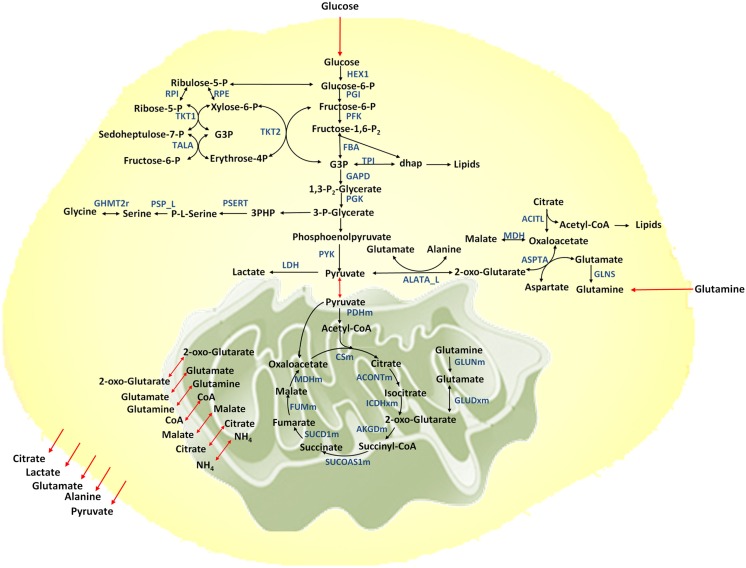
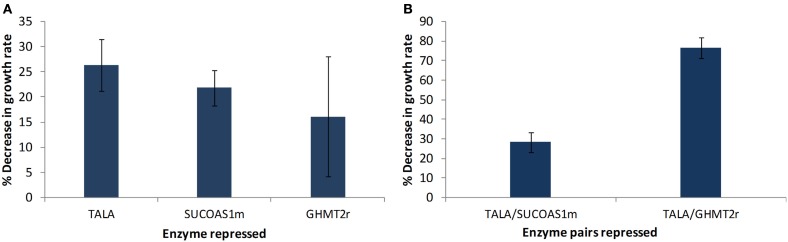
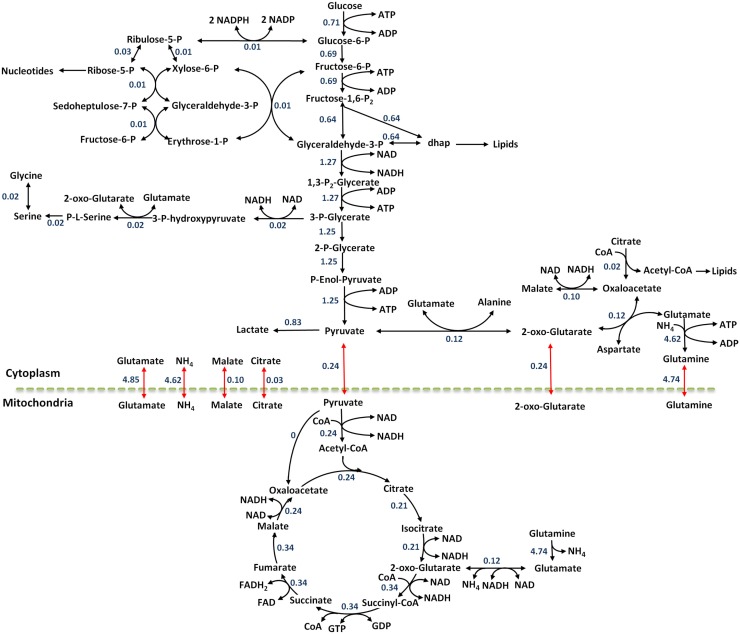
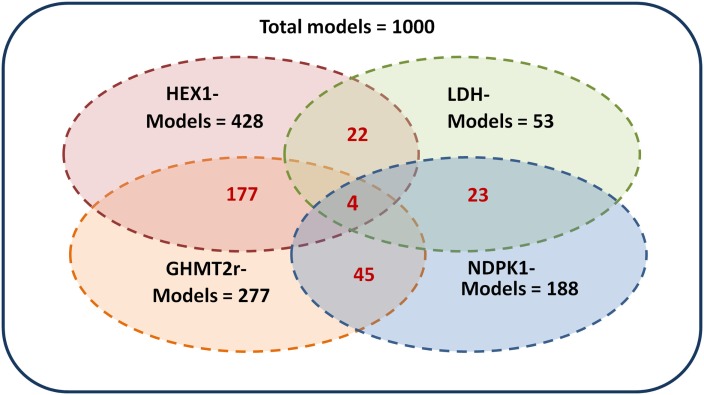
The metabolic behavior of cancer cells is adapted to meet their proliferative needs, with notable changes such as enhanced lactate secretion and glucose uptake rates. In this work, we use the Ensemble Modeling (EM) framework to gain insight and predict potential drug targets for tumor cells. EM generates a set of models which span the space of kinetic parameters that are constrained by thermodynamics. Perturbation data based on known targets are used to screen the entire ensemble of models to obtain a sub-set, which is increasingly predictive. EM allows for incorporation of regulatory information and captures the behavior of enzymatic reactions at the molecular level by representing reactions in the elementary reaction form. In this study, a metabolic network consisting of 58 reactions is considered and accounts for glycolysis, the pentose phosphate pathway, lipid metabolism, amino acid metabolism, and includes allosteric regulation of key enzymes. Experimentally measured intracellular and extracellular metabolite concentrations are used for developing the ensemble of models along with information on established drug targets. The resulting models predicted transaldolase (TALA) and succinyl-CoA ligase (SUCOAS1m) to cause a significant reduction in growth rate when repressed, relative to currently known drug targets. Furthermore, the results suggest that the synergistic repression of transaldolase and glycine hydroxymethyltransferase (GHMT2r) will lead to a threefold decrease in growth rate compared to the repression of single enzyme targets.
癌细胞的代谢行为会进行适应性调整以满足其增殖需求,呈现出显著变化,如乳酸分泌增加和葡萄糖摄取率提高。在这项研究中,我们使用集成建模(EM)框架来深入了解并预测肿瘤细胞的潜在药物靶点。EM生成一组模型,这些模型跨越受热力学约束的动力学参数空间。基于已知靶点的扰动数据用于筛选整个模型集,以获得一个预测性越来越强的子集。EM允许纳入调控信息,并通过以基本反应形式表示反应来捕捉分子水平上酶促反应的行为。在本研究中,考虑了一个由58个反应组成的代谢网络,该网络涵盖糖酵解、磷酸戊糖途径、脂质代谢、氨基酸代谢,并包括关键酶的变构调节。实验测量的细胞内和细胞外代谢物浓度与已确立的药物靶点信息一起用于构建模型集。相对于目前已知的药物靶点,所得模型预测转醛醇酶(TALA)和琥珀酰辅酶A连接酶(SUCOAS1m)在受到抑制时会导致生长速率显著降低。此外,结果表明,与单一酶靶点的抑制相比,转醛醇酶和甘氨酸羟甲基转移酶(GHMT2r)的协同抑制将导致生长速率降低三倍。