Biomedical Engineering, Johns Hopkins University School of Medicine, Baltimore, Maryland, United States of America.
PLoS One. 2012;7(5):e37543. doi: 10.1371/journal.pone.0037543. Epub 2012 May 21.
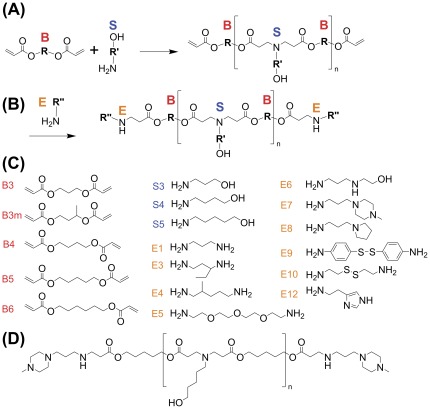
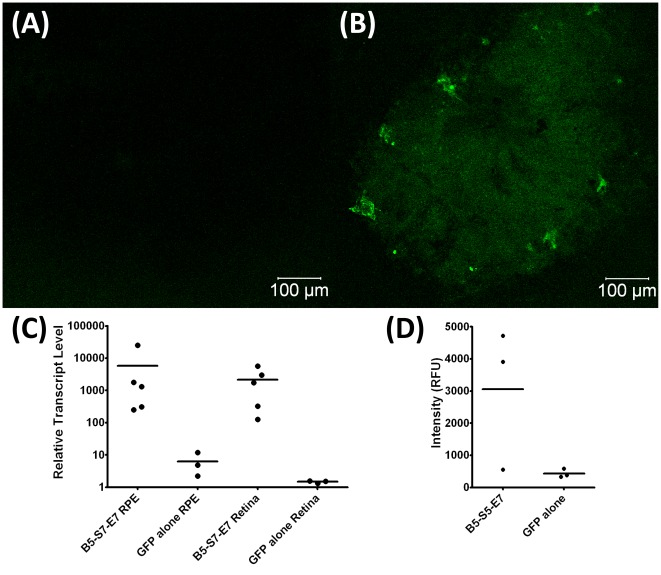
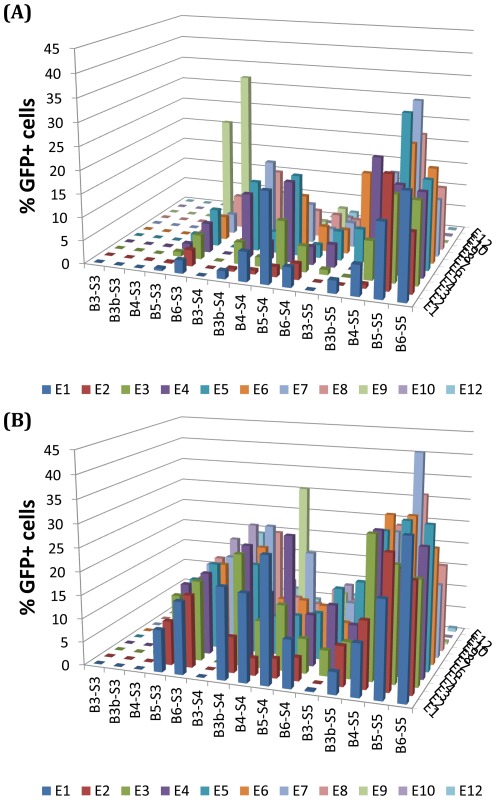
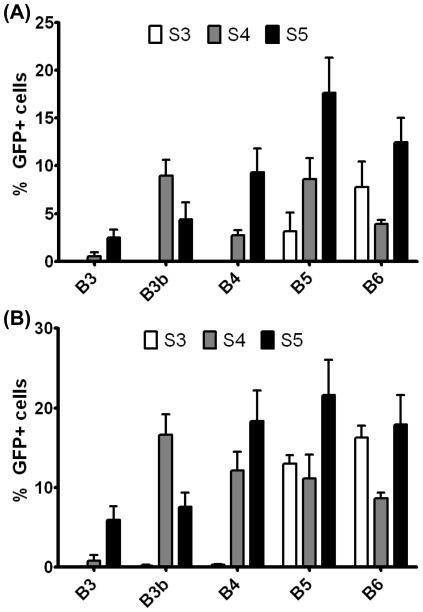
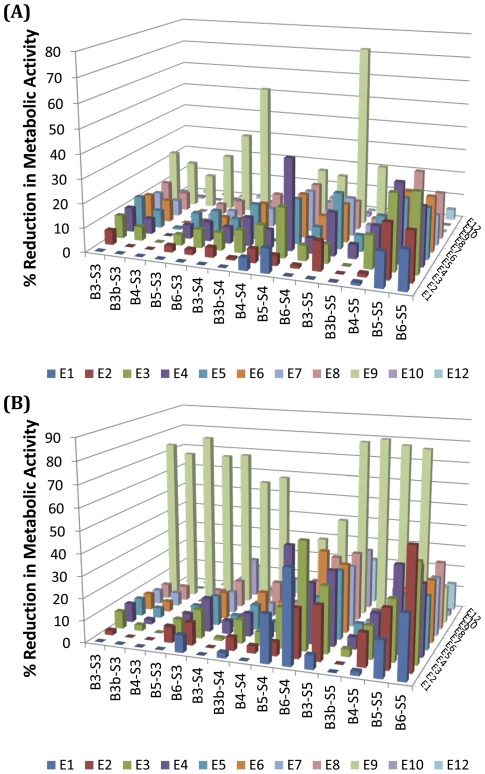
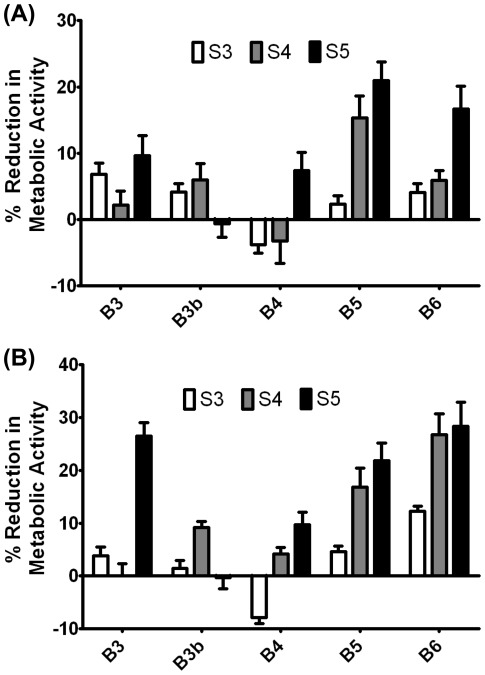
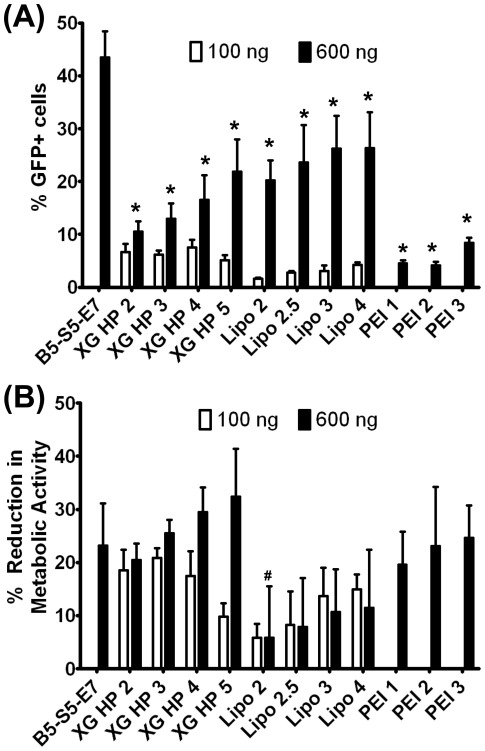
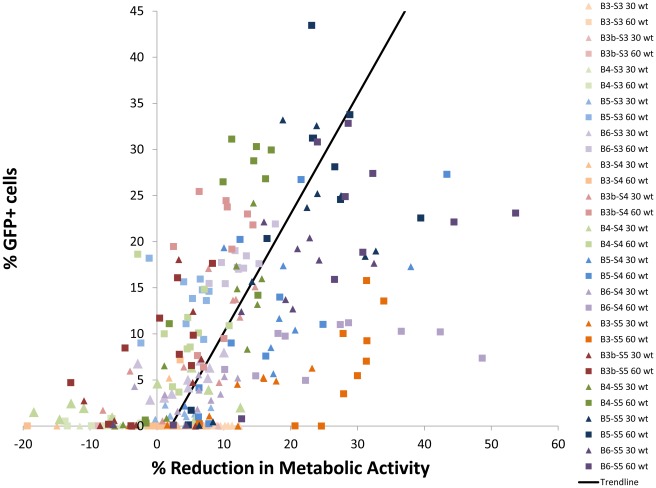
A variety of genetic diseases in the retina, including retinitis pigmentosa and leber congenital amaurosis, might be excellent targets for gene delivery as treatment. A major challenge in non-viral gene delivery remains finding a safe and effective delivery system. Poly(beta-amino ester)s (PBAEs) have shown great potential as gene delivery reagents because they are easily synthesized and they transfect a wide variety of cell types with high efficacy in vitro. We synthesized a combinatorial library of PBAEs and evaluated them for transfection efficacy and toxicity in retinal pigment epithelial (ARPE-19) cells to identify lead polymer structures and transfection formulations. Our optimal polymer (B5-S5-E7 at 60 w/w polymer:DNA ratio) transfected ARPE-19 cells with 44±5% transfection efficacy, significantly higher than with optimized formulations of leading commercially available reagents Lipofectamine 2000 (26±7%) and X-tremeGENE HP DNA (22±6%); (p<0.001 for both). Ten formulations exceeded 30% transfection efficacy. This high non-viral efficacy was achieved with comparable cytotoxicity (23±6%) to controls; optimized formulations of Lipofectamine 2000 and X-tremeGENE HP DNA showed 15±3% and 32±9% toxicity respectively (p>0.05 for both). Our optimal polymer was also significantly better than a gold standard polymeric transfection reagent, branched 25 kDa polyethyleneimine (PEI), which achieved only 8±1% transfection efficacy with 25±6% cytotoxicity. Subretinal injections using lyophilized GFP-PBAE nanoparticles resulted in 1.1±1×10(3)-fold and 1.5±0.7×10(3)-fold increased GFP expression in the retinal pigment epithelium (RPE)/choroid and neural retina respectively, compared to injection of DNA alone (p = 0.003 for RPE/choroid, p<0.001 for neural retina). The successful transfection of the RPE in vivo suggests that these nanoparticles could be used to study a number of genetic diseases in the laboratory with the potential to treat debilitating eye diseases.
视网膜中的多种遗传疾病,包括色素性视网膜炎和莱伯先天性黑蒙症,可能是基因治疗的极佳靶点。非病毒基因传递的主要挑战仍然是寻找安全有效的传递系统。聚(β-氨基酯)(PBAE)作为基因传递试剂具有很大的潜力,因为它们易于合成,并且在体外对多种细胞类型具有高效的转染作用。我们合成了 PBAE 的组合文库,并在视网膜色素上皮(ARPE-19)细胞中评估它们的转染效率和毒性,以确定主要聚合物结构和转染配方。我们的最佳聚合物(B5-S5-E7 在 60 w/w 聚合物:DNA 比)将 ARPE-19 细胞的转染效率提高到 44±5%,明显高于优化的商业试剂 Lipofectamine 2000(26±7%)和 X-tremeGENE HP DNA(22±6%)的配方(两者均 p<0.001)。十种配方的转染效率超过 30%。这种高非病毒效率与对照相比具有相当的细胞毒性(23±6%);优化的 Lipofectamine 2000 和 X-tremeGENE HP DNA 配方的毒性分别为 15±3%和 32±9%(两者均 p>0.05)。我们的最佳聚合物也明显优于一种标准的聚合物转染试剂,支化的 25 kDa 聚乙烯亚胺(PEI),其转染效率仅为 8±1%,细胞毒性为 25±6%。与单独注射 DNA 相比,冻干 GFP-PBAE 纳米颗粒的视网膜下注射导致视网膜色素上皮(RPE)/脉络膜中的 GFP 表达分别增加 1.1±1×10(3)-倍和 1.5±0.7×10(3)-倍,神经视网膜(p=0.003 用于 RPE/脉络膜,p<0.001 用于神经视网膜)。RPE 的体内成功转染表明,这些纳米颗粒可用于实验室中研究多种遗传疾病,并有可能治疗致盲性眼病。