Department of Biochemistry and Structural Biology, Center for Molecular Protein Science, Center for Chemistry and Chemical Engineering, Lund University Lund, Sweden.
Front Plant Sci. 2012 Feb 20;3:33. doi: 10.3389/fpls.2012.00033. eCollection 2012.
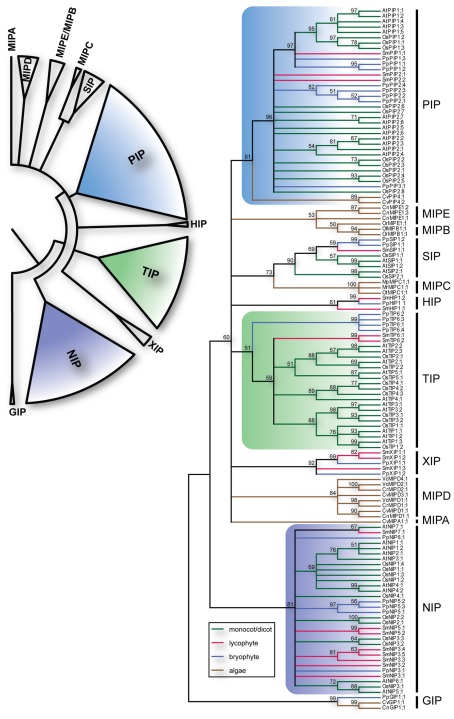
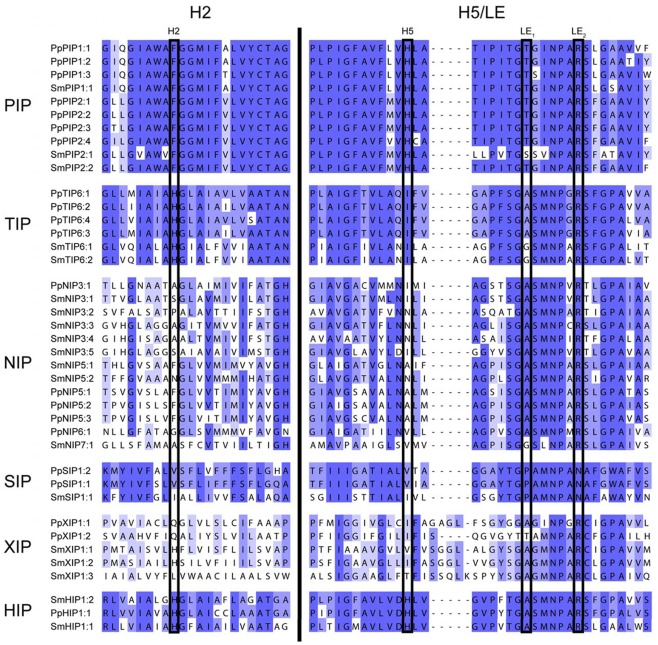
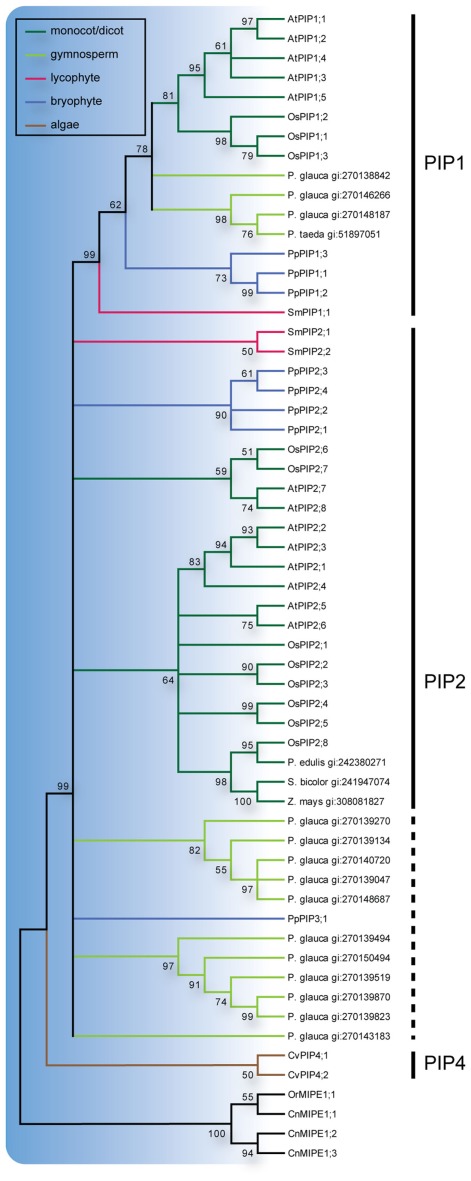
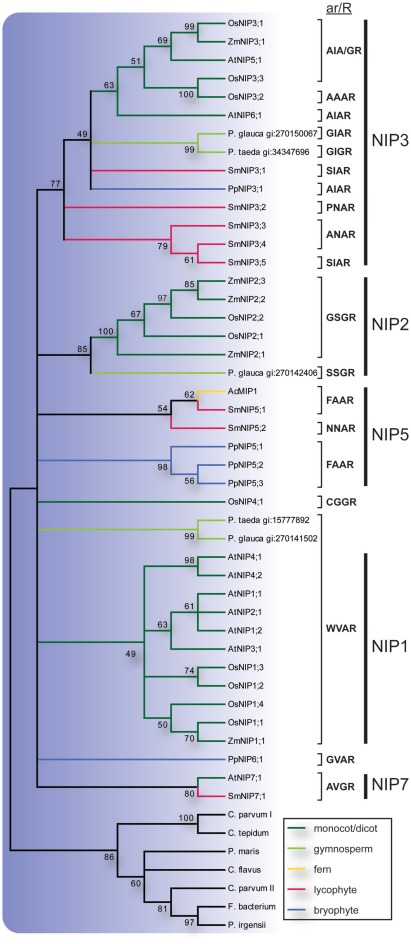
Major intrinsic proteins (MIPs) also called aquaporins form pores in membranes to facilitate the permeation of water and certain small polar solutes across membranes. MIPs are present in virtually every organism but are uniquely abundant in land plants. To elucidate the evolution and function of MIPs in terrestrial plants, the MIPs encoded in the genome of the spikemoss Selaginella moellendorffii were identified and analyzed. In total 19 MIPs were found in S. moellendorffii belonging to 6 of the 7 MIP subfamilies previously identified in the moss Physcomitrella patens. Only three of the MIPs were classified as members of the conserved water specific plasma membrane intrinsic protein (PIP) subfamily whereas almost half were found to belong to the diverse NOD26-like intrinsic protein (NIP) subfamily permeating various solutes. The small number of PIPs in S. moellendorffii is striking compared to all other land plants and no other species has more NIPs than PIPs. Similar to moss, S. moellendorffii only has one type of tonoplast intrinsic protein (TIP). Based on ESTs from non-angiosperms we conclude that the specialized groups of TIPs present in higher plants are not found in primitive vascular plants but evolved later in a common ancestor of seed plants. We also note that the silicic acid permeable NIP2 group that has been reported from angiosperms appears at the same time. We suggest that the expansion of the number MIP isoforms in higher plants is primarily associated with an increase in the different types of specialized tissues rather than the emergence of vascular tissue per se and that the loss of subfamilies has been possible due to a functional overlap between some subfamilies.
主要内在蛋白(MIPs)也称为水通道蛋白,在膜中形成孔,以促进水和某些小的极性溶质穿过膜的渗透。MIPs 几乎存在于所有生物体中,但在陆生植物中尤为丰富。为了阐明 MIP 在陆生植物中的进化和功能,鉴定并分析了石松属卷柏基因组中编码的 MIP。在 S. moellendorffii 中共发现了 19 种 MIP,属于先前在苔藓植物Physcomitrella patens 中鉴定的 7 种 MIP 亚家族中的 6 种。只有 3 种 MIP 被归类为保守的水特异性质膜内在蛋白(PIP)亚家族的成员,而近一半被发现属于多样化的 NOD26 样内在蛋白(NIP)亚家族,可渗透各种溶质。与所有其他陆生植物相比,S. moellendorffii 中的 PIP 数量非常少,而且没有其他物种的 NIP 比 PIP 多。与苔藓植物相似,S. moellendorffii 只有一种液泡膜内在蛋白(TIP)。基于非被子植物的 ESTs,我们得出结论,在高等植物中存在的特化 TIP 组不在原始维管植物中发现,而是在种子植物的共同祖先中进化而来。我们还注意到,从被子植物中报道的硅渗透 NIP2 组同时出现。我们认为,高等植物中 MIP 同工型数量的增加主要与不同类型的特化组织的增加有关,而不是维管组织本身的出现,并且由于某些亚家族之间存在功能重叠,某些亚家族的丧失是可能的。