• 文献检索
  • 文档翻译
  • 深度研究
  • 学术资讯
  • Suppr Zotero 插件Zotero 插件
  • 邀请有礼
  • 套餐&价格
  • 历史记录
应用&插件
Suppr Zotero 插件Zotero 插件浏览器插件Mac 客户端Windows 客户端微信小程序
定价
高级版会员购买积分包购买API积分包
服务
文献检索文档翻译深度研究API 文档MCP 服务
关于我们
关于 Suppr公司介绍联系我们用户协议隐私条款
关注我们

Suppr 超能文献

核心技术专利:CN118964589B侵权必究
粤ICP备2023148730 号-1Suppr @ 2026

文献检索

告别复杂PubMed语法,用中文像聊天一样搜索,搜遍4000万医学文献。AI智能推荐,让科研检索更轻松。

立即免费搜索

文件翻译

保留排版,准确专业,支持PDF/Word/PPT等文件格式,支持 12+语言互译。

免费翻译文档

深度研究

AI帮你快速写综述,25分钟生成高质量综述,智能提取关键信息,辅助科研写作。

立即免费体验

利用蛋白质组学理解植物-微生物相互作用。

Leveraging proteomics to understand plant-microbe interactions.

机构信息

Department of Agronomy, University of Wisconsin Madison Madison, WI, USA.

出版信息

Front Plant Sci. 2012 Mar 8;3:44. doi: 10.3389/fpls.2012.00044. eCollection 2012.

DOI:10.3389/fpls.2012.00044
PMID:22645586
原文链接:https://pmc.ncbi.nlm.nih.gov/articles/PMC3355735/
Abstract

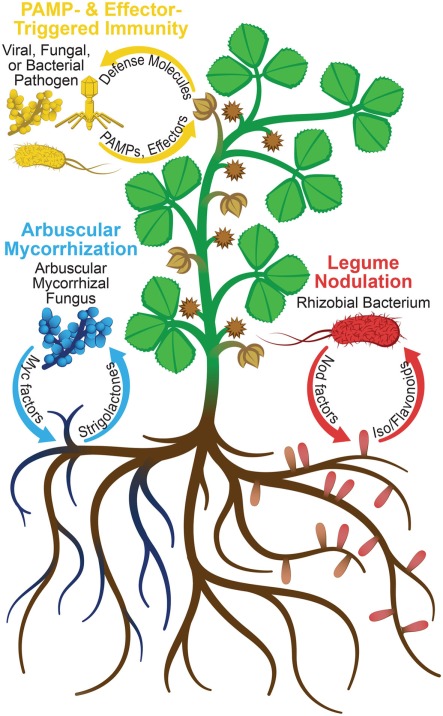
Understanding the interactions of plants with beneficial and pathogenic microbes is a promising avenue to improve crop productivity and agriculture sustainability. Proteomic techniques provide a unique angle to describe these intricate interactions and test hypotheses. The various approaches for proteomic analysis generally include protein/peptide separation and identification, but can also provide quantification and the characterization of post-translational modifications. In this review, we discuss how these techniques have been applied to the study of plant-microbe interactions. We also present some areas where this field of study would benefit from the utilization of newly developed methods that overcome previous limitations. Finally, we reinforce the need for expanding, integrating, and curating protein databases, as well as the benefits of combining protein-level datasets with those from genetic analyses and other high-throughput large-scale approaches for a systems-level view of plant-microbe interactions.

摘要

理解植物与有益和致病微生物的相互作用是提高作物生产力和农业可持续性的一个有前途的途径。蛋白质组学技术为描述这些复杂的相互作用和检验假设提供了一个独特的角度。各种蛋白质组学分析方法通常包括蛋白质/肽的分离和鉴定,但也可以提供定量和翻译后修饰的特征。在这篇综述中,我们讨论了这些技术如何应用于植物-微生物相互作用的研究。我们还介绍了一些领域,在这些领域中,利用克服以前局限性的新开发方法将使该研究领域受益。最后,我们强调了扩展、整合和管理蛋白质数据库的必要性,以及将蛋白质水平数据集与遗传分析和其他高通量大规模方法的数据相结合,以获得对植物-微生物相互作用的系统级视图的好处。
https://cdn.ncbi.nlm.nih.gov/pmc/blobs/4fbe/3355735/a30977a4364d/fpls-03-00044-g001.jpg

相似文献

1
Leveraging proteomics to understand plant-microbe interactions.利用蛋白质组学理解植物-微生物相互作用。
Front Plant Sci. 2012 Mar 8;3:44. doi: 10.3389/fpls.2012.00044. eCollection 2012.
2
Plant-Microbe Symbiosis: What Has Proteomics Taught Us?植物-微生物共生:蛋白质组学告诉了我们什么?
Proteomics. 2019 Aug;19(16):e1800105. doi: 10.1002/pmic.201800105.
3
Deciphering plant-microbe crosstalk through proteomics studies.通过蛋白质组学研究解析植物-微生物互作
Microbiol Res. 2021 Jan;242:126590. doi: 10.1016/j.micres.2020.126590. Epub 2020 Sep 28.
4
Enhancement of Plant Productivity in the Post-Genomics Era.后基因组时代植物生产力的提高
Curr Genomics. 2016 Aug;17(4):295-6. doi: 10.2174/138920291704160607182507.
5
Plant Microbe Interactions in Post Genomic Era: Perspectives and Applications.后基因组时代的植物-微生物相互作用:观点与应用
Front Microbiol. 2016 Sep 26;7:1488. doi: 10.3389/fmicb.2016.01488. eCollection 2016.
6
Comparative proteomic studies of root-microbe interactions.根际微生物相互作用的比较蛋白质组学研究
J Proteomics. 2009 Apr 13;72(3):353-66. doi: 10.1016/j.jprot.2008.12.006. Epub 2008 Dec 25.
7
Deciphering the Omics of Plant-Microbe Interaction: Perspectives and New Insights.解析植物-微生物相互作用组学:观点与新见解
Curr Genomics. 2020 Aug;21(5):343-362. doi: 10.2174/1389202921999200515140420.
8
Genomic dissection of host-microbe and microbe-microbe interactions for advanced plant breeding.用于先进植物育种的宿主-微生物和微生物-微生物相互作用的基因组剖析
Curr Opin Plant Biol. 2017 Apr;36:71-78. doi: 10.1016/j.pbi.2017.01.004. Epub 2017 Feb 23.
9
Integration of 'omics' data: does it lead to new insights into host-microbe interactions?组学数据的整合:是否会带来对宿主-微生物相互作用的新认识?
Future Microbiol. 2010 Feb;5(2):313-28. doi: 10.2217/fmb.10.1.
10
Translational Metabolomics of Head Injury: Exploring Dysfunctional Cerebral Metabolism with Ex Vivo NMR Spectroscopy-Based Metabolite Quantification头部损伤的转化代谢组学:基于体外核磁共振波谱的代谢物定量分析探索脑代谢功能障碍

引用本文的文献

1
A new biostimulant derived from soybean by-products enhances plant tolerance to abiotic stress triggered by ozone.一种从大豆副产物中提取的新型生物刺激素可增强植物对臭氧引发的非生物胁迫的耐受性。
BMC Plant Biol. 2024 Jun 19;24(1):580. doi: 10.1186/s12870-024-05290-3.
2
Beauveria bassiana rewires molecular mechanisms related to growth and defense in tomato.球孢白僵菌重编与番茄生长和防御相关的分子机制。
J Exp Bot. 2023 Aug 3;74(14):4225-4243. doi: 10.1093/jxb/erad148.
3
A Proteomics Insight into Advancements in the Rice-Microbe Interaction.水稻与微生物相互作用进展的蛋白质组学洞察

本文引用的文献

1
A comparative proteomic analysis of the early response to compatible symbiotic bacteria in the roots of a supernodulating soybean variety.超结瘤大豆品种根部与相容共生菌早期互作的比较蛋白质组学分析。
J Proteomics. 2012 Jan 4;75(3):819-32. doi: 10.1016/j.jprot.2011.09.022. Epub 2011 Oct 8.
2
Mass spectrometry in the postgenomic era.后基因组时代的质谱技术。
Annu Rev Biochem. 2011;80:239-46. doi: 10.1146/annurev-biochem-110810-095744.
3
Potential defense-related prenylated isoflavones in lactofen-induced soybean.在乳氟禾草灵诱导的大豆中潜在的与防御相关的异戊烯基化异黄酮。
Plants (Basel). 2023 Feb 28;12(5):1079. doi: 10.3390/plants12051079.
4
Proteomics as a New-Generation Tool for Studying Moulds Related to Food Safety and Quality.蛋白质组学作为一种新一代工具,用于研究与食品安全和质量相关的霉菌。
Int J Mol Sci. 2023 Mar 1;24(5):4709. doi: 10.3390/ijms24054709.
5
The Promises, Challenges, and Opportunities of Omics for Studying the Plant Holobiont.组学在研究植物全生物系统中的前景、挑战与机遇
Microorganisms. 2022 Oct 12;10(10):2013. doi: 10.3390/microorganisms10102013.
6
Current perspectives on the beneficial effects of soybean isoflavones and their metabolites on plants.大豆异黄酮及其代谢产物对植物有益作用的当前观点。
Food Sci Biotechnol. 2022 Apr 5;31(5):515-526. doi: 10.1007/s10068-022-01070-7. eCollection 2022 May.
7
Plant-Microbe Interaction: Aboveground to Belowground, from the Good to the Bad.植物-微生物相互作用:从地上到地下,从有益到有害。
Int J Mol Sci. 2021 Sep 27;22(19):10388. doi: 10.3390/ijms221910388.
8
Current Perspectives on the Beneficial Effects of Soybean Isoflavones and Their Metabolites for Humans.大豆异黄酮及其代谢产物对人类有益作用的当前观点
Antioxidants (Basel). 2021 Jun 30;10(7):1064. doi: 10.3390/antiox10071064.
9
Fusarium head blight in wheat: contemporary status and molecular approaches.小麦赤霉病:现状与分子方法
3 Biotech. 2020 Apr;10(4):172. doi: 10.1007/s13205-020-2158-x. Epub 2020 Mar 18.
10
The Apoplastic Secretome of During Interaction With Maize Roots Shows an Inhibition of Plant Defence and Scavenging Oxidative Stress Secreted Proteins.与玉米根相互作用期间的质外体分泌组显示出对植物防御的抑制和对氧化应激分泌蛋白的清除作用。
Front Plant Sci. 2018 Apr 5;9:409. doi: 10.3389/fpls.2018.00409. eCollection 2018.
Phytochemistry. 2011 Jun;72(9):875-81. doi: 10.1016/j.phytochem.2011.03.010. Epub 2011 Apr 7.
4
Phosphoproteome analysis of Lotus japonicus roots reveals shared and distinct components of symbiosis and defense.豌豆根磷酸蛋白质组分析揭示共生和防御的共有和独特组分。
Mol Plant Microbe Interact. 2011 Aug;24(8):932-7. doi: 10.1094/MPMI-09-10-0222.
5
A legume specific protein database (LegProt) improves the number of identified peptides, confidence scores and overall protein identification success rates for legume proteomics.豆科植物特异蛋白数据库(LegProt)可提高豆科植物蛋白质组学中鉴定肽段数量、置信分数和整体蛋白鉴定成功率。
Phytochemistry. 2011 Jul;72(10):1020-7. doi: 10.1016/j.phytochem.2011.01.026. Epub 2011 Feb 23.
6
Post-translation modification of proteins; methodologies and applications in plant sciences.蛋白质的翻译后修饰;在植物科学中的方法学和应用。
Phytochemistry. 2011 Jul;72(10):975-96. doi: 10.1016/j.phytochem.2011.01.029. Epub 2011 Feb 23.
7
Development of proteomics-based fungicides: new strategies for environmentally friendly control of fungal plant diseases.基于蛋白质组学的杀菌剂开发:真菌植物病害环境友好型防治新策略
Int J Mol Sci. 2011 Jan 21;12(1):795-816. doi: 10.3390/ijms12010795.
8
Quantitative plant proteomics.定量植物蛋白质组学。
Proteomics. 2011 Feb;11(4):756-75. doi: 10.1002/pmic.201000426. Epub 2011 Jan 18.
9
Gel-based and gel-free proteomic technologies.基于凝胶和非凝胶的蛋白质组学技术。
Methods Mol Biol. 2011;702:163-90. doi: 10.1007/978-1-61737-960-4_13.
10
PHOSIDA 2011: the posttranslational modification database.PHOSIDA 2011:翻译后修饰数据库。
Nucleic Acids Res. 2011 Jan;39(Database issue):D253-60. doi: 10.1093/nar/gkq1159. Epub 2010 Nov 16.