J. Craig Venter Institute, 9704 Medical Center Drive, Rockville, MD 20850, USA.
BMC Microbiol. 2012 May 30;12:88. doi: 10.1186/1471-2180-12-88.
Ureaplasma urealyticum (UUR) and Ureaplasma parvum (UPA) are sexually transmitted bacteria among humans implicated in a variety of disease states including but not limited to: nongonococcal urethritis, infertility, adverse pregnancy outcomes, chorioamnionitis, and bronchopulmonary dysplasia in neonates. There are 10 distinct serotypes of UUR and 4 of UPA. Efforts to determine whether difference in pathogenic potential exists at the ureaplasma serovar level have been hampered by limitations of antibody-based typing methods, multiple cross-reactions and poor discriminating capacity in clinical samples containing two or more serovars.
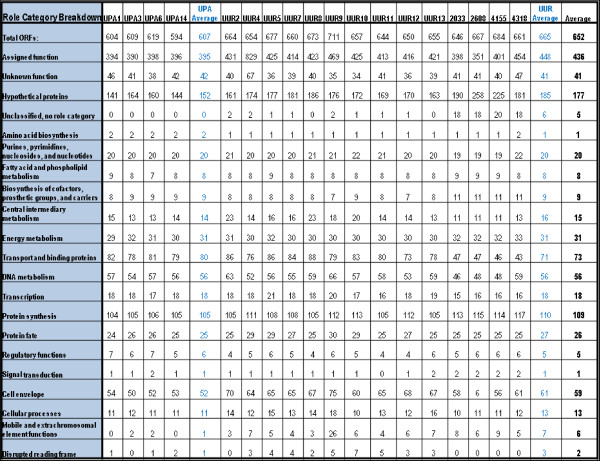
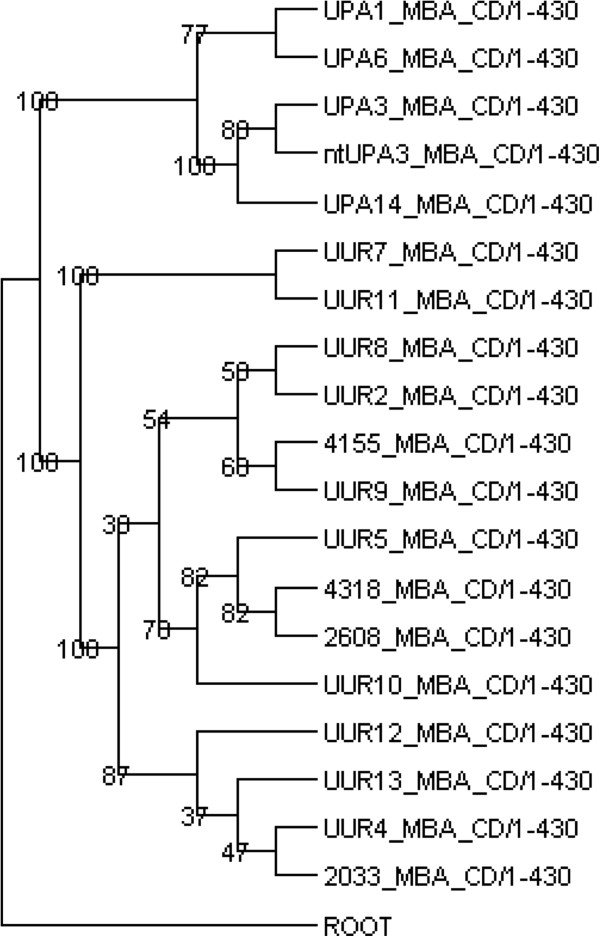
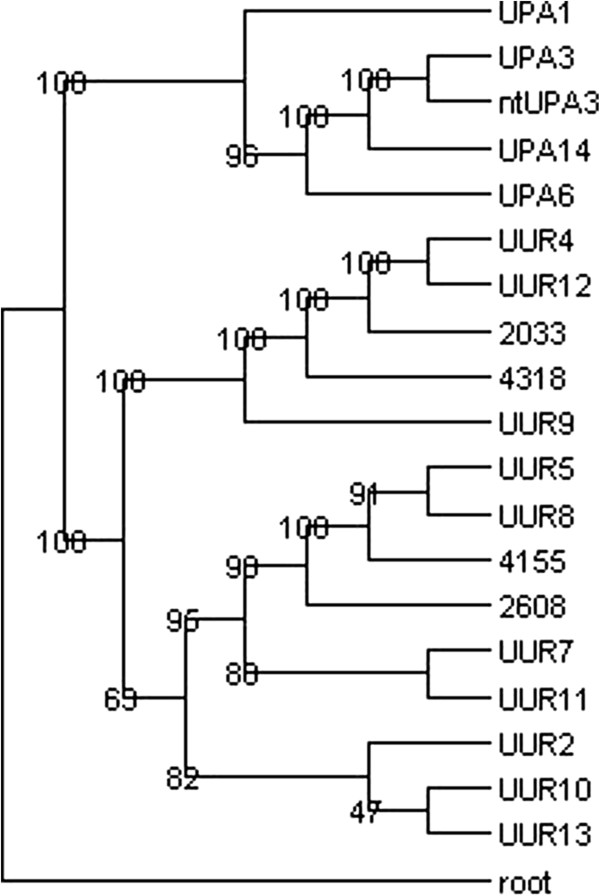
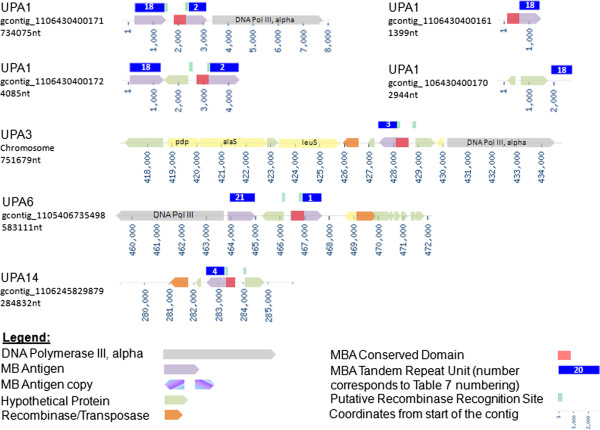
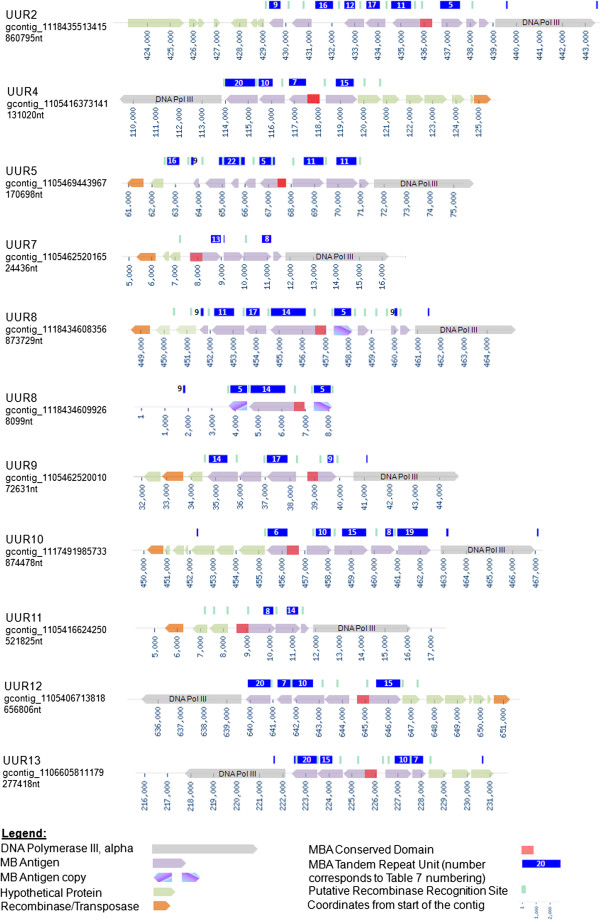
We determined the genome sequences of the American Type Culture Collection (ATCC) type strains of all UUR and UPA serovars as well as four clinical isolates of UUR for which we were not able to determine serovar designation. UPA serovars had 0.75-0.78 Mbp genomes and UUR serovars were 0.84-0.95 Mbp. The original classification of ureaplasma isolates into distinct serovars was largely based on differences in the major ureaplasma surface antigen called the multiple banded antigen (MBA) and reactions of human and animal sera to the organisms. Whole genome analysis of the 14 serovars and the 4 clinical isolates showed the mba gene was part of a large superfamily, which is a phase variable gene system, and that some serovars have identical sets of mba genes. Most of the differences among serovars are hypothetical genes, and in general the two species and 14 serovars are extremely similar at the genome level.
Comparative genome analysis suggests UUR is more capable of acquiring genes horizontally, which may contribute to its greater virulence for some conditions. The overwhelming evidence of extensive horizontal gene transfer among these organisms from our previous studies combined with our comparative analysis indicates that ureaplasmas exist as quasi-species rather than as stable serovars in their native environment. Therefore, differential pathogenicity and clinical outcome of a ureaplasmal infection is most likely not on the serovar level, but rather may be due to the presence or absence of potential pathogenicity factors in an individual ureaplasma clinical isolate and/or patient to patient differences in terms of autoimmunity and microbiome.
解脲脲原体(UUR)和微小脲原体(UPA)是人类中传播的细菌,与多种疾病状态有关,包括但不限于:非淋球菌性尿道炎、不孕、不良妊娠结局、绒毛膜羊膜炎和新生儿支气管肺发育不良。UUR 有 10 种不同的血清型,UPA 有 4 种。由于抗体分型方法的局限性、在包含两种或更多血清型的临床样本中的多种交叉反应和较差的区分能力,因此,确定在脲原体血清型水平上是否存在致病性差异的努力受到了阻碍。
我们确定了美国典型培养物保藏中心(ATCC)所有 UUR 和 UPA 血清型的标准株以及我们无法确定血清型的四个 UUR 临床分离株的基因组序列。UPA 血清型的基因组大小为 0.75-0.78 Mbp,而 UUR 血清型的基因组大小为 0.84-0.95 Mbp。最初将脲原体分离株分为不同血清型主要基于称为多带抗原(MBA)的主要脲原体表面抗原的差异以及人类和动物血清对这些生物体的反应。对 14 个血清型和 4 个临床分离株的全基因组分析表明,mba 基因是一个大型超家族的一部分,这是一个相变型基因系统,一些血清型具有相同的 mba 基因。血清型之间的大多数差异是假设基因,一般来说,两种生物和 14 种血清型在基因组水平上非常相似。
比较基因组分析表明,UUR 更有能力横向获得基因,这可能使其在某些情况下具有更高的毒力。我们之前的研究结合比较分析表明,这些生物体之间存在广泛的水平基因转移,这表明脲原体在其原生环境中不是作为稳定的血清型存在,而是作为准种存在。因此,脲原体感染的致病性和临床结果差异很可能不是在血清型水平上,而是可能归因于单个脲原体临床分离株中潜在致病性因素的存在与否,以及个体患者自身免疫和微生物组的差异。