Alere Wellbeing (Formerly Free & Clear, Inc.), Seattle, WA 98104-1139, USA.
J Environ Public Health. 2012;2012:314740. doi: 10.1155/2012/314740. Epub 2012 May 8.
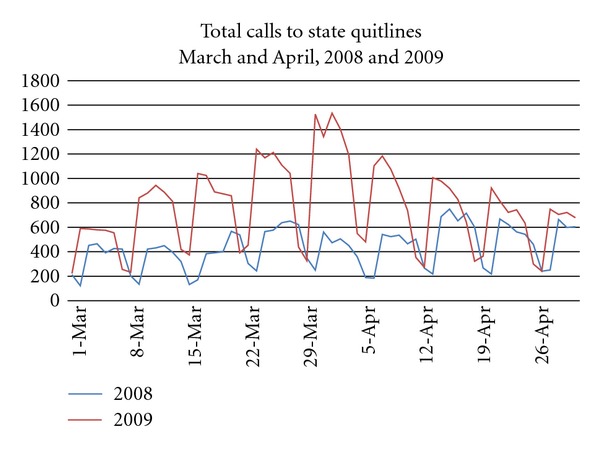
On April 1, 2009, the federal cigarette excise tax increased from 39 cents to $1.01 per pack.
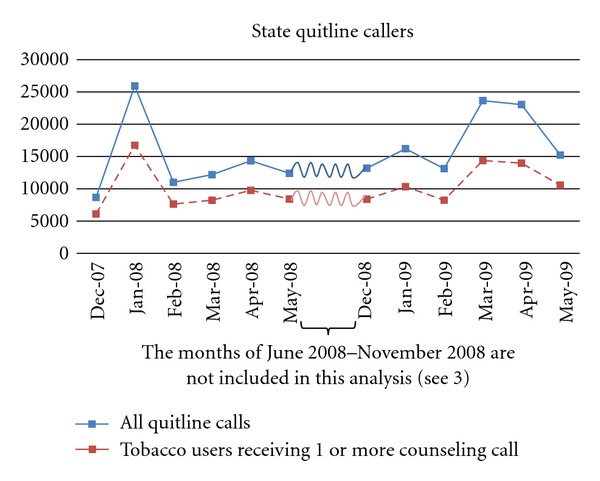
This study describes call volumes to 16 state quitlines, characteristics of callers and cessation outcomes before and after the tax.
Calls to the quitlines increased by 23.5% in 2009 and more whites, smokers ≥ 25 years of age, smokers of shorter duration, those with less education, and those who live with smokers called after (versus before) the tax. Quit rates at 7 months did not differ before versus after tax.
Descriptive analyses revealed that the federal excise tax on cigarettes was associated with increased calls to quitlines but multivariate analyses revealed no difference in quit rates. However, more callers at the same quit rate indicates an increase in total number of successful quitters. If revenue obtained from increased taxation on cigarettes is put into cessation treatment, then it is likely future excise taxes would have an even greater effect.
2009 年 4 月 1 日,联邦香烟消费税从每包 39 美分提高到 1.01 美元。
本研究描述了在税收前后,16 个州戒烟热线的呼叫量、呼叫者特征和戒烟效果。
2009 年,戒烟热线的呼叫量增加了 23.5%,更多的白人、25 岁及以上的吸烟者、吸烟时间较短的吸烟者、受教育程度较低的吸烟者以及与吸烟者同住的吸烟者在税收后(而非税收前)拨打了电话。税收前后 7 个月的戒烟率没有差异。
描述性分析显示,联邦香烟消费税的提高与戒烟热线的呼叫量增加有关,但多变量分析显示,戒烟率没有差异。然而,在相同的戒烟率下,更多的呼叫者意味着成功戒烟者的总数增加。如果从增加的香烟税收中获得的收入用于戒烟治疗,那么未来的消费税可能会产生更大的影响。