CSIRO Plant Industry, Glen Osmond, South Australia, Australia.
PLoS One. 2012;7(5):e37632. doi: 10.1371/journal.pone.0037632. Epub 2012 May 23.
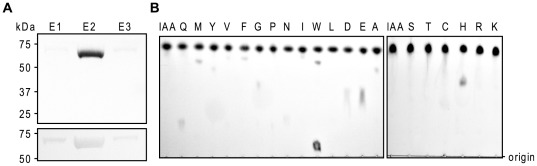
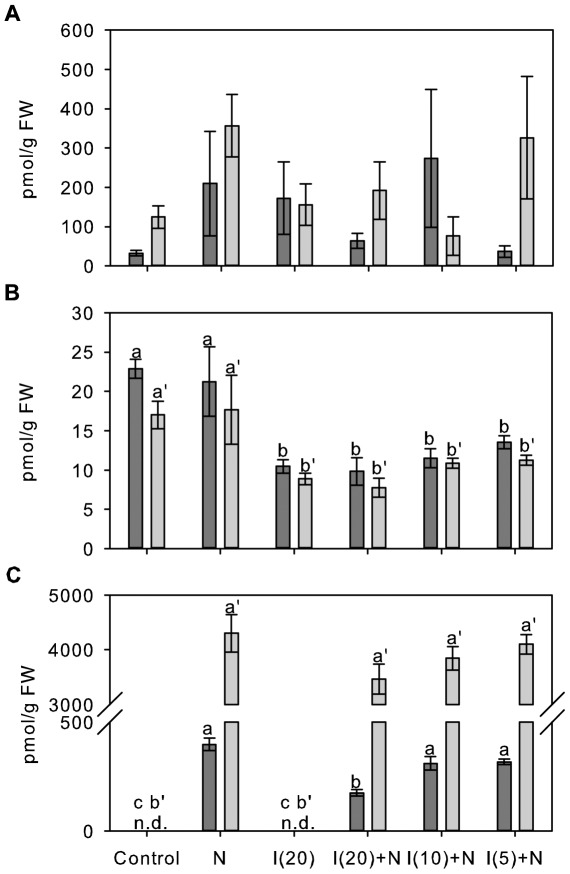
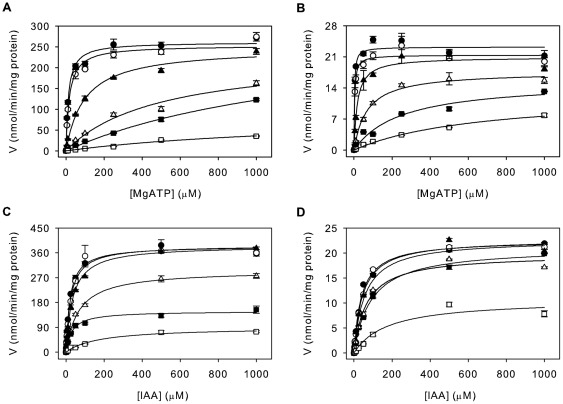
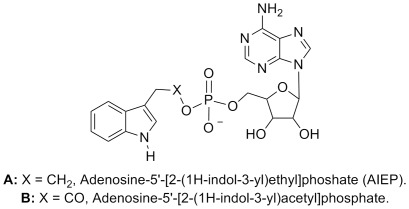
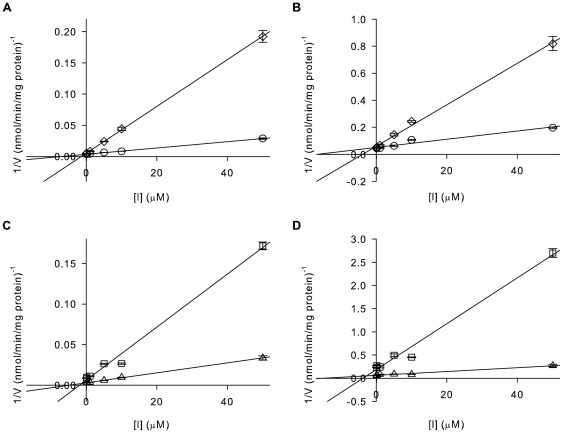
An important process for the regulation of auxin levels in plants is the inactivation of indole-3-acetic acid (IAA) by conjugation to amino acids. The conjugation reaction is catalysed by IAA-amido synthetases belonging to the family of GH3 proteins. Genetic approaches to study the biological significance of these enzymes have been hampered by large gene numbers and a high degree of functional redundancy. To overcome these difficulties a chemical approach based on the reaction mechanism of GH3 proteins was employed to design a small molecule inhibitor of IAA-amido synthetase activity. Adenosine-5'-[2-(1H-indol-3-yl)ethyl]phosphate (AIEP) mimics the adenylated intermediate of the IAA-conjugation reaction and was therefore proposed to compete with the binding of MgATP and IAA in the initial stages of catalysis. Two grapevine IAA-amido synthetases with different catalytic properties were chosen to test the inhibitory effects of AIEP in vitro. GH3-1 has previously been implicated in the grape berry ripening process and is restricted to two amino acid substrates, whereas GH3-6 conjugated IAA to 13 amino acids. AIEP is the most potent inhibitor of GH3 enzymes so far described and was shown to be competitive against MgATP and IAA binding to both enzymes with K(i)-values 17-68-fold lower than the respective K(m)-values. AIEP also exhibited in vivo activity in an ex planta test system using young grape berries. Exposure to 5-20 µM of the inhibitor led to decreased levels of the common conjugate IAA-Asp and reduced the accumulation of the corresponding Asp-conjugate upon treatment with a synthetic auxin. AIEP therefore represents a novel chemical probe with which to study IAA-amido synthetase function.
植物中生长素水平调节的一个重要过程是通过与氨基酸缀合使吲哚-3-乙酸(IAA)失活。缀合反应由属于 GH3 蛋白家族的 IAA 酰胺合成酶催化。遗传方法研究这些酶的生物学意义受到基因数量大且功能冗余度高的阻碍。为了克服这些困难,我们采用了一种基于 GH3 蛋白反应机制的化学方法来设计一种小分子 IAA 酰胺合成酶活性抑制剂。腺苷-5'-[2-(1H-吲哚-3-基)乙基]磷酸(AIEP)模拟 IAA 缀合反应的腺苷酰化中间产物,因此被提议与 MgATP 和 IAA 在催化的初始阶段竞争结合。选择了两种具有不同催化特性的葡萄 IAA 酰胺合成酶来体外测试 AIEP 的抑制作用。GH3-1 先前被认为参与了葡萄浆果成熟过程,并且仅局限于两种氨基酸底物,而 GH3-6 将 IAA 缀合到 13 种氨基酸上。AIEP 是迄今为止描述的最有效的 GH3 酶抑制剂,并且被证明是对两种酶的 MgATP 和 IAA 结合的竞争性抑制剂,其 K(i)值比各自的 K(m)值低 17-68 倍。AIEP 在使用幼葡萄浆果的离体测试系统中也表现出体内活性。暴露于 5-20 µM 的抑制剂会导致常见缀合物 IAA-Asp 的水平降低,并在用合成生长素处理时减少相应的 Asp 缀合物的积累。因此,AIEP 代表了一种新的化学探针,可用于研究 IAA 酰胺合成酶功能。