Regenerative Biology Program, Boston Biomedical Research Institute, Watertown, Massachusetts, United States of America.
PLoS One. 2012;7(5):e37929. doi: 10.1371/journal.pone.0037929. Epub 2012 May 23.
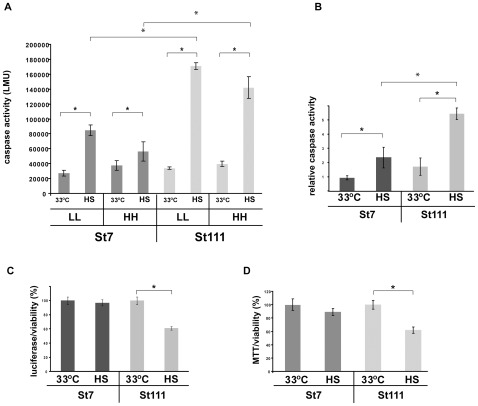
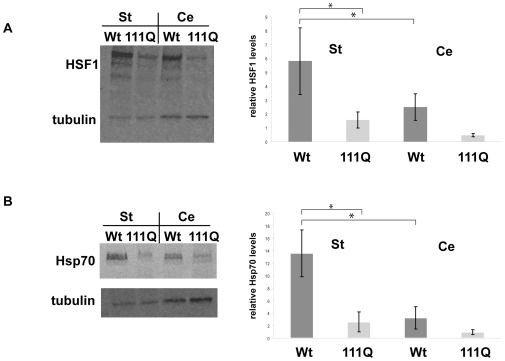
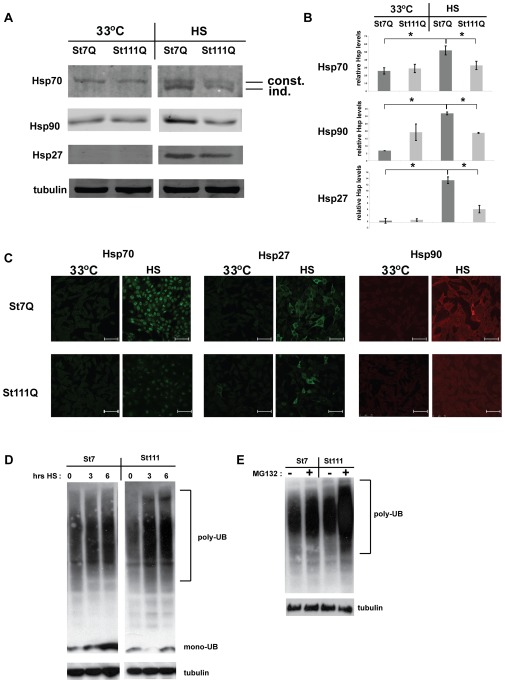
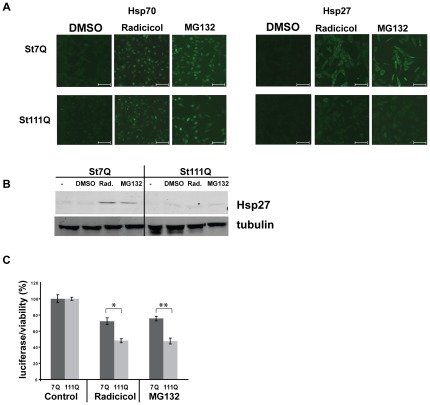
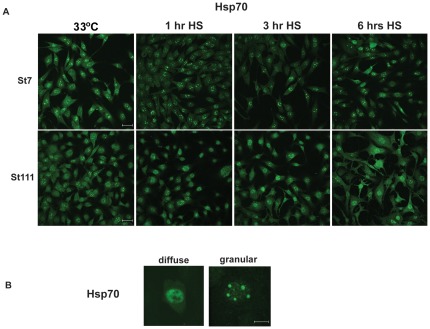
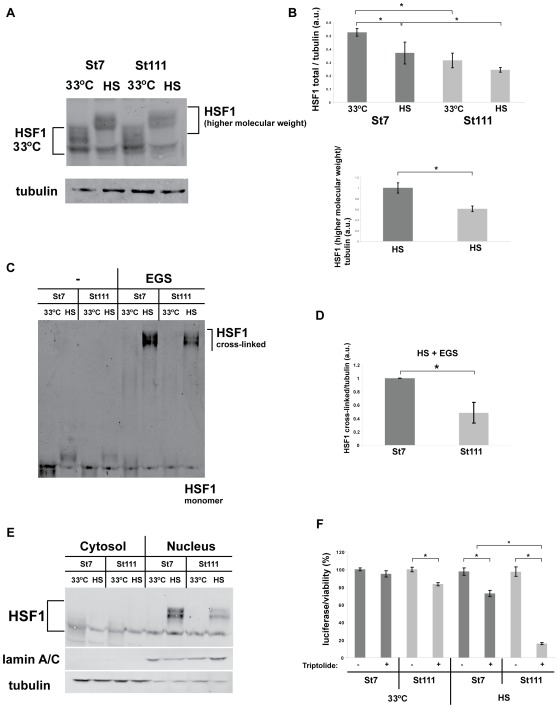
The molecular mechanisms by which polyglutamine (polyQ)-expanded huntingtin (Htt) causes neurodegeneration in Huntington's disease (HD) remain unclear. The malfunction of cellular proteostasis has been suggested as central in HD pathogenesis and also as a target of therapeutic interventions for the treatment of HD. We present results that offer a previously unexplored perspective regarding impaired proteostasis in HD. We find that, under non-stress conditions, the proteostatic capacity of cells expressing full length polyQ-expanded Htt is adequate. Yet, under stress conditions, the presence of polyQ-expanded Htt impairs the heat shock response, a key component of cellular proteostasis. This impaired heat shock response results in a reduced capacity to withstand the damage caused by cellular stress. We demonstrate that in cells expressing polyQ-expanded Htt the levels of heat shock transcription factor 1 (HSF1) are reduced, and, as a consequence, these cells have an impaired a heat shock response. Also, we found reduced HSF1 and HSP70 levels in the striata of HD knock-in mice when compared to wild-type mice. Our results suggests that full length, non-aggregated polyQ-expanded Htt blocks the effective induction of the heat shock response under stress conditions and may thus trigger the accumulation of cellular damage during the course of HD pathogenesis.
多聚谷氨酰胺(polyQ)扩展亨廷顿蛋白(Htt)导致亨廷顿病(HD)神经退行性变的分子机制仍不清楚。细胞蛋白稳态失调被认为是 HD 发病机制的核心,也是治疗 HD 的治疗干预靶点。我们提出的结果提供了一个关于 HD 中蛋白质稳态受损的全新视角。我们发现,在非应激条件下,表达全长多聚谷氨酰胺扩展的 Htt 的细胞的蛋白质稳态能力是充足的。然而,在应激条件下,多聚谷氨酰胺扩展的 Htt 的存在会损害热休克反应,这是细胞蛋白质稳态的关键组成部分。这种受损的热休克反应导致细胞无法承受细胞应激造成的损伤。我们证明,在表达多聚谷氨酰胺扩展的 Htt 的细胞中,热休克转录因子 1(HSF1)的水平降低,因此这些细胞的热休克反应受损。此外,与野生型小鼠相比,HD 基因敲入小鼠的纹状体中 HSF1 和 HSP70 的水平降低。我们的研究结果表明,全长、非聚集的多聚谷氨酰胺扩展的 Htt 可阻断应激条件下热休克反应的有效诱导,从而可能在 HD 发病过程中引发细胞损伤的积累。