Department of Biochemistry, University of Texas Southwestern Medical Center, Dallas, TX 75390, USA.
Science. 2012 Jul 13;337(6091):189-94. doi: 10.1126/science.1222804. Epub 2012 May 31.
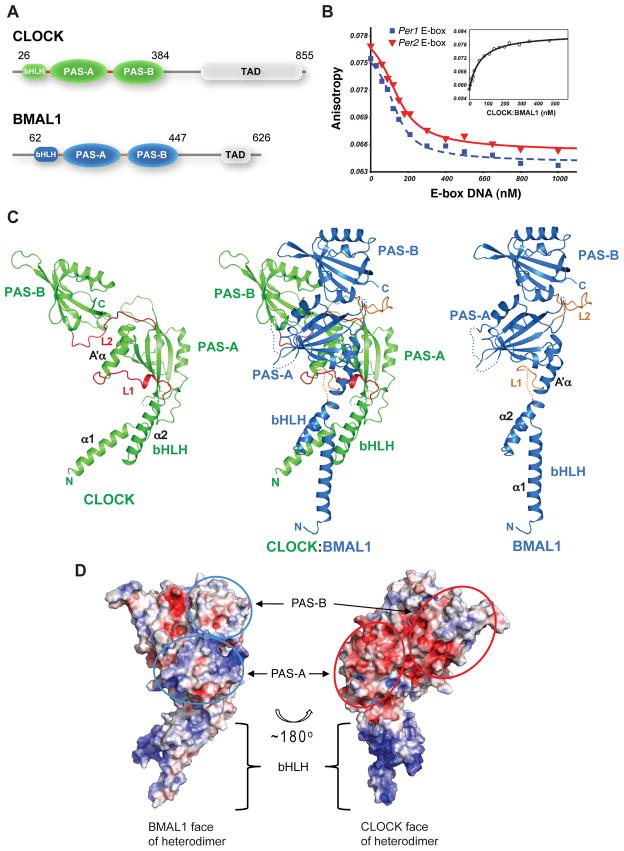
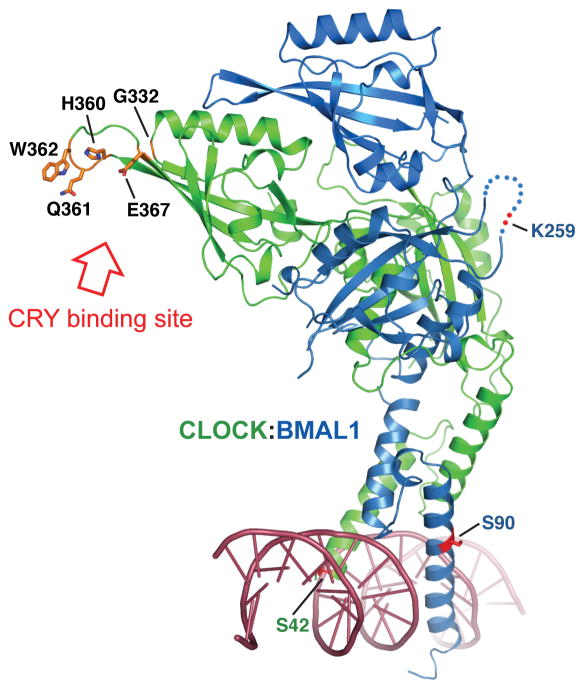
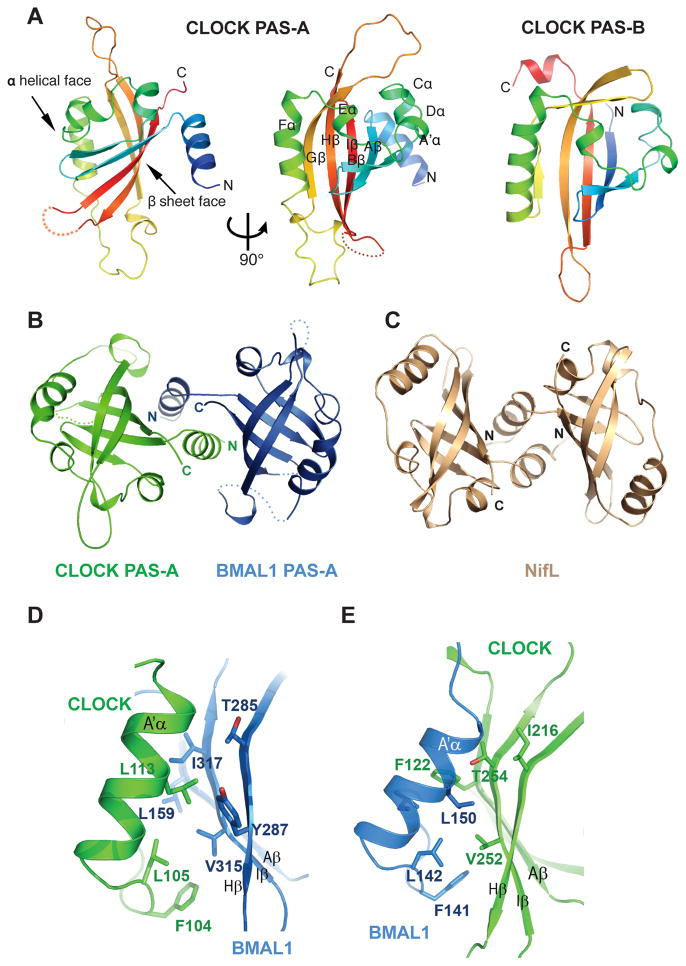
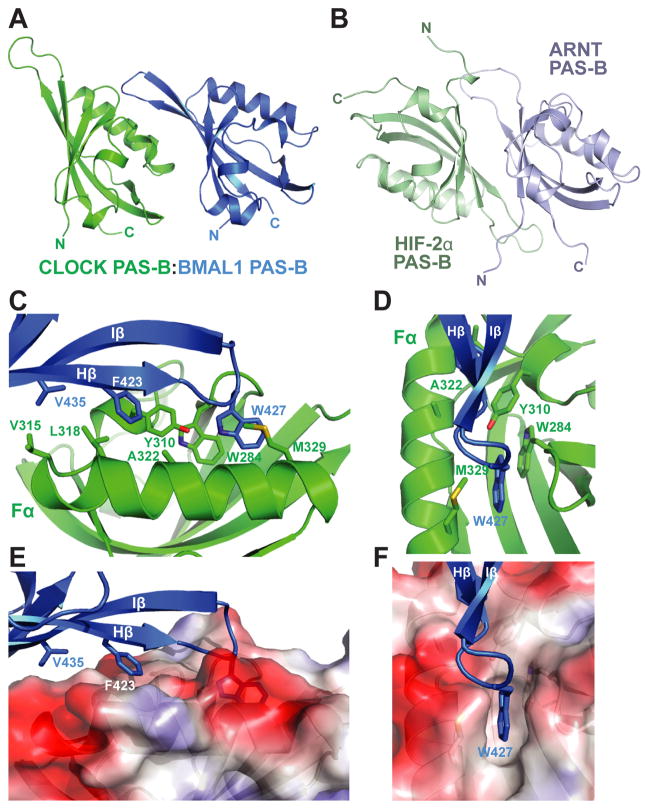
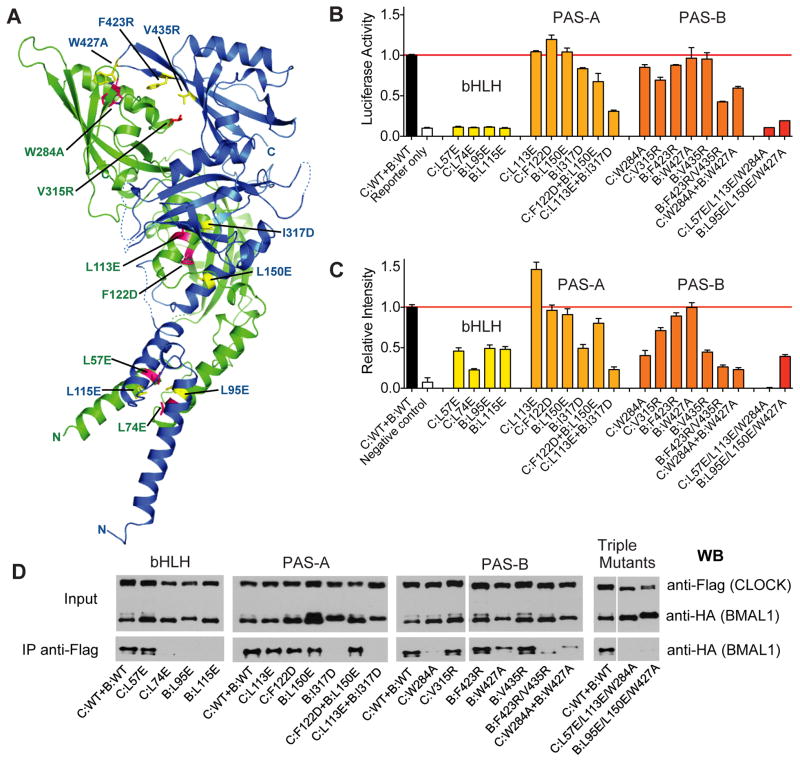
The circadian clock in mammals is driven by an autoregulatory transcriptional feedback mechanism that takes approximately 24 hours to complete. A key component of this mechanism is a heterodimeric transcriptional activator consisting of two basic helix-loop-helix PER-ARNT-SIM (bHLH-PAS) domain protein subunits, CLOCK and BMAL1. Here, we report the crystal structure of a complex containing the mouse CLOCK:BMAL1 bHLH-PAS domains at 2.3 Å resolution. The structure reveals an unusual asymmetric heterodimer with the three domains in each of the two subunits--bHLH, PAS-A, and PAS-B--tightly intertwined and involved in dimerization interactions, resulting in three distinct protein interfaces. Mutations that perturb the observed heterodimer interfaces affect the stability and activity of the CLOCK:BMAL1 complex as well as the periodicity of the circadian oscillator. The structure of the CLOCK:BMAL1 complex is a starting point for understanding at an atomic level the mechanism driving the mammalian circadian clock.
哺乳动物的生物钟是由一个自动调节的转录反馈机制驱动的,这个机制大约需要 24 小时才能完成。这个机制的一个关键组成部分是一个由两个基本螺旋-环-螺旋 PER-ARNT-SIM(bHLH-PAS)结构域蛋白亚基 CLOCK 和 BMAL1 组成的异二聚体转录激活剂。在这里,我们报告了一个包含小鼠 CLOCK:BMAL1 bHLH-PAS 结构域的复合物的晶体结构,分辨率为 2.3 Å。该结构揭示了一个不寻常的不对称异二聚体,其中每个亚基的三个结构域——bHLH、PAS-A 和 PAS-B——紧密交织,并参与二聚化相互作用,形成三个独特的蛋白质界面。破坏观察到的异二聚体界面的突变会影响 CLOCK:BMAL1 复合物的稳定性和活性,以及生物钟的周期性。CLOCK:BMAL1 复合物的结构为从原子水平理解驱动哺乳动物生物钟的机制提供了一个起点。