Medical Faculty, Department of Neurophysiology, Ruhr University Bochum Bochum, Germany.
Front Integr Neurosci. 2012 May 23;6:23. doi: 10.3389/fnint.2012.00023. eCollection 2012.
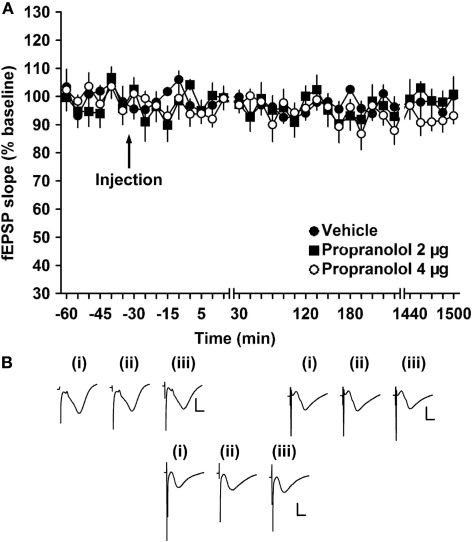
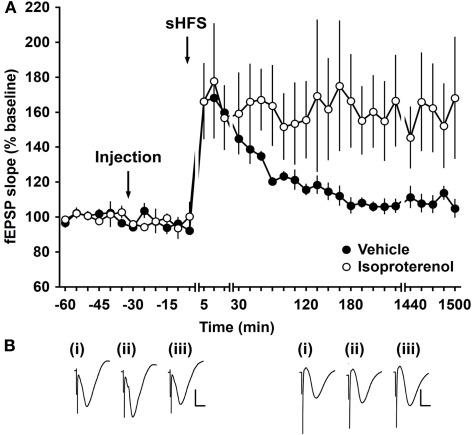
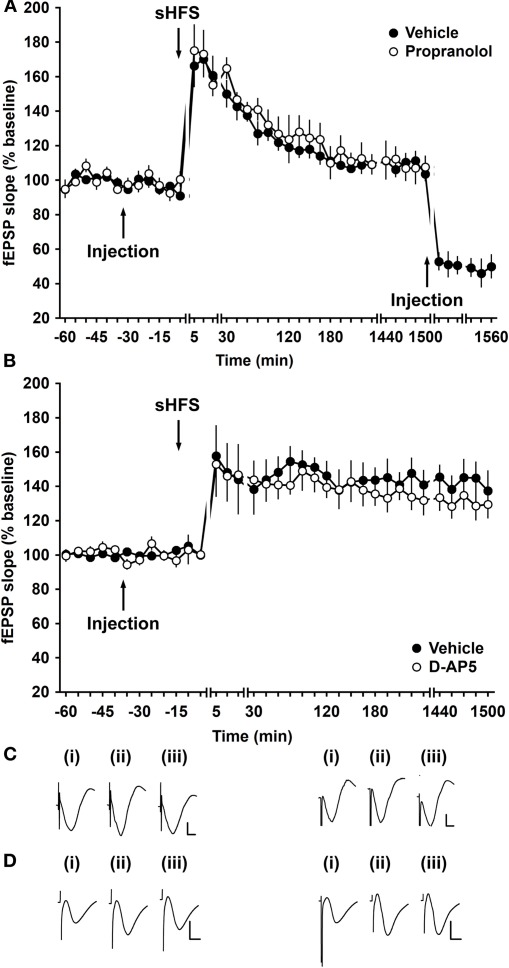
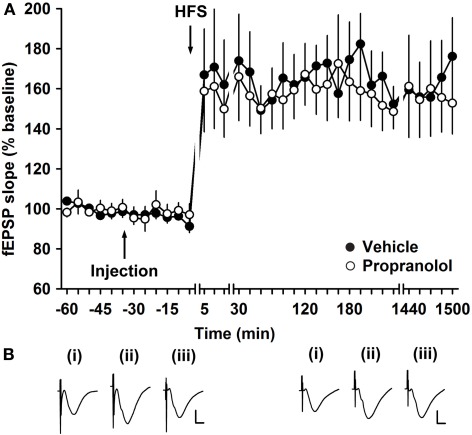
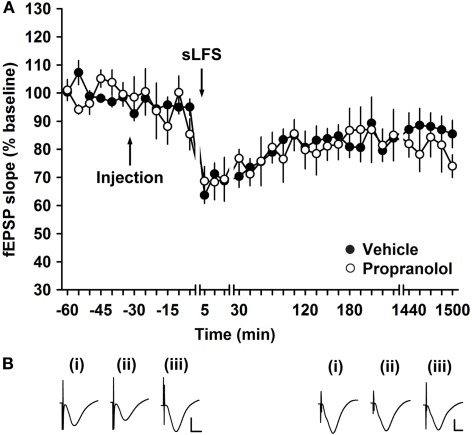
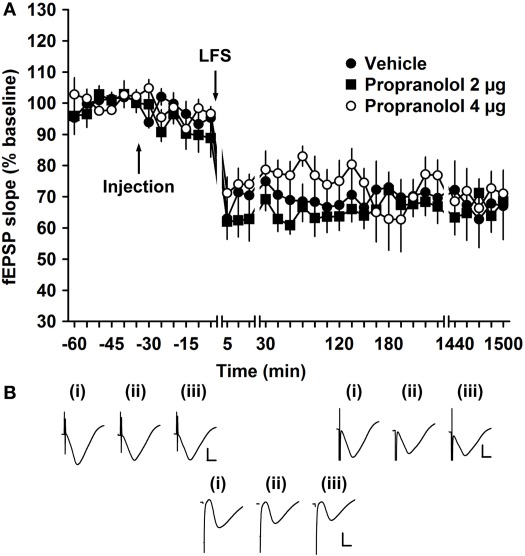
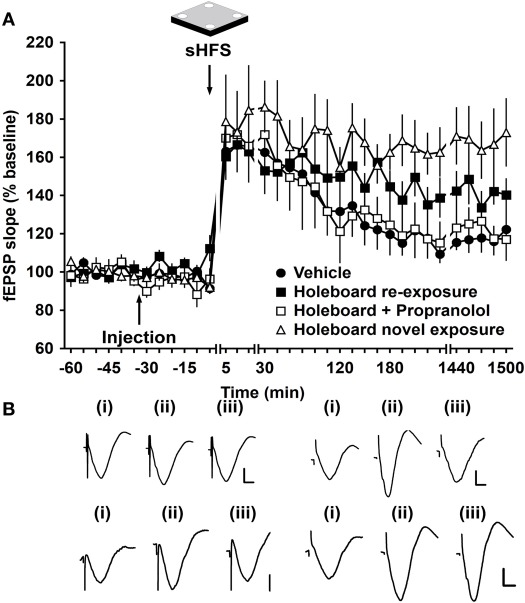
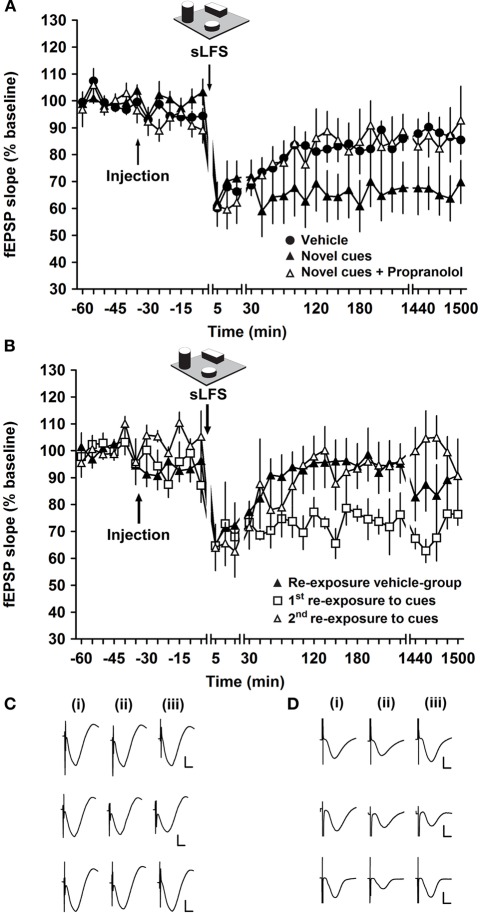
Learning-facilitated plasticity refers to hippocampal synaptic plasticity that is facilitated by novel spatial learning events. Both long-term potentiation (LTP) and long-term depression (LTD) are facilitated by novel hippocampus-dependent learning. This has important ramifications for our understanding of how the hippocampus encodes memory. One structure that is rarely studied in vivo, but is believed to be crucially important for working and long-term memory processing is the hippocampal CA3 region. Whereas learning-facilitated plasticity has been described in this structure, the mechanisms underlying this phenomenon have not been explored. The noradrenergic system plays an important role in arousal and qualification of new information as salient. It regulates synaptic plasticity in the dentate gyrus and CA1, but nothing is known about the regulation by the noradrenergic system of synaptic plasticity in the CA3 region. We explored whether β-adrenergic receptors contribute to learning-facilitated plasticity at mossy fiber (mf)-CA3 synapses of behaving rats. We found that receptor antagonism had no effect on basal synaptic transmission, short-term potentiation (STP), short-term depression, LTP, or LTD, that were electrically induced by patterned afferent stimulation. We found, however, that both learning-facilitated LTP and LTD were prevented by antagonism of β-adrenergic receptors, whereas the agonist isoproterenol facilitated STP into LTP. Thus, learning-facilitated and electrically-induced plasticity may not share the same prerequisites. These results support that the mf synapse engages in a distinct aspect of encoding of spatial information that involves both LTP and LTD. Furthermore, changes in arousal that are coupled to new learning are associated with activation of hippocampal β-adrenergic receptors that in turn comprise a key element in this type of information acquisition and processing by the CA3 region.
学习促进的可塑性是指海马突触可塑性,它由新的空间学习事件促进。长时程增强(LTP)和长时程抑制(LTD)都由新的海马依赖性学习促进。这对我们理解海马如何编码记忆有重要意义。有一种结构在体内很少被研究,但被认为对工作记忆和长期记忆处理至关重要,那就是海马 CA3 区。虽然在这个结构中已经描述了学习促进的可塑性,但这种现象的机制尚未被探索。去甲肾上腺素能系统在唤醒和将新信息定性为显著方面起着重要作用。它调节齿状回和 CA1 的突触可塑性,但关于去甲肾上腺素能系统对 CA3 区突触可塑性的调节还一无所知。我们探讨了β-肾上腺素受体是否有助于行为大鼠的苔藓纤维(mf)-CA3 突触的学习促进可塑性。我们发现,受体拮抗剂对基础突触传递、短期增强(STP)、短期抑制、LTP 或 LTD 没有影响,这些都是通过模式传入刺激电诱导的。然而,我们发现,β-肾上腺素受体拮抗剂不仅阻止了学习促进的 LTP 和 LTD,而且激动剂异丙肾上腺素还将 STP 促进为 LTP。因此,学习促进的可塑性和电诱导的可塑性可能没有共同的前提条件。这些结果支持 mf 突触参与了空间信息编码的一个独特方面,涉及 LTP 和 LTD。此外,与新学习相关的唤醒变化与海马β-肾上腺素受体的激活有关,而β-肾上腺素受体反过来又构成 CA3 区域获取和处理这种类型信息的关键要素。