Moeller F Gerard, Steinberg Joel L, Lane Scott D, Kjome Kimberly L, Ma Liangsuo, Ferre Sergi, Schmitz Joy M, Green Charles E, Bandak Stephen I, Renshaw Perry F, Kramer Larry A, Narayana Ponnada A
Department of Psychiatry and Behavioral Sciences, Center for Neurobehavioral Research on Addiction, University of Texas Health Science Center at Houston Houston, TX, USA.
Front Psychiatry. 2012 May 28;3:44. doi: 10.3389/fpsyt.2012.00044. eCollection 2012.
Positron Emission Tomography imaging studies provide evidence of reduced dopamine function in cocaine dependent subjects in the striatum, which is correlated with prefrontal cortical glucose metabolism, particularly in the orbitofrontal cortex. However, whether enhancement of dopamine in the striatum in cocaine dependent subjects would be associated with changes in prefrontal cortical brain activation is unknown. One novel class of medications that enhance dopamine function via heteromer formation with dopamine receptors in the striatum is the selective adenosine A(2A) receptor antagonists. This study sought to determine the effects administration of the selective adenosine A(2A) receptor antagonist SYN115 on brain function in cocaine dependent subjects.
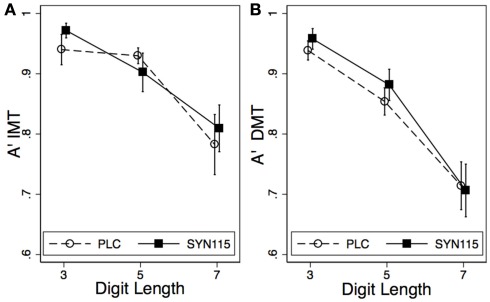
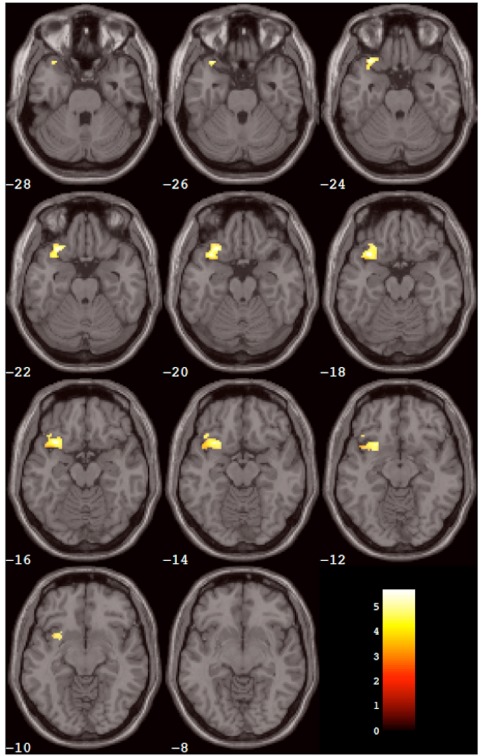
METHODOLOGY/PRINCIPLE FINDINGS: Twelve cocaine dependent subjects underwent two fMRI scans (one after a dose of placebo and one after a dose of 100 mg of SYN115) while performing a working memory task with three levels of difficulty (3, 5, and 7 digits). fMRI results showed that for 7-digit working memory activation there was significantly greater activation from SYN115 compared to placebo in portions of left (L) lateral orbitofrontal cortex, L insula, and L superior and middle temporal pole.
CONCLUSION/SIGNIFICANCE: These findings are consistent with enhanced dopamine function in the striatum in cocaine dependent subjects via blockade of adenosine A(2A) receptors producing increased brain activation in the orbitofrontal cortex and other cortical regions. This suggests that at least some of the changes in brain activation in prefrontal cortical regions in cocaine dependent subjects may be related to altered striatal dopamine function, and that enhancement of dopamine function via adenosine A(2A) receptor blockade could be explored further for amelioration of neurobehavioral deficits associated with chronic cocaine use.
正电子发射断层扫描成像研究表明,可卡因依赖者纹状体中的多巴胺功能降低,这与前额叶皮质葡萄糖代谢相关,尤其是眶额皮质。然而,可卡因依赖者纹状体中多巴胺的增强是否会与前额叶皮质脑激活的变化相关尚不清楚。一类通过与纹状体中的多巴胺受体形成异聚体来增强多巴胺功能的新型药物是选择性腺苷A(2A)受体拮抗剂。本研究旨在确定选择性腺苷A(2A)受体拮抗剂SYN115对可卡因依赖者脑功能的影响。
方法/主要发现:12名可卡因依赖者在进行三种难度水平(3、5和7位数)的工作记忆任务时接受了两次功能磁共振成像扫描(一次在服用安慰剂后,一次在服用100毫克SYN115后)。功能磁共振成像结果显示,对于7位数的工作记忆激活,与安慰剂相比,SYN115在左侧外侧眶额皮质、岛叶以及左侧颞上极和颞中极的部分区域有显著更强的激活。
结论/意义:这些发现与通过阻断腺苷A(2A)受体增强可卡因依赖者纹状体中的多巴胺功能,从而在眶额皮质和其他皮质区域产生增强的脑激活一致。这表明,可卡因依赖者前额叶皮质区域脑激活的至少一些变化可能与纹状体多巴胺功能改变有关,并且通过腺苷A(2A)受体阻断增强多巴胺功能可能会被进一步探索,以改善与长期使用可卡因相关的神经行为缺陷。