Biological Control of Insects Research Laboratory, Agricultural Research Service, United States Department of Agriculture Columbia, MO, USA.
Front Endocrinol (Lausanne). 2011 Dec 30;2:105. doi: 10.3389/fendo.2011.00105. eCollection 2011.
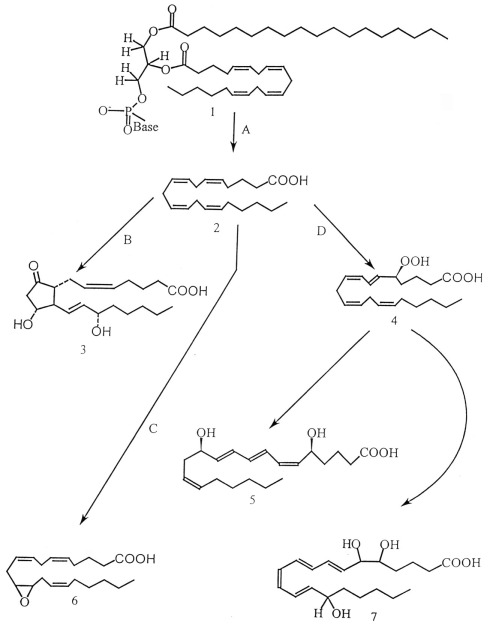
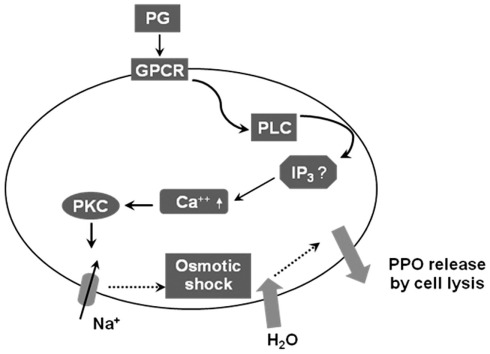
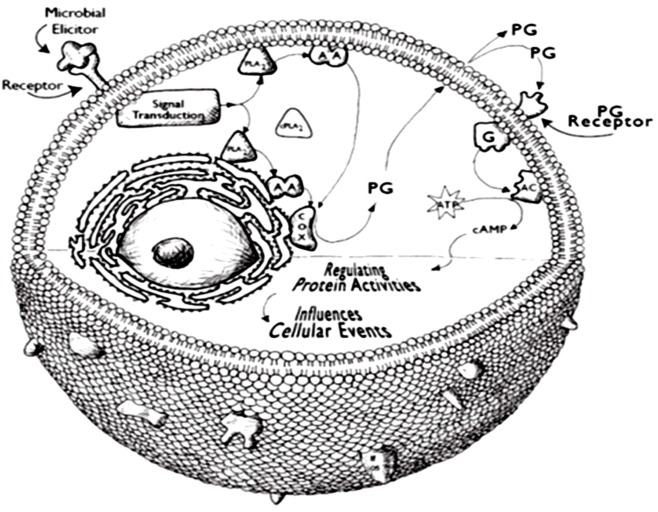
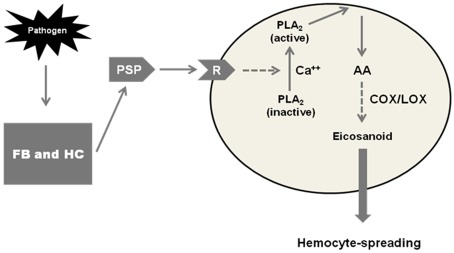
We treat the biological significance of prostaglandins (PGs) and their known receptors in insect biology. PGs and related eicosanoids are oxygenated derivatives of arachidonic acid (AA) and two other C20 polyunsaturated fatty acids. PGs are mostly appreciated in the context of biomedicine, but a growing body of literature indicates the biological significance of these compounds extends throughout the animal kingdom, and possibly beyond. The actions of most PGs are mediated by specific receptors. Biomedical research has discovered a great deal of knowledge about PG receptors in mammals, including their structures, pharmacology, molecular biology and cellular locations. Studies of PG receptors in insects lag behind the biomedical background, however, recent results hold the promise of accelerated research in this area. A PG receptor has been identified in a class of lepidopteran hemocytes and experimentally linked to the release of prophenoloxidase. PGs act in several crucial areas of insect biology. In reproduction, a specific PG, PGE(2), releases oviposition behavior in most crickets and a few other insect species; PGs also mediate events in egg development in some species, which may represent all insects. PGs play major roles in modulating fluid secretion in Malpighian tubules, rectum and salivary glands, although, again, this has been studied in only a few insect species that may represent the Class. Insect immunity is a very complex defense system. PGs and other eicosanoids mediate a large number of immune reactions to infection and invasion. We conclude that research into PGs and their receptors in insects will lead to important advances in our understanding of insect biology.
我们探讨了前列腺素(PGs)及其在昆虫生物学中已知受体的生物学意义。PGs 和相关的类二十烷酸是花生四烯酸(AA)和另外两种 C20 多不饱和脂肪酸的氧化衍生物。PGs 在生物医学领域中广为人知,但越来越多的文献表明,这些化合物的生物学意义不仅局限于动物界,甚至可能超越了动物界。大多数 PGs 的作用是通过特定的受体介导的。生物医学研究已经发现了哺乳动物 PG 受体的大量知识,包括它们的结构、药理学、分子生物学和细胞定位。然而,昆虫 PG 受体的研究落后于生物医学背景,尽管最近的研究结果有望加速这一领域的研究。在一类鳞翅目血细胞中已经鉴定出一种 PG 受体,并通过实验将其与酚氧化酶原的释放联系起来。PGs 在昆虫生物学的几个关键领域发挥作用。在生殖方面,一种特定的 PG,PGE(2),在大多数蟋蟀和一些其他昆虫物种中释放产卵行为;PGs 也在某些物种的卵发育中发挥作用,这可能代表所有昆虫。PGs 在调节马氏管、直肠和唾液腺的液体分泌中起主要作用,尽管这仅在少数昆虫物种中进行了研究,这些物种可能代表了昆虫纲。昆虫免疫是一个非常复杂的防御系统。PGs 和其他类二十烷酸介导了大量对感染和入侵的免疫反应。我们得出结论,对昆虫 PGs 及其受体的研究将有助于我们深入了解昆虫生物学。