Translational Research Division, International Vaccine Institute, Seoul, Korea.
PLoS One. 2012;7(5):e36930. doi: 10.1371/journal.pone.0036930. Epub 2012 May 25.
The gold standard for the diagnosis of cholera is stool culture, but this requires laboratory facilities and takes at least 24 hours. A rapid diagnostic test (RDT) that can be used by minimally trained staff at treatment centers could potentially improve the reporting and management of cholera outbreaks.
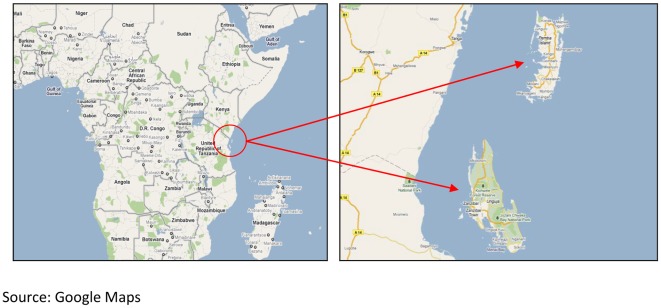
We evaluated the Crystal VC™ RDT under field conditions in Zanzibar in 2009. Patients presenting to treatment centers with watery diarrhea provided a stool sample for rapid diagnostic testing. Results were compared to stool culture performed in a reference laboratory. We assessed the overall performance of the RDT and evaluated whether previous intake of antibiotics, intravenous fluids, location of testing, and skill level of the technician affected the RDT results.
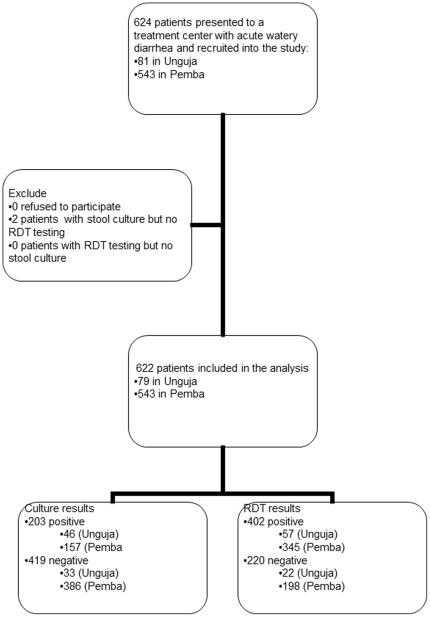
We included stool samples from 624 patients. Compared to culture, the overall sensitivity of the RDT was 93.1% (95%CI: 88.7 to 96.2%), specificity was 49.2% (95%CI: 44.3 to 54.1%), the positive predictive value was 47.0% (95%CI: 42.1 to 52.0%) and the negative predictive value was 93.6% (95%CI: 89.6 to 96.5%). The overall false positivity rate was 50.8% (213/419); fieldworkers frequently misread very faint test lines as positive.
The observed sensitivity of the Crystal VC RDT evaluated was similar compared to earlier versions, while specificity was poorer. The current version of the RDT could potentially be used as a screening tool in the field. Because of the high proportion of false positive results when field workers test stool specimens, positive results will need to be confirmed with stool culture.
诊断霍乱的金标准是粪便培养,但这需要实验室设施,并且至少需要 24 小时。一种可由治疗中心受过最低限度培训的工作人员使用的快速诊断检测(RDT)有可能改善霍乱暴发的报告和管理。
我们于 2009 年在桑给巴尔的实地条件下评估了 Crystal VC™ RDT。有水样腹泻症状的患者在治疗中心提供粪便样本进行快速诊断检测。结果与在参考实验室进行的粪便培养进行了比较。我们评估了 RDT 的总体性能,并评估了先前摄入的抗生素、静脉补液、检测地点和技术人员的技能水平是否会影响 RDT 结果。
我们纳入了 624 例粪便样本。与培养相比,RDT 的总体敏感性为 93.1%(95%CI:88.7 至 96.2%),特异性为 49.2%(95%CI:44.3 至 54.1%),阳性预测值为 47.0%(95%CI:42.1 至 52.0%),阴性预测值为 93.6%(95%CI:89.6 至 96.5%)。总的假阳性率为 50.8%(213/419);现场工作人员经常将非常微弱的检测线误读为阳性。
评估的 Crystal VC RDT 的观察敏感性与早期版本相似,而特异性较差。目前版本的 RDT 有可能在现场用作筛选工具。由于现场工作人员检测粪便标本时假阳性结果的比例较高,阳性结果需要用粪便培养来确认。