Thorpe Lilian, Pahwa Punam, Bennett Vernon, Kirk Andrew, Nanson Josephine
Departments of Community Health & Epidemiology and Psychiatry, College of Medicine, University of Saskatchewan, Saskatoon, SK, Canada S7N 0W8.
Curr Gerontol Geriatr Res. 2012;2012:943890. doi: 10.1155/2012/943890. Epub 2012 May 16.
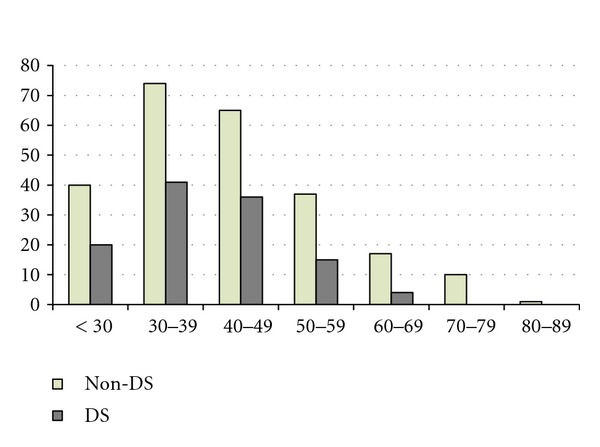
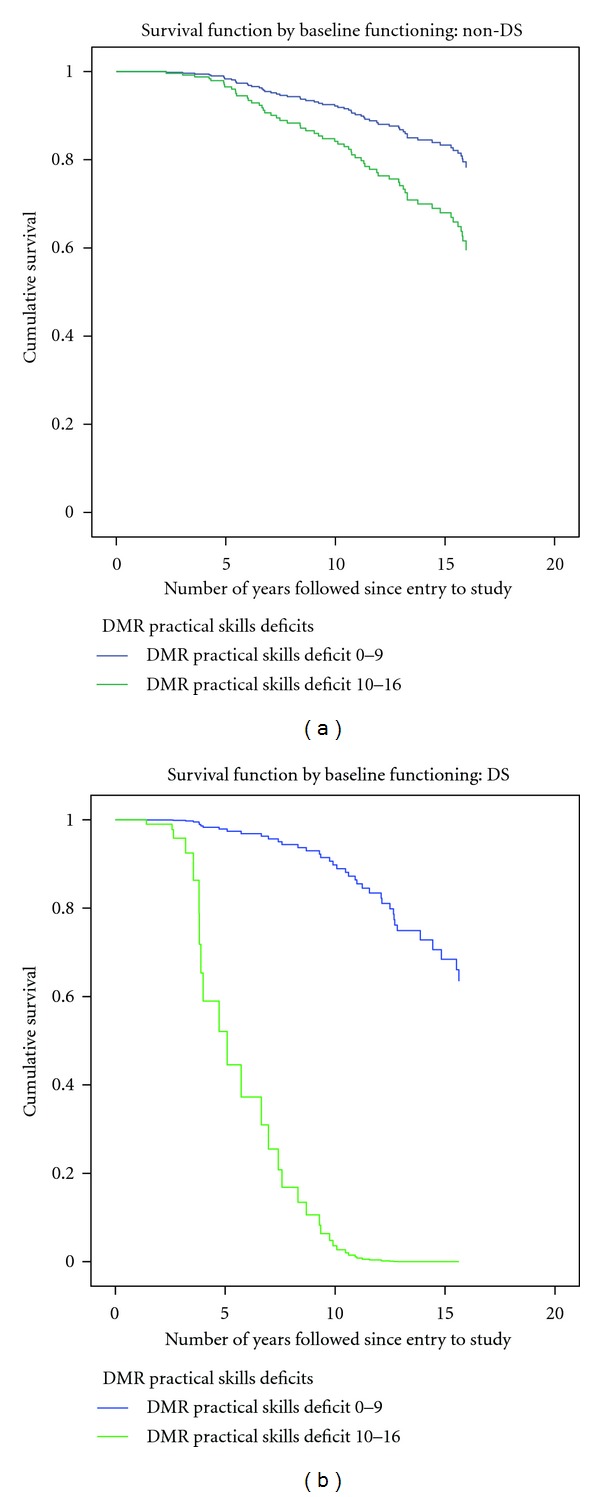
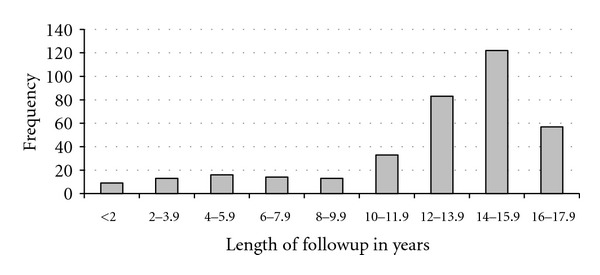
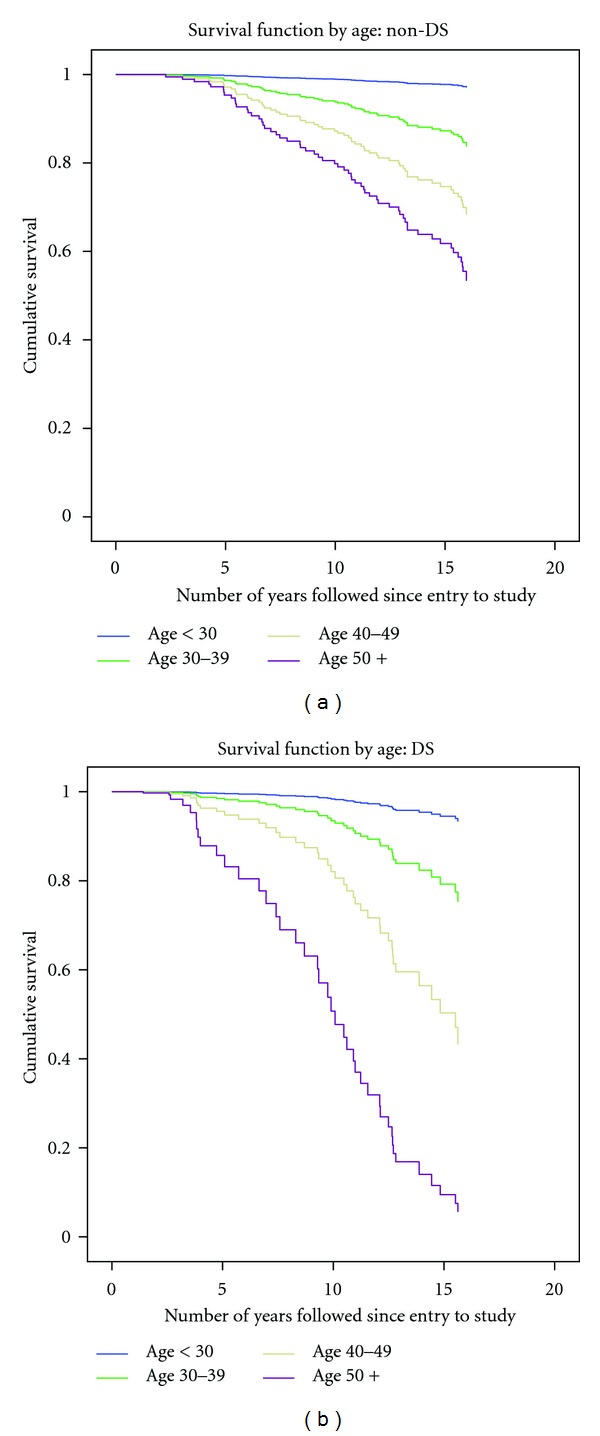
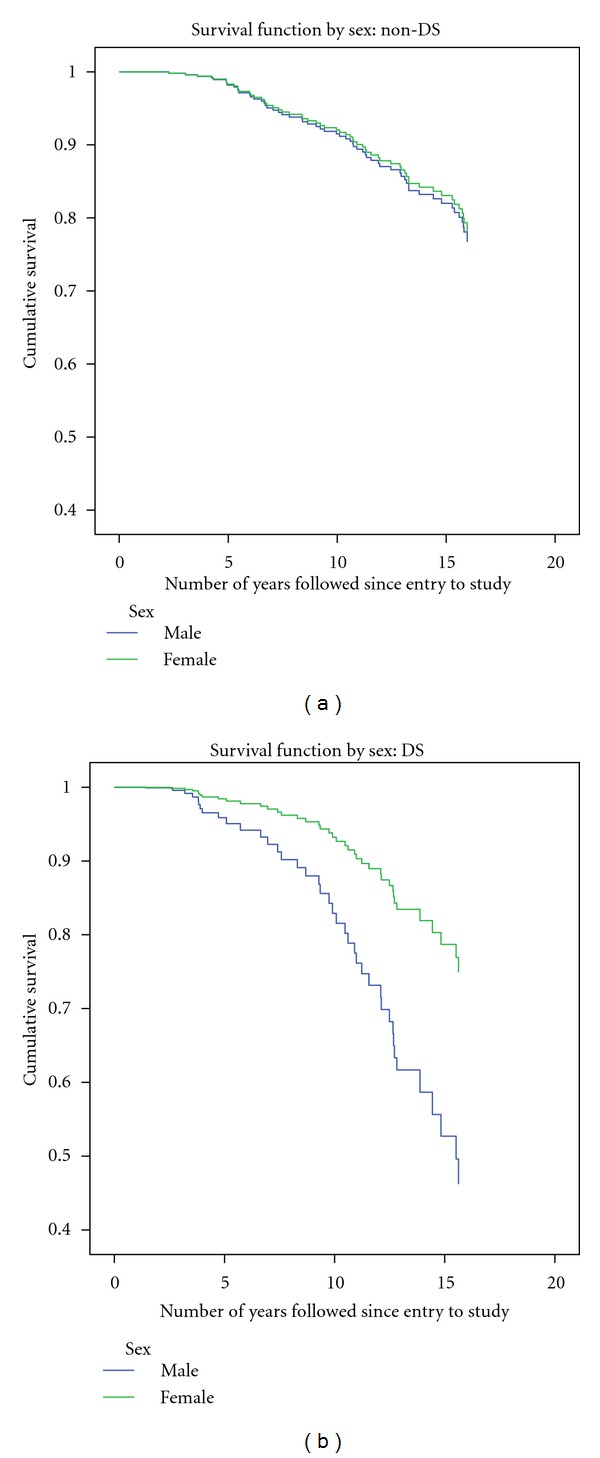
Background. Mood, baseline functioning, and cognitive abilities as well as psychotropic medications may contribute to mortality in adults with and without Down Syndrome (DS). Methods. Population-based (nonclinical), community-dwelling adults with intellectual disabilities (IDs) were recruited between 1995 and 2000, assessed individually for 1-4 times, and then followed by yearly phone calls. Results. 360 participants (116 with DS and 244 without DS) were followed for an average of 12.9 years (range 0-16.1 years as of July 2011). 108 people died during the course of the followup, 65 males (31.9% of all male participants) and 43 females (27.6% of all female participants). Cox proportional hazards modeling showed that baseline practical skills, seizures, anticonvulsant use, depressive symptoms, and cognitive decline over the first six years all significantly contributed to mortality, as did a diagnosis of DS, male gender, and higher age at study entry. Analysis stratified by DS showed interesting differences in mortality predictors. Conclusion. Although adults with DS have had considerable improvements in life expectancy over time, they are still disadvantaged compared to adults with ID without DS. Recognition of potentially modifiable factors such as depression may decrease this risk.
背景。情绪、基线功能、认知能力以及精神药物可能对患有和未患有唐氏综合征(DS)的成年人的死亡率产生影响。方法。1995年至2000年间招募了以社区为基础(非临床)的智障(ID)成年居民,对其进行1至4次个体评估,随后每年进行电话随访。结果。360名参与者(116名患有DS,244名未患有DS)平均随访了12.9年(截至2011年7月,范围为0至16.1年)。随访期间有108人死亡,其中65名男性(占所有男性参与者的31.9%)和43名女性(占所有女性参与者的27.6%)。Cox比例风险模型显示,基线实用技能、癫痫发作、抗惊厥药物使用、抑郁症状以及前六年的认知衰退均对死亡率有显著影响,DS诊断、男性性别以及研究入组时年龄较大也有同样影响。按DS分层分析显示死亡率预测因素存在有趣的差异。结论。尽管随着时间推移,患有DS的成年人预期寿命有了显著改善,但与未患有DS的智障成年人相比,他们仍然处于劣势。认识到诸如抑郁等潜在可改变因素可能会降低这种风险。