Department of Pharmaceutical Sciences, West Virginia University, Morgantown, West Virginia, United States of America.
PLoS One. 2012;7(5):e37045. doi: 10.1371/journal.pone.0037045. Epub 2012 May 29.
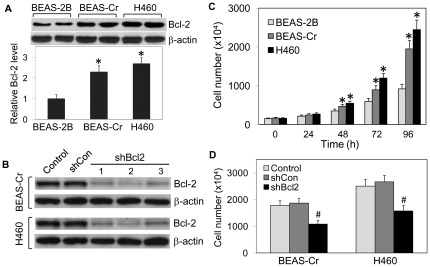
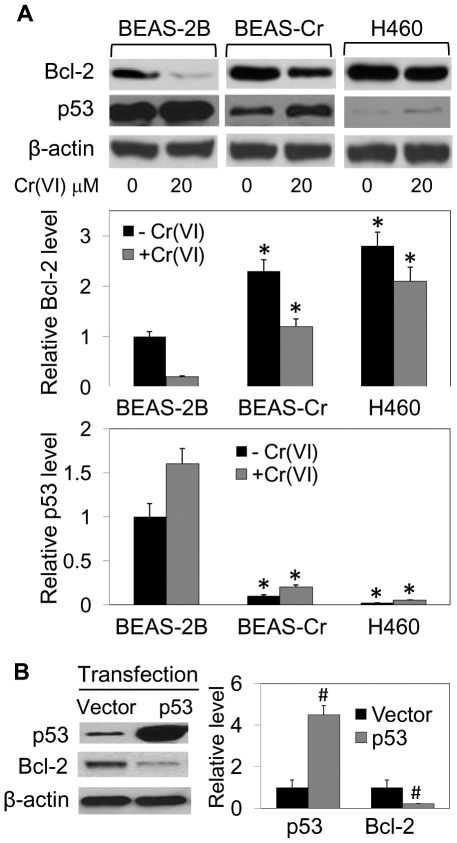
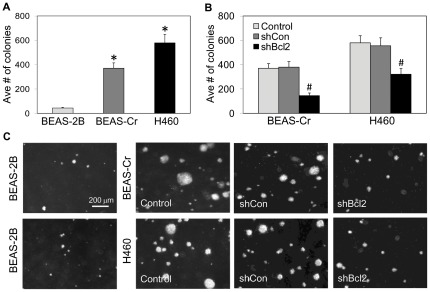
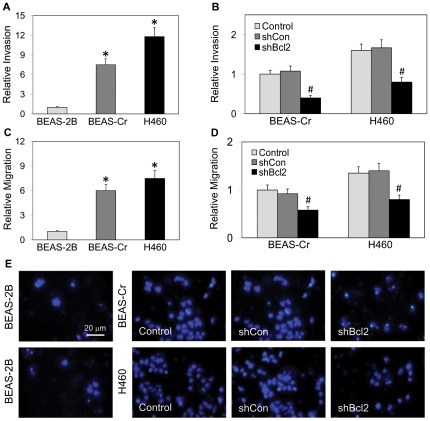
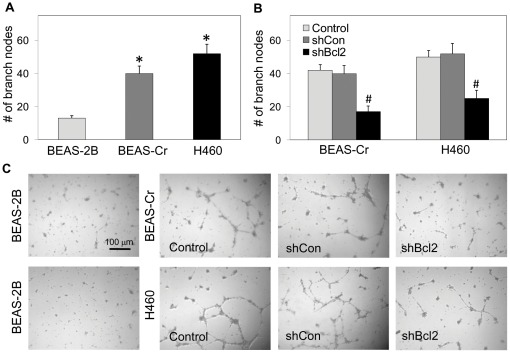
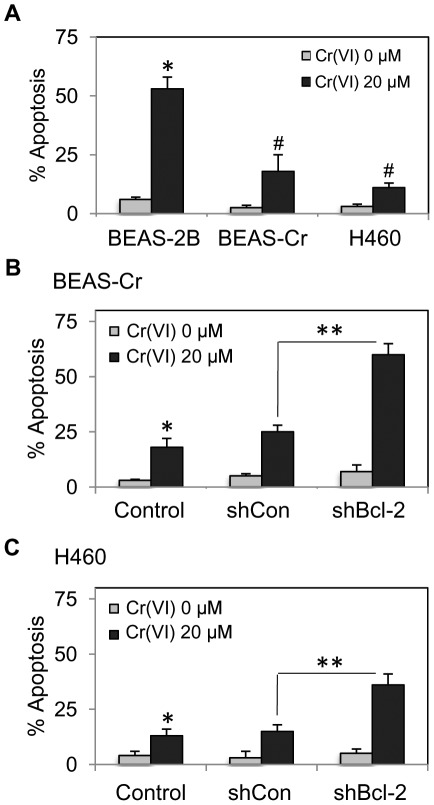
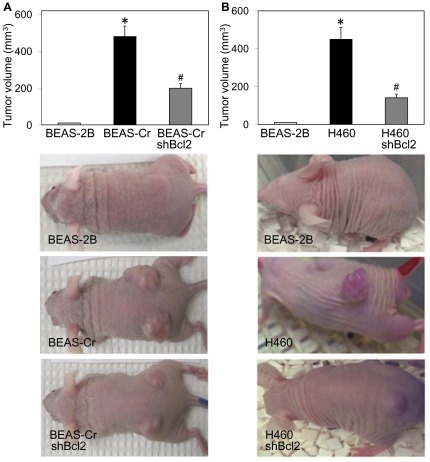
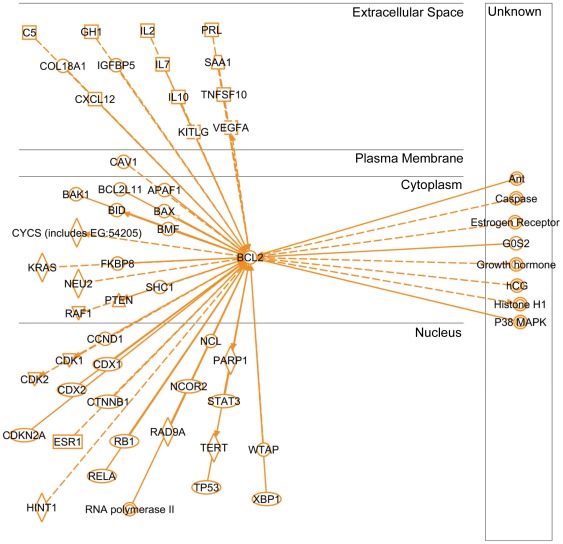
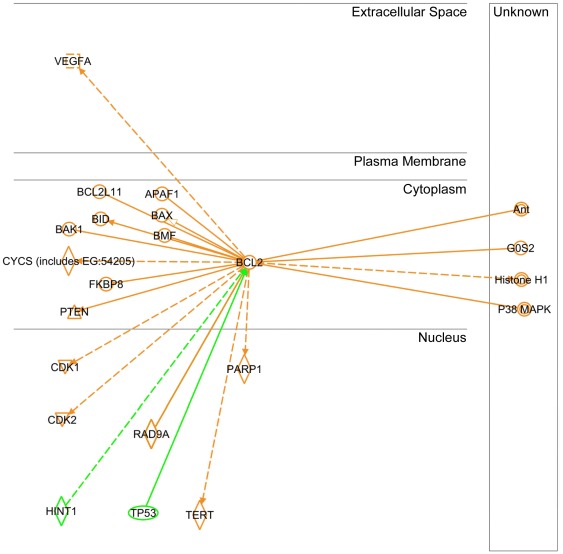
B-cell lymphoma-2 (Bcl-2) is an antiapoptotic protein known to be important in the regulation of apoptosis in various cell types. However, its role in malignant transformation and tumorigenesis of human lung cells is not well understood. We previously reported that chronic exposure of human lung epithelial cells to the carcinogenic hexavalent chromium Cr(VI) caused malignant transformation and Bcl-2 upregulation; however, the role of Bcl-2 in the transformation is unclear. Using a gene silencing approach, we showed that Bcl-2 plays an important role in the malignant properties of Cr(VI)-transformed cells. Downregulation of Bcl-2 inhibited the invasive and proliferative properties of the cells as well as their colony forming and angiogenic activities, which are upregulated in the transformed cells as compared to control cells. Furthermore, animal studies showed the inhibitory effect of Bcl-2 knockdown on the tumorigenesis of Cr(VI)-transformed cells. The role of Bcl-2 in malignant transformation and tumorigenesis was confirmed by gene silencing experiments using human lung carcinoma NCI-H460 cells. These cells exhibited aggressive malignant phenotypes similar to those of Cr(VI)-transformed cells. Knockdown of Bcl-2 in the H460 cells inhibited malignant and tumorigenic properties of the cells, indicating the general role of Bcl-2 in human lung tumorigenesis. Ingenuity Pathways Analysis (IPA) revealed potential effectors of Bcl-2 in tumorigenesis regulation. Additionally, using IPA together with ectopic expression of p53, we show p53 as an upstream regulator of Bcl-2 in Cr(VI)-transformed cells. Together, our results indicate the novel and multifunctional role of Bcl-2 in malignant transformation and tumorigenesis of human lung epithelial cells chronically exposed to Cr(VI).
B 细胞淋巴瘤-2(Bcl-2)是一种抗凋亡蛋白,已知在各种细胞类型的凋亡调节中起重要作用。然而,它在人肺细胞恶性转化和肿瘤发生中的作用尚不清楚。我们之前报道,人肺上皮细胞长期暴露于致癌六价铬 Cr(VI)会导致恶性转化和 Bcl-2 上调;然而,Bcl-2 在转化中的作用尚不清楚。使用基因沉默方法,我们表明 Bcl-2 在 Cr(VI)转化细胞的恶性特性中发挥重要作用。下调 Bcl-2 抑制了细胞的侵袭和增殖特性以及它们的集落形成和血管生成活性,这些特性在转化细胞中上调,而在对照细胞中下调。此外,动物研究表明 Bcl-2 敲低对 Cr(VI)转化细胞肿瘤发生的抑制作用。使用人肺腺癌 NCI-H460 细胞进行基因沉默实验证实了 Bcl-2 在恶性转化和肿瘤发生中的作用。这些细胞表现出类似于 Cr(VI)转化细胞的侵袭性恶性表型。在 H460 细胞中敲低 Bcl-2 抑制了细胞的恶性和致瘤特性,表明 Bcl-2 在人肺肿瘤发生中的普遍作用。Ingenuity Pathways Analysis (IPA) 揭示了 Bcl-2 在肿瘤发生调节中的潜在效应物。此外,使用 IPA 结合 p53 的异位表达,我们表明 p53 是 Cr(VI)转化细胞中 Bcl-2 的上游调节剂。总之,我们的结果表明 Bcl-2 在人肺上皮细胞长期暴露于 Cr(VI)后恶性转化和肿瘤发生中的新的多功能作用。