Exercise Physiology Laboratory, Camilo José Cela University, Madrid, Spain.
PLoS One. 2012;7(5):e37821. doi: 10.1371/journal.pone.0037821. Epub 2012 May 29.
The negative effects of dehydration on aerobic activities are well established. However, it is unknown how dehydration affects intermittent sports performance. The purpose of this study was to identify the level of dehydration in elite badminton players and its relation to muscle strength and power production.
Seventy matches from the National Spanish badminton championship were analyzed (46 men's singles and 24 women's singles). Before and after each match, jump height and power production were determined during a countermovement jump on a force platform. Participants' body weight and a urine sample were also obtained before and after each match. The amount of liquid that the players drank during the match was also calculated by weighing their individual drinking bottles.
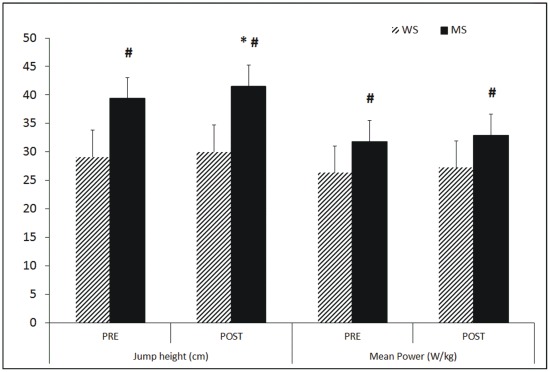
Sweat rate during the game was 1.14 ± 0.46 l/h in men and 1.02 ± 0.64 l/h in women. The players rehydrated at a rate of 1.10 ± 0.55 l/h and 1.01 ± 0.44 l/h in the male and female groups respectively. Thus, the dehydration attained during the game was only 0.37 ± 0.50% in men and 0.32 ± 0.83% in women. No differences were found in any of the parameters analyzed during the vertical jump (men: from 31.82 ± 5.29 to 32.90 ± 4.49 W/kg; p>0.05, women: from 26.36 ± 4.73 to 27.25 ± 4.44 W/kg; p>0.05). Post-exercise urine samples revealed proteinuria (60.9% of cases in men and 66.7% in women), leukocyturia (men = 43.5% and women = 50.0%) and erythrocyturia (men = 50.0% and women = 21.7%).
Despite a moderate sweat rate, badminton players adequately hydrated during a game and thus the dehydration attained was low. The badminton match did not cause muscle fatigue but it significantly increased the prevalence of proteinuria, leukocyturia and erythrocyturia.
脱水对有氧运动的负面影响已得到充分证实。然而,脱水如何影响间歇性运动表现尚不清楚。本研究的目的是确定精英羽毛球运动员的脱水程度及其与肌肉力量和力量产生的关系。
分析了西班牙全国羽毛球锦标赛的 70 场比赛(46 场男单和 24 场女单)。在每场比赛前后,参与者在力量平台上进行反跳时,通过反跳确定跳跃高度和力量产生。在每场比赛前后,还获得了参与者的体重和尿液样本。通过称重参与者的个人饮水瓶,还计算了比赛中球员饮用的液体量。
男性球员比赛中的出汗率为 1.14 ± 0.46 l/h,女性为 1.02 ± 0.64 l/h。男性和女性组的球员分别以 1.10 ± 0.55 l/h 和 1.01 ± 0.44 l/h 的速度重新补水。因此,男性球员在比赛中脱水仅为 0.37 ± 0.50%,女性球员脱水仅为 0.32 ± 0.83%。在垂直跳跃的任何参数分析中均未发现差异(男性:从 31.82 ± 5.29 到 32.90 ± 4.49 W/kg;p>0.05,女性:从 26.36 ± 4.73 到 27.25 ± 4.44 W/kg;p>0.05)。运动后尿液样本显示蛋白尿(男性 60.9%,女性 66.7%)、白细胞尿(男性 43.5%,女性 50.0%)和血尿(男性 50.0%,女性 21.7%)。
尽管出汗率适中,但羽毛球运动员在比赛中充分补水,因此脱水程度较低。羽毛球比赛不会导致肌肉疲劳,但会显著增加蛋白尿、白细胞尿和血尿的发生率。