BRC Translational Immunology Lab, NIHR, Nuffield Department of Medicine, John Radcliffe Hospital, University of Oxford, Oxford, OX3 9DU, UK.
Cell Mol Life Sci. 2013 Jan;70(1):89-103. doi: 10.1007/s00018-012-1032-3. Epub 2012 Jun 5.
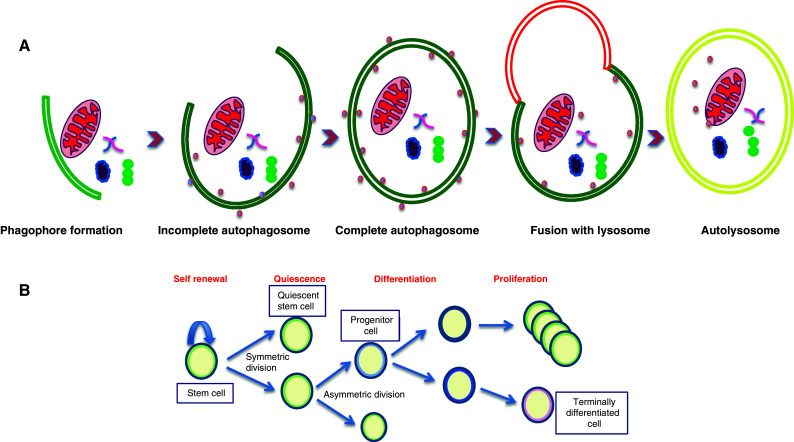
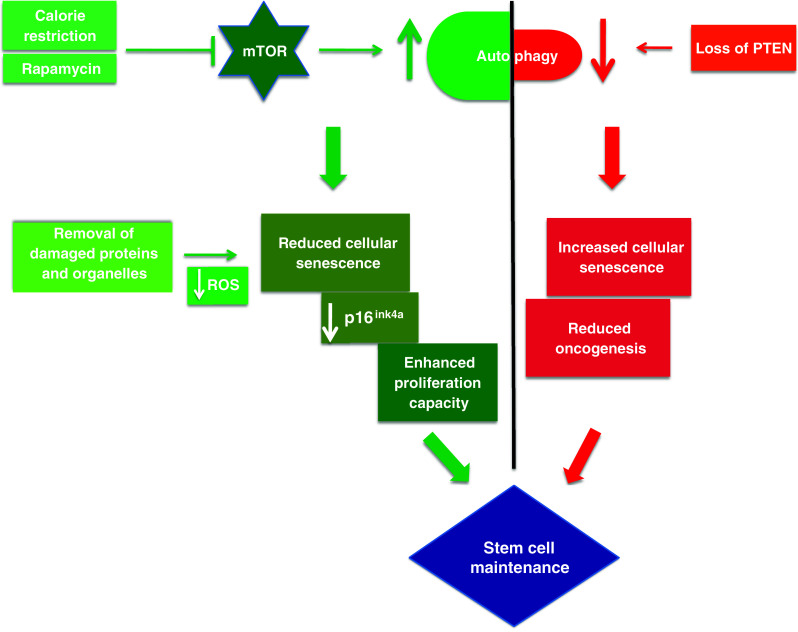
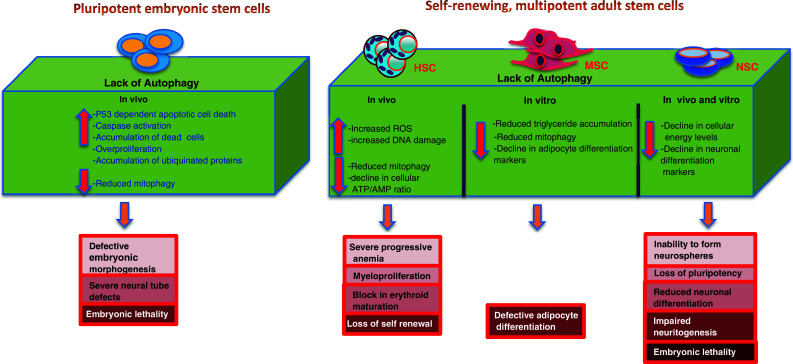
Autophagy is a constitutive lysosomal catabolic pathway that degrades damaged organelles and protein aggregates. Stem cells are characterized by self-renewal, pluripotency, and quiescence; their long life span, limited capacity to dilute cellular waste and spent organelles due to quiescence, along with their requirement for remodeling in order to differentiate, all suggest that they require autophagy more than other cell types. Here, we review the current literature on the role of autophagy in embryonic and adult stem cells, including hematopoietic, mesenchymal, and neuronal stem cells, highlighting the diverse and contrasting roles autophagy plays in their biology. Furthermore, we review the few studies on stem cells, lysosomal activity, and autophagy. Novel techniques to detect autophagy in primary cells are required to study autophagy in different stem cell types. These will help to elucidate the importance of autophagy in stem cells during transplantation, a promising therapeutic approach for many diseases.
自噬是一种组成性溶酶体分解代谢途径,可降解受损的细胞器和蛋白质聚集体。干细胞的特征是自我更新、多能性和静止;它们的寿命长,由于静止,清除细胞废物和耗竭细胞器的能力有限,以及为了分化而需要重塑,这一切都表明它们比其他类型的细胞更需要自噬。在这里,我们回顾了自噬在胚胎和成体干细胞中的作用的现有文献,包括造血干细胞、间充质干细胞和神经干细胞,强调了自噬在它们的生物学中发挥的不同和相反的作用。此外,我们还回顾了少数关于干细胞、溶酶体活性和自噬的研究。需要新的技术来检测原代细胞中的自噬,以便研究不同干细胞类型中的自噬。这些将有助于阐明自噬在移植过程中对干细胞的重要性,移植是许多疾病有前途的治疗方法。