National Institute of Mental Health, National Institutes of Health, Bethesda, MD 20892, USA.
Neuron. 2012 Jun 7;74(5):899-910. doi: 10.1016/j.neuron.2012.04.014.
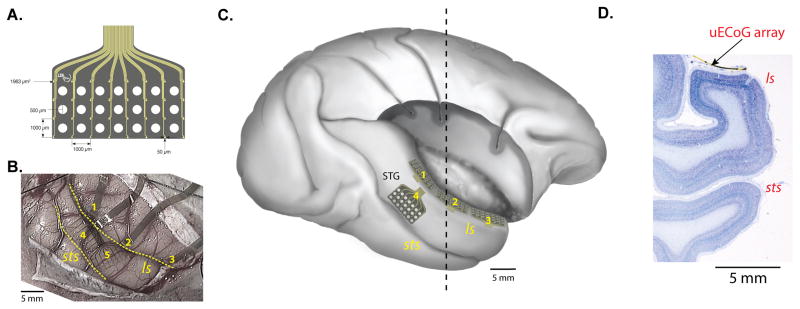
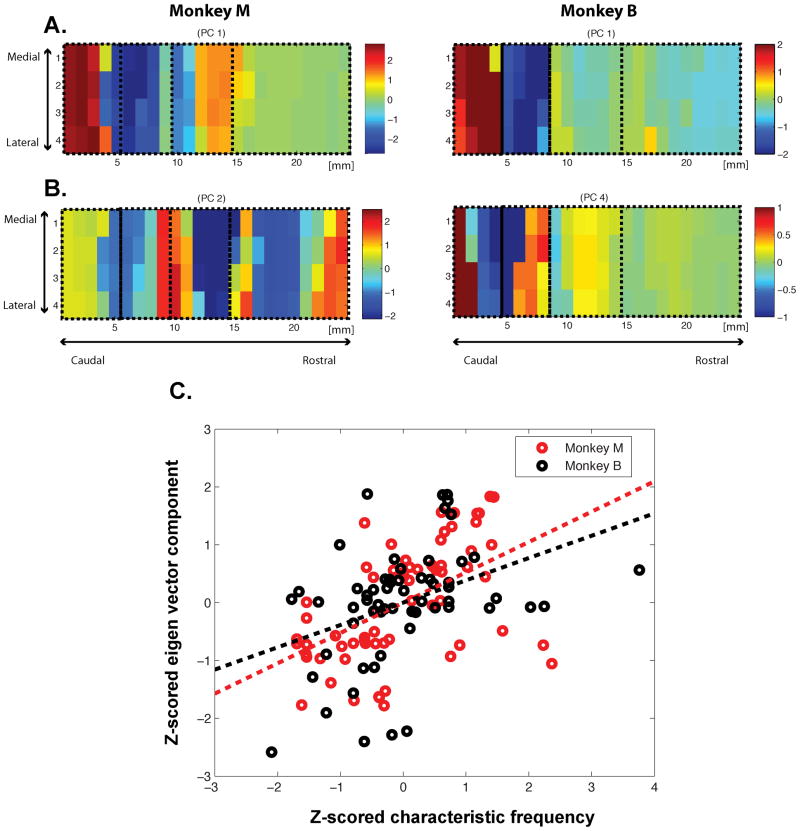
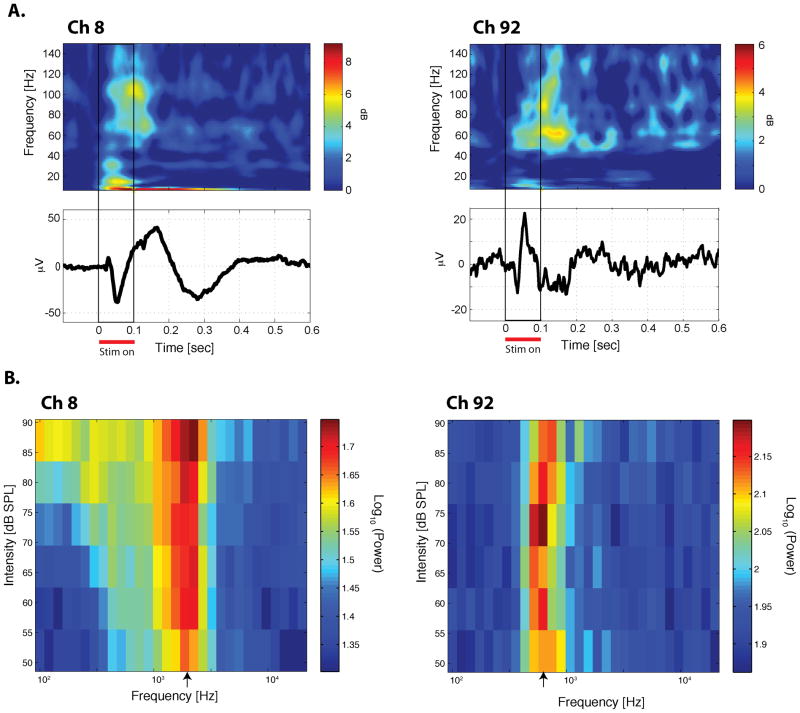
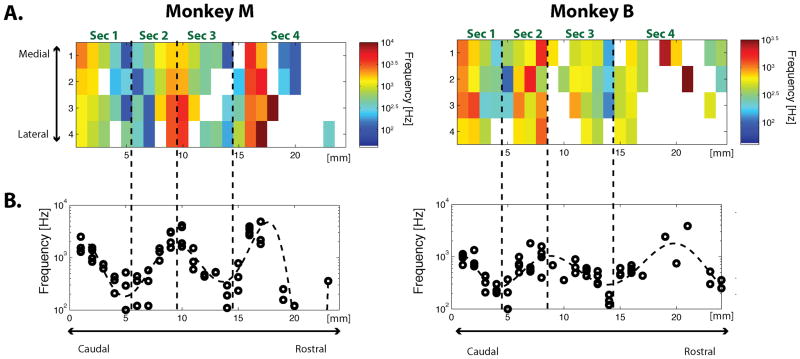
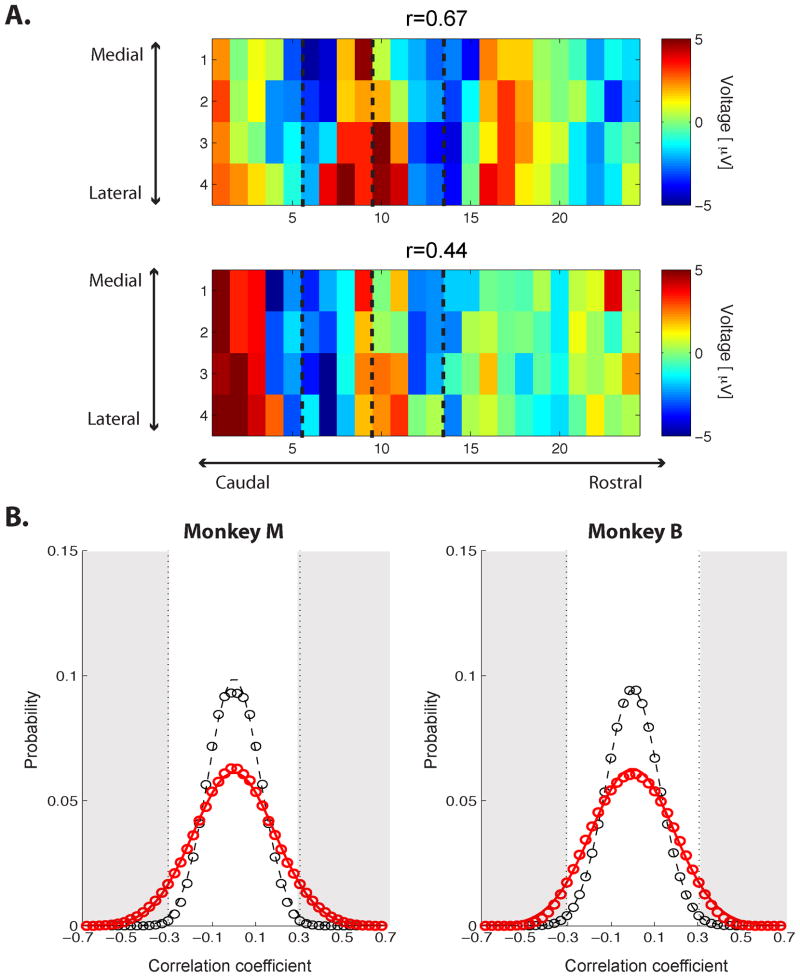
In the absence of sensory stimuli, spontaneous activity in the brain has been shown to exhibit organization at multiple spatiotemporal scales. In the macaque auditory cortex, responses to acoustic stimuli are tonotopically organized within multiple, adjacent frequency maps aligned in a caudorostral direction on the supratemporal plane (STP) of the lateral sulcus. Here, we used chronic microelectrocorticography to investigate the correspondence between sensory maps and spontaneous neural fluctuations in the auditory cortex. We first mapped tonotopic organization across 96 electrodes spanning approximately two centimeters along the primary and higher auditory cortex. In separate sessions, we then observed that spontaneous activity at the same sites exhibited spatial covariation that reflected the tonotopic map of the STP. This observation demonstrates a close relationship between functional organization and spontaneous neural activity in the sensory cortex of the awake monkey.
在缺乏感觉刺激的情况下,大脑的自发性活动已经被证明在多个时空尺度上具有组织性。在猕猴的听觉皮层中,对声音刺激的反应在多个相邻的频率图谱中呈现出音位组织,这些图谱沿着外侧裂的顶颞平面(STP)按尾到头的方向排列。在这里,我们使用慢性微电极记录技术研究了听觉皮层中感觉图谱和自发性神经波动之间的对应关系。我们首先在跨越大约两厘米的初级和高级听觉皮层的 96 个电极上绘制了音位组织图谱。在随后的单独会议中,我们观察到同一部位的自发性活动表现出空间协变,反映了 STP 的音位图谱。这一观察结果表明,在清醒猴子的感觉皮层中,功能组织和自发性神经活动之间存在密切关系。