Institute for Neuroscience and Psychology, University of Glasgow, West Medical Building, Glasgow, G12 8QQ, UK.
Mol Brain. 2012 Jun 9;5:22. doi: 10.1186/1756-6606-5-22.
There is mounting evidence for a neurodevelopmental basis for disorders such as autism and schizophrenia, in which prenatal or early postnatal events may influence brain development and predispose the young to develop these and related disorders. We have now investigated the effect of a prenatal immune challenge on brain development in the offspring. Pregnant rats were treated with the double-stranded RNA polyinosinic:polycytidylic acid (poly(I:C); 10 mg/kg) which mimics immune activation occurring after activation of Toll-like receptors-3 (TLR3) by viral infection. Injections were made in late gestation (embryonic days E14, E16 and E18), after which parturition proceeded naturally and the young were allowed to develop up to the time of weaning at postnatal day 21 (P21). The brains of these animals were then removed to assess the expression of 13 different neurodevelopmental molecules by immunoblotting.
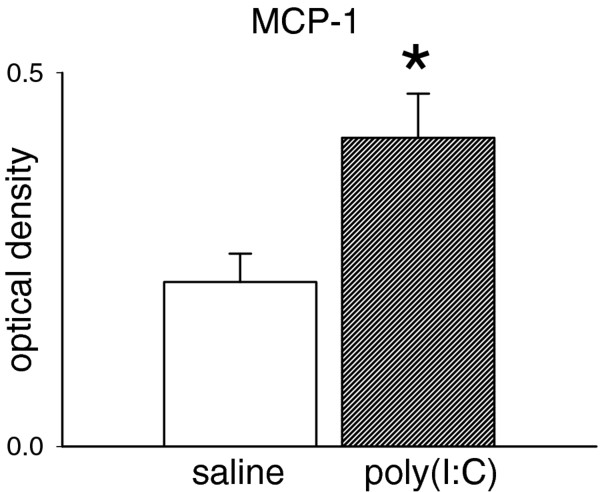
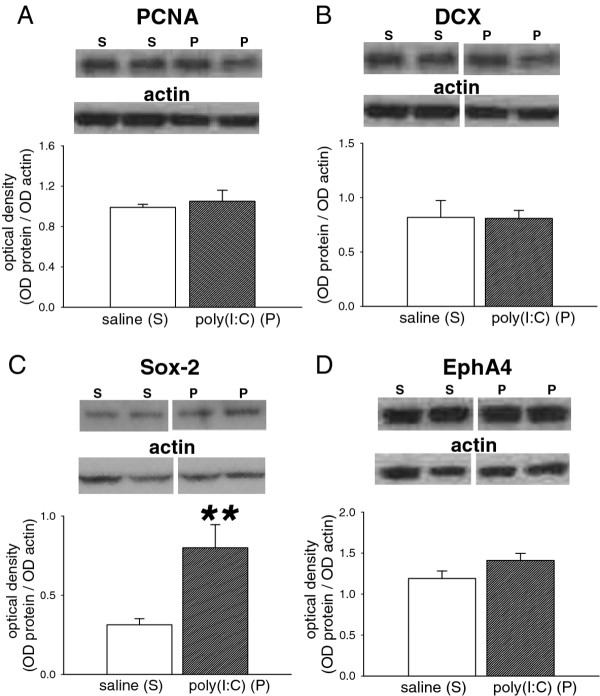
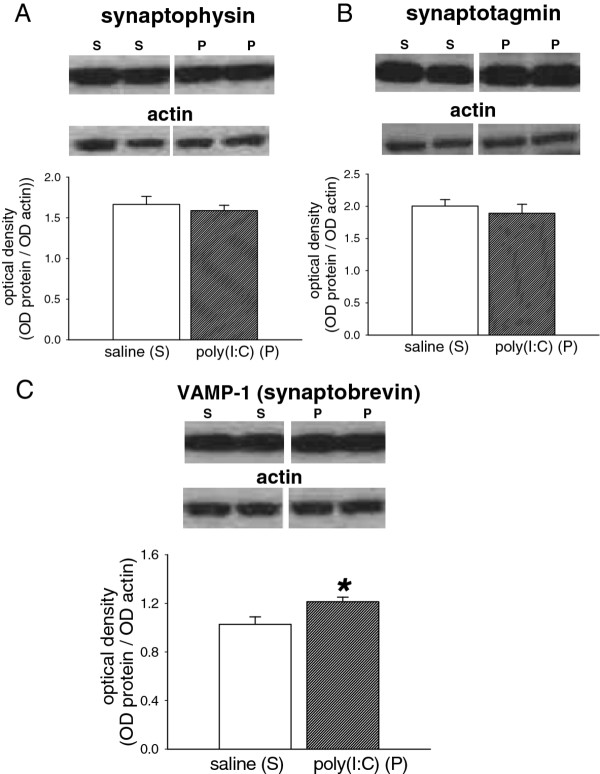
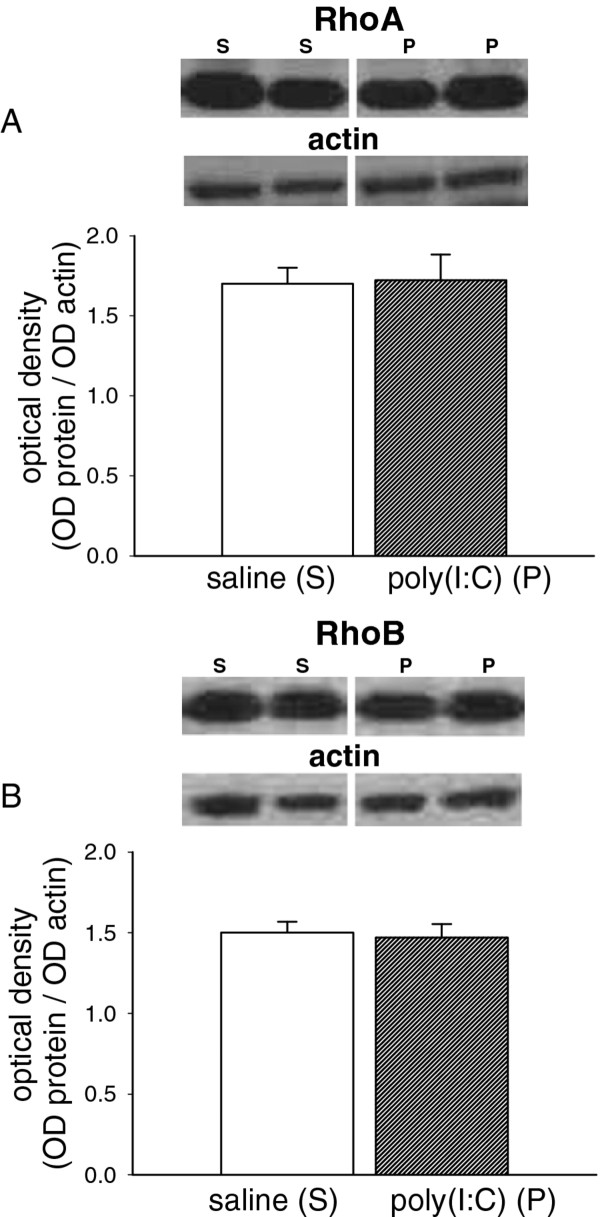
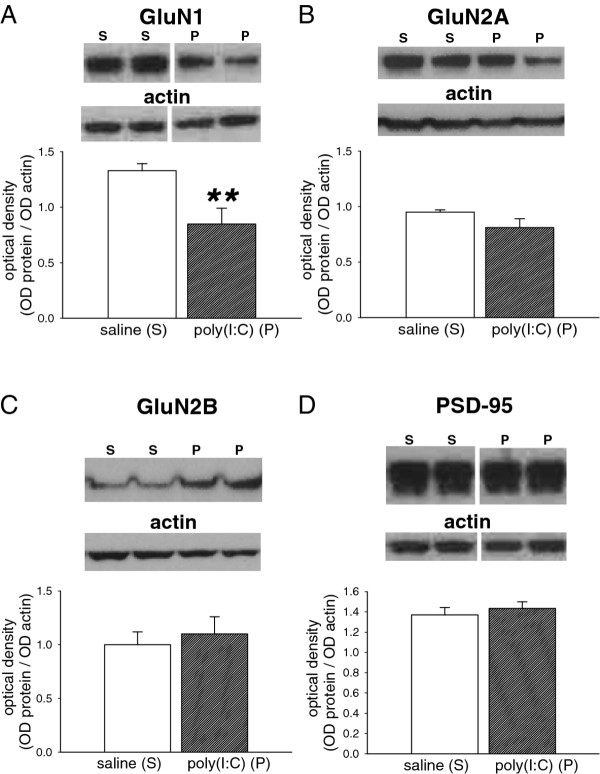
Measurement of cytokine levels in the maternal blood 5 hours after an injection of poly(I:C) showed significantly increased levels of monocyte chemoattractant protein-1 (MCP-1), confirming immune activation. In the P21 offspring, significant changes were detected in the expression of GluN1 subunits of NMDA receptors, with no difference in GluN2A or GluN2B subunits or the postsynaptic density protein PSD-95 and no change in the levels of the related small GTPases RhoA or RhoB, or the NMDA receptor modulator EphA4. Among presynaptic molecules, a significant increase in Vesicle Associated Membrane Protein-1 (VAMP-1; synaptobrevin) was seen, with no change in synaptophysin or synaptotagmin. Proliferating Cell Nuclear Antigen (PCNA), as well as the neurogenesis marker doublecortin were unchanged, although Sox-2 levels were increased, suggesting possible changes in the rate of new cell differentiation.
The results reveal the induction by prenatal poly(I:C) of selective molecular changes in the brains of P21 offspring, affecting primarily molecules associated with neuronal development and synaptic transmission. These changes may contribute to the behavioural abnormalities that have been reported in adult animals after exposure to poly(I:C) and which resemble symptoms seen in schizophrenia and related disorders.
越来越多的证据表明,自闭症和精神分裂症等疾病存在神经发育基础,其中产前或产后早期事件可能会影响大脑发育,并使年轻人易患这些疾病和相关疾病。我们现在研究了产前免疫挑战对后代大脑发育的影响。给怀孕的老鼠注射双链 RNA 聚肌苷酸:聚胞苷酸(poly(I:C);10mg/kg),模拟病毒感染后 Toll 样受体-3(TLR3)激活引起的免疫激活。注射在妊娠晚期(胚胎第 14、16 和 18 天)进行,此后分娩自然进行,幼鼠发育至出生后第 21 天(P21)断奶。然后取出这些动物的大脑,通过免疫印迹法评估 13 种不同神经发育分子的表达。
poly(I:C)注射后 5 小时测量母血中的细胞因子水平显示单核细胞趋化蛋白-1(MCP-1)水平显著升高,证实了免疫激活。在 P21 后代中,检测到 NMDA 受体 GluN1 亚基的表达发生显著变化,GluN2A 或 GluN2B 亚基或突触后密度蛋白 PSD-95 无差异,相关小 GTPase RhoA 或 RhoB 水平无变化,NMDA 受体调节剂 EphA4 也无变化。在突触前分子中,发现囊泡相关膜蛋白-1(VAMP-1;突触融合蛋白)显著增加,突触小体素或突触结合蛋白无变化。增殖细胞核抗原(PCNA)以及神经发生标志物双皮质素无变化,尽管 Sox-2 水平升高,提示新细胞分化速度可能发生变化。
结果显示,产前 poly(I:C)诱导 P21 后代大脑中选择性分子变化,主要影响与神经元发育和突触传递相关的分子。这些变化可能导致暴露于 poly(I:C)后的成年动物出现行为异常,类似于精神分裂症和相关疾病的症状。