Carnegie Mellon University, Department of Psychology,, Baker Hall 342c, Pittsburgh, PA 15213, United States.
Neurosci Biobehav Rev. 2012 Sep;36(8):1870-84. doi: 10.1016/j.neubiorev.2012.05.008. Epub 2012 Jun 7.
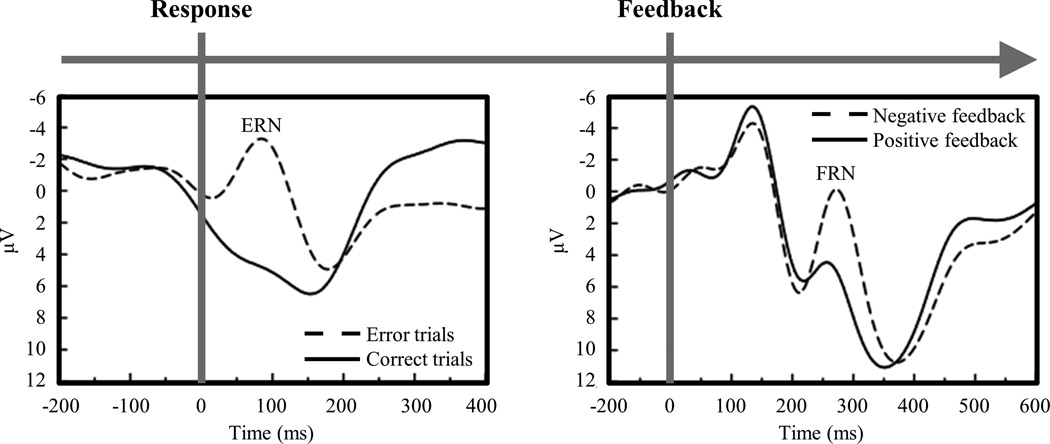
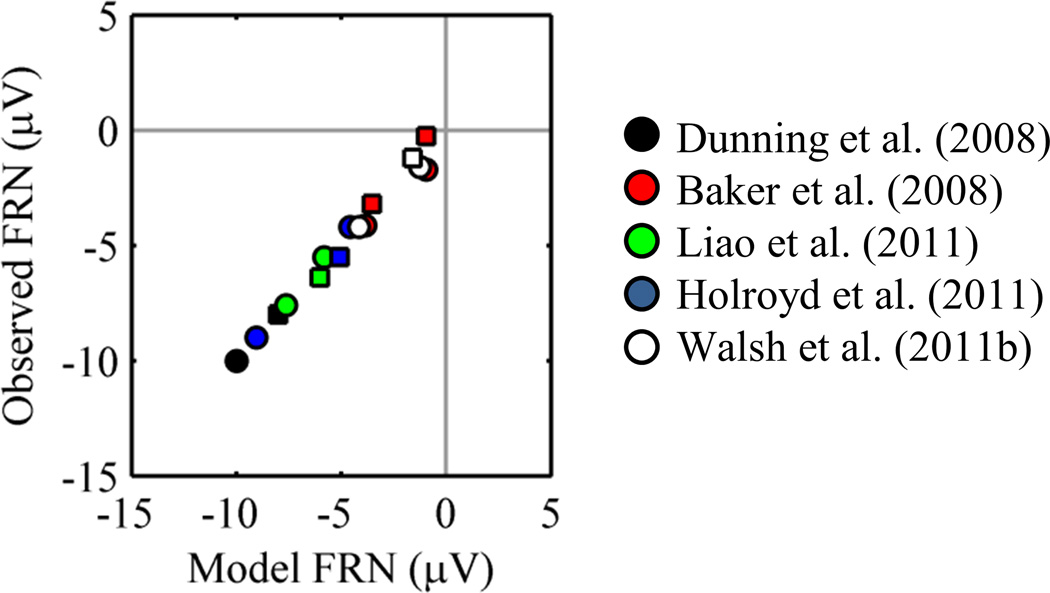
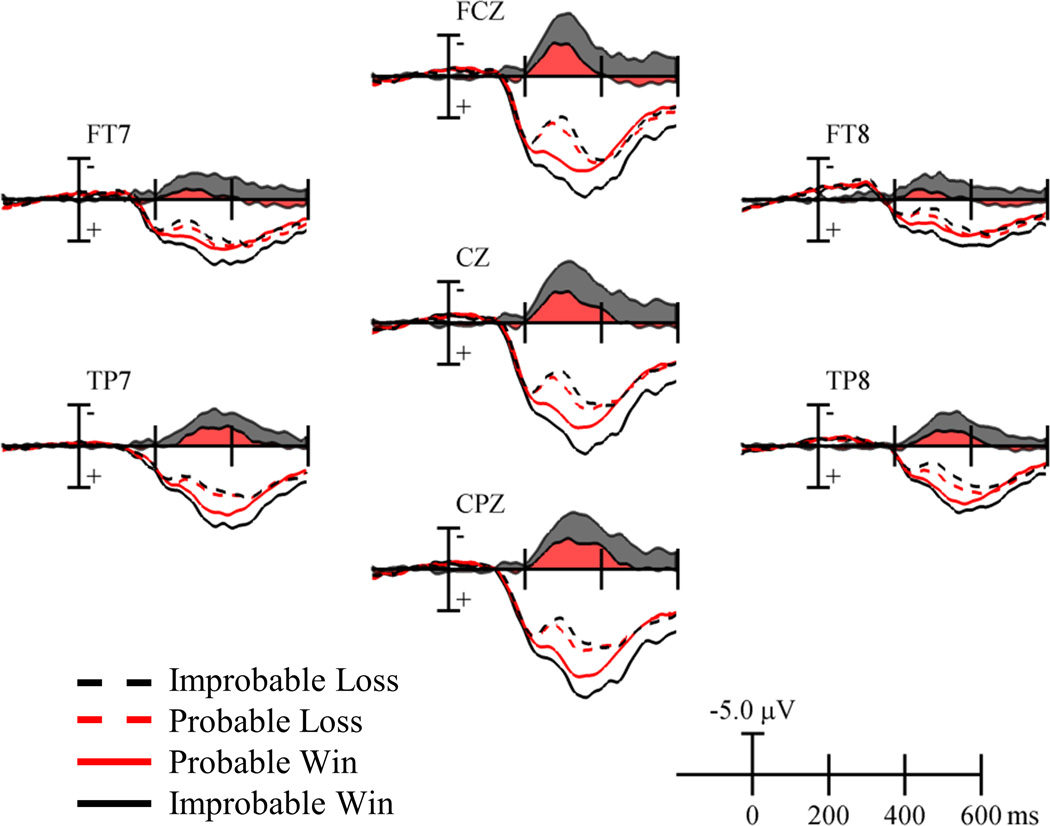
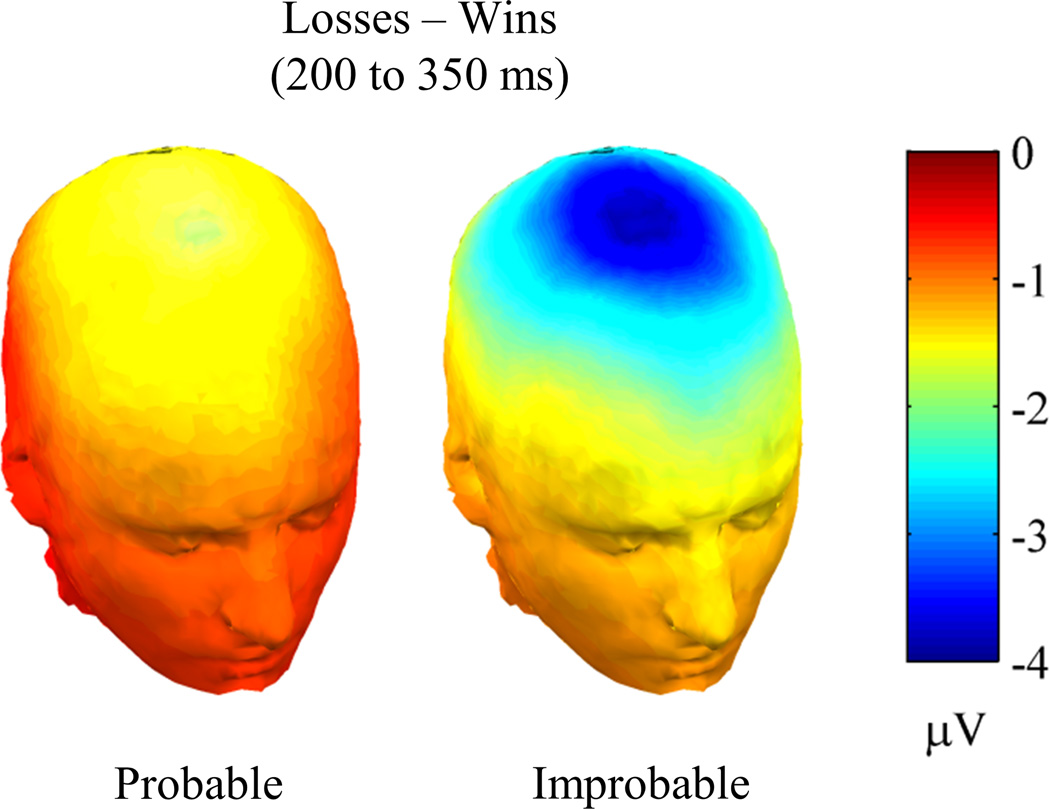
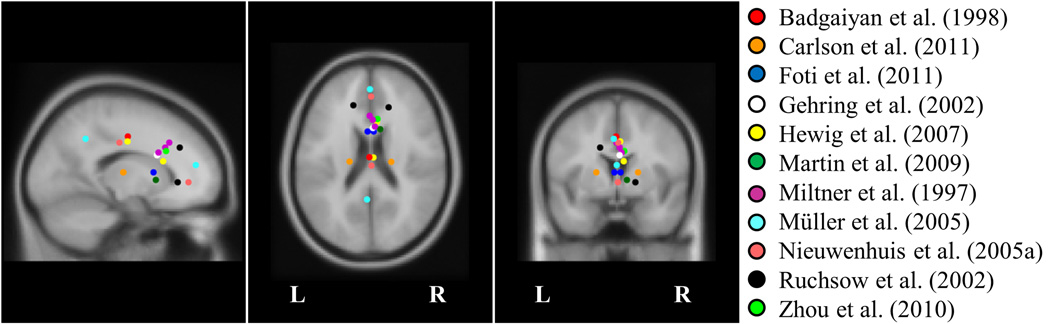
To behave adaptively, we must learn from the consequences of our actions. Studies using event-related potentials (ERPs) have been informative with respect to the question of how such learning occurs. These studies have revealed a frontocentral negativity termed the feedback-related negativity (FRN) that appears after negative feedback. According to one prominent theory, the FRN tracks the difference between the values of actual and expected outcomes, or reward prediction errors. As such, the FRN provides a tool for studying reward valuation and decision making. We begin this review by examining the neural significance of the FRN. We then examine its functional significance. To understand the cognitive processes that occur when the FRN is generated, we explore variables that influence its appearance and amplitude. Specifically, we evaluate four hypotheses: (1) the FRN encodes a quantitative reward prediction error; (2) the FRN is evoked by outcomes and by stimuli that predict outcomes; (3) the FRN and behavior change with experience; and (4) the system that produces the FRN is maximally engaged by volitional actions.
为了适应性地表现,我们必须从我们行为的后果中学习。使用事件相关电位(ERPs)的研究对以下问题很有启发性:这种学习是如何发生的。这些研究揭示了一种在前额中央出现的负向电位,称为反馈相关负波(FRN),它出现在负反馈之后。根据一个著名的理论,FRN 追踪实际和预期结果之间的差异,或者说奖励预测误差。因此,FRN 为研究奖励评估和决策提供了一种工具。我们通过检查 FRN 的神经意义来开始这篇综述。然后我们检查它的功能意义。为了理解生成 FRN 时发生的认知过程,我们探讨了影响其出现和幅度的变量。具体来说,我们评估了四个假设:(1)FRN 编码定量奖励预测误差;(2)FRN 由结果和预测结果的刺激引起;(3)FRN 和行为随着经验而变化;(4)产生 FRN 的系统通过自愿行为最大限度地参与。