INRA, UR1341 ADNC (Alimentation & Adaptations Digestives, Nerveuses et Comportementales), Saint Gilles, France.
PLoS One. 2012;7(5):e37968. doi: 10.1371/journal.pone.0037968. Epub 2012 May 25.
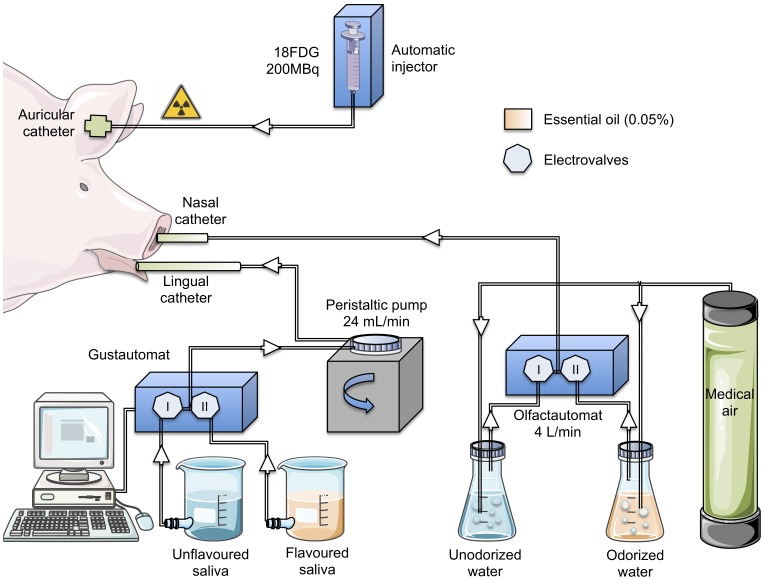
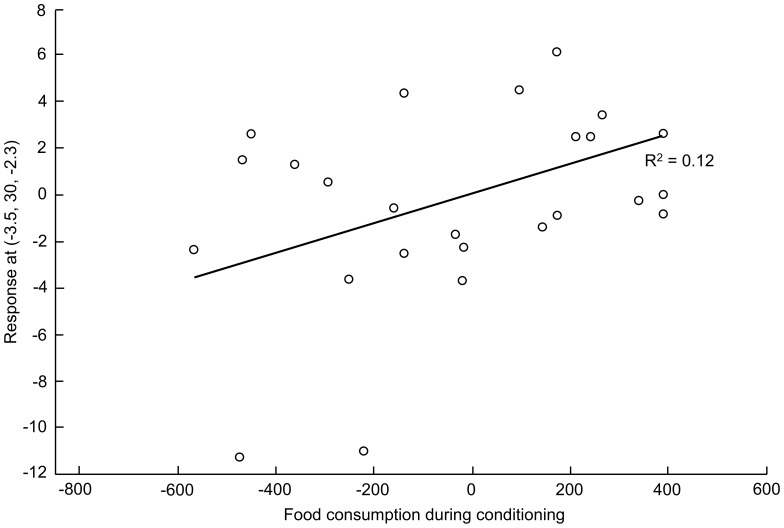
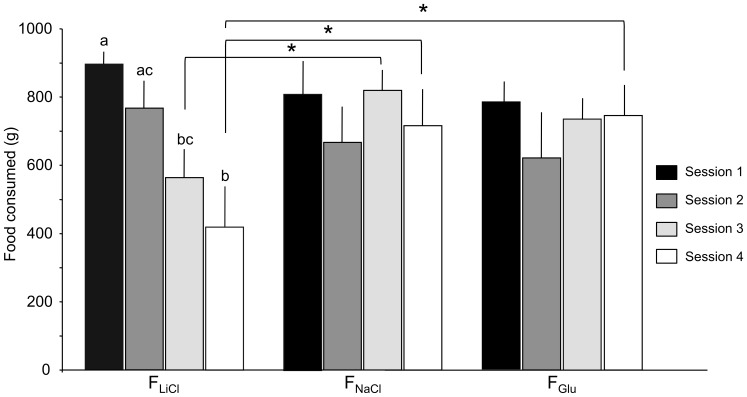
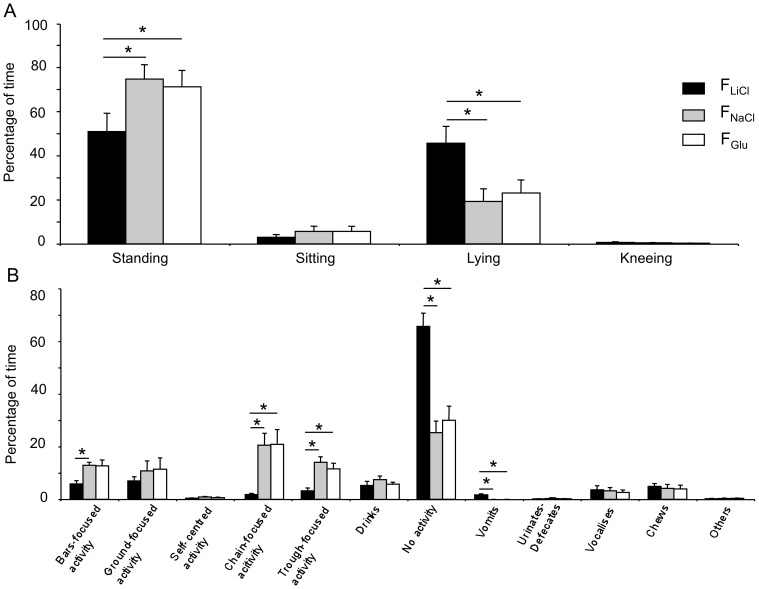
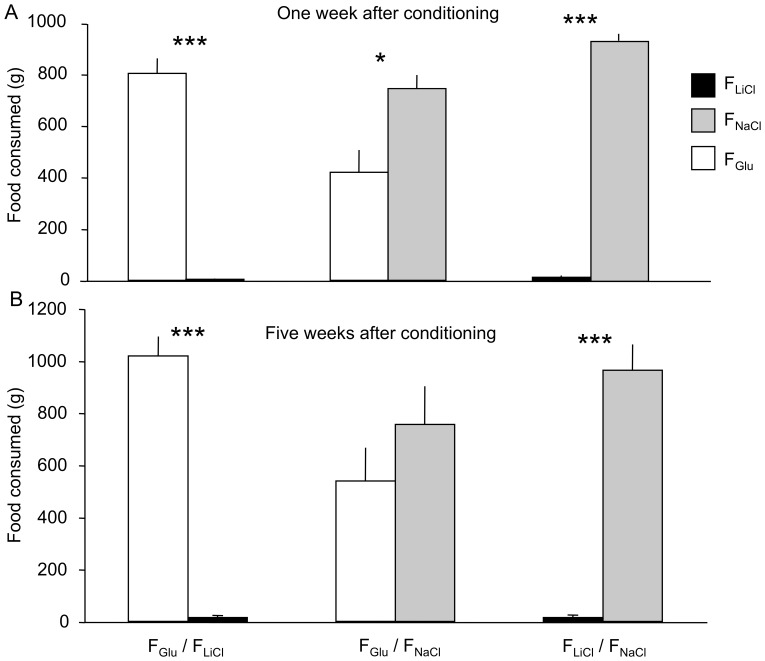
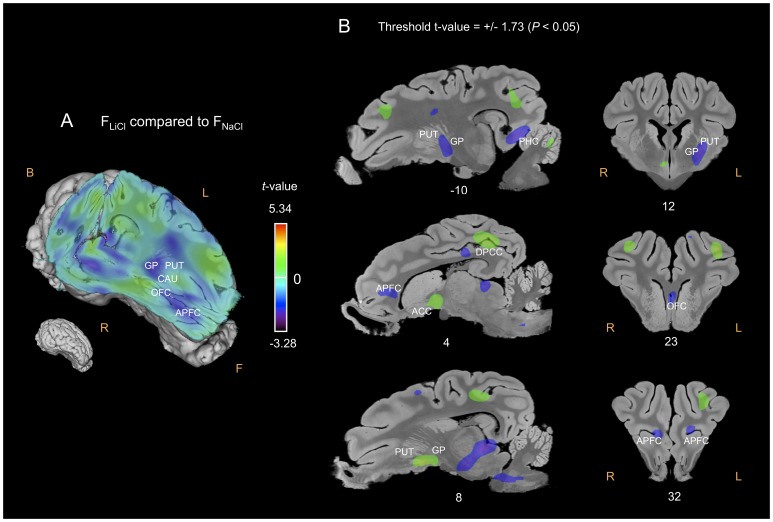
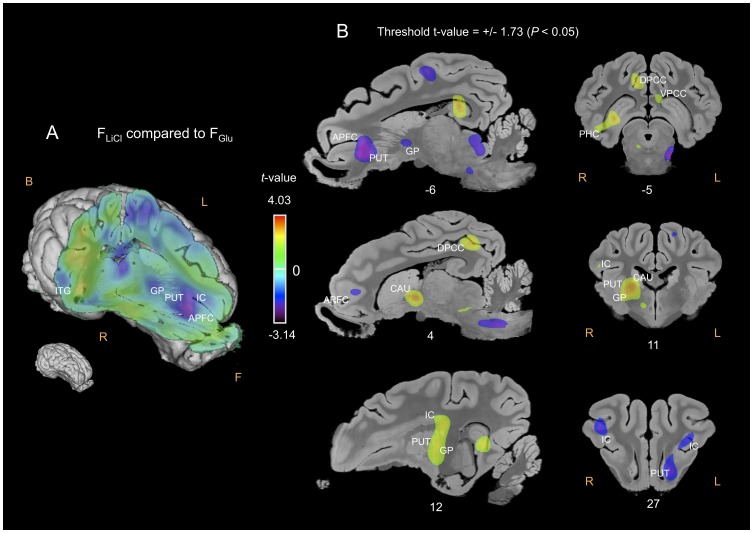
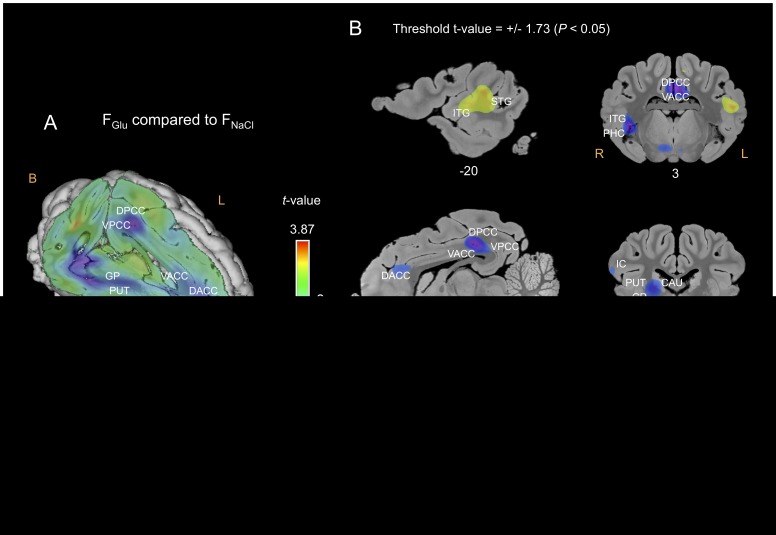
This study investigated the behavioural and brain responses towards conditioned flavours with different hedonic values in juvenile pigs. Twelve 30-kg pigs were given four three-day conditioning sessions: they received three different flavoured meals paired with intraduodenal (i.d.) infusions of 15% glucose (F(Glu)), lithium chloride (F(LiCl)), or saline (control treatment, F(NaCl)). One and five weeks later, the animals were subjected to three two-choice feeding tests without reinforcement to check the acquisition of a conditioned flavour preference or aversion. In between, the anaesthetised pigs were subjected to three (18)FDG PET brain imaging coupled with an olfactogustatory stimulation with the conditioned flavours. During conditioning, the pigs spent more time lying inactive, and investigated their environment less after the F(LiCl) than the F(NaCl) or F(Glu) meals. During the two-choice tests performed one and five weeks later, the F(NaCl) and F(Glu) foods were significantly preferred over the F(LICl) food even in the absence of i.d. infusions. Surprisingly, the F(NaCl) food was also preferred over the F(Glu) food during the first test only, suggesting that, while LiCl i.d. infusions led to a strong flavour aversion, glucose infusions failed to induce flavour preference. As for brain imaging results, exposure to aversive or less preferred flavours triggered global deactivation of the prefrontal cortex, specific activation of the posterior cingulate cortex, as well as asymmetric brain responses in the basal nuclei and the temporal gyrus. In conclusion, postingestive visceral stimuli can modulate the flavour/food hedonism and further feeding choices. Exposure to flavours with different hedonic values induced metabolism differences in neural circuits known to be involved in humans in the characterization of food palatability, feeding motivation, reward expectation, and more generally in the regulation of food intake.
这项研究调查了不同享乐值条件风味在幼年猪中的行为和大脑反应。12 头 30 公斤的猪接受了四个为期三天的条件训练:它们接受了三种不同口味的餐食,同时十二指肠内(i.d.)输注 15%葡萄糖(F(Glu))、氯化锂(F(LiCl))或生理盐水(对照处理,F(NaCl))。一周后和五周后,动物进行了三次无强化的二选一进食测试,以检查条件风味偏好或厌恶的获得。在此期间,麻醉猪接受了三次(18)FDG PET 脑成像和条件风味的嗅觉味觉刺激。在训练过程中,与 F(NaCl)或 F(Glu)餐相比,猪在 F(LiCl)餐之后,躺着不动的时间更多,对环境的探索也更少。在一周后和五周后进行的二选一测试中,即使没有 i.d.输注,F(NaCl)和 F(Glu)食物也明显优于 F(LiCl)食物。令人惊讶的是,在第一次测试中,F(NaCl)食物甚至也优于 F(Glu)食物,这表明,尽管 LiCl i.d.输注导致了强烈的风味厌恶,但葡萄糖输注未能诱导风味偏好。至于脑成像结果,暴露于厌恶或不太受欢迎的风味会引发前额叶皮层的整体失活,后扣带皮层的特异性激活,以及基底核和颞叶的不对称大脑反应。总之,餐后内脏刺激可以调节风味/食物享乐主义,并进一步影响进食选择。暴露于具有不同享乐值的风味会引起涉及人类食物适口性、进食动机、奖励预期等特征的神经回路的代谢差异,更普遍地说,会引起食物摄入的调节。