Interdisciplinary Biotechnology Unit, Aligarh Muslim University, Aligarh, India.
PLoS One. 2012;7(6):e38372. doi: 10.1371/journal.pone.0038372. Epub 2012 Jun 7.
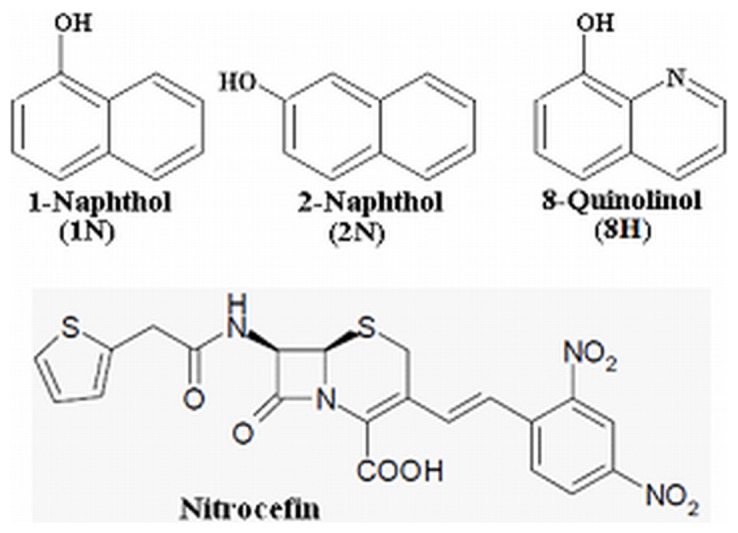
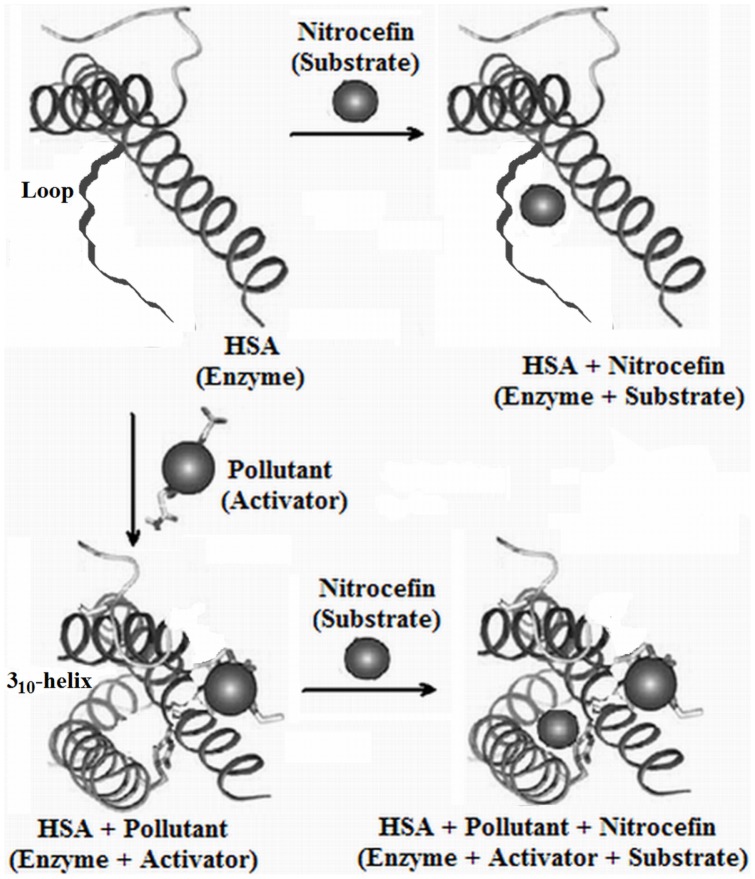
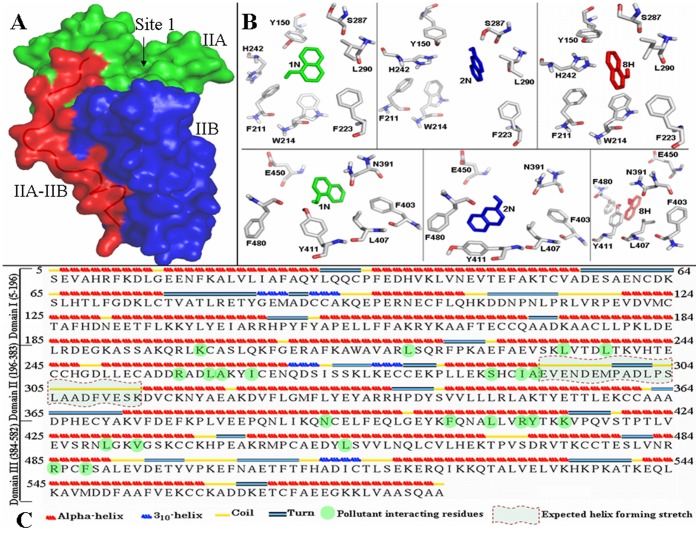
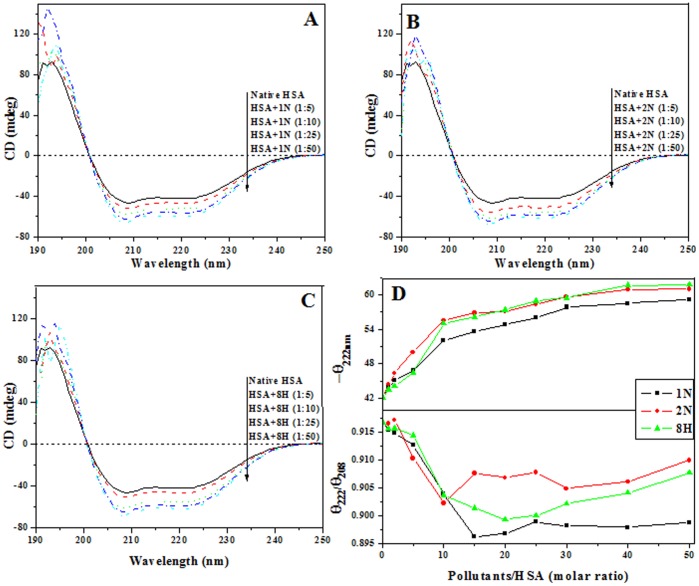
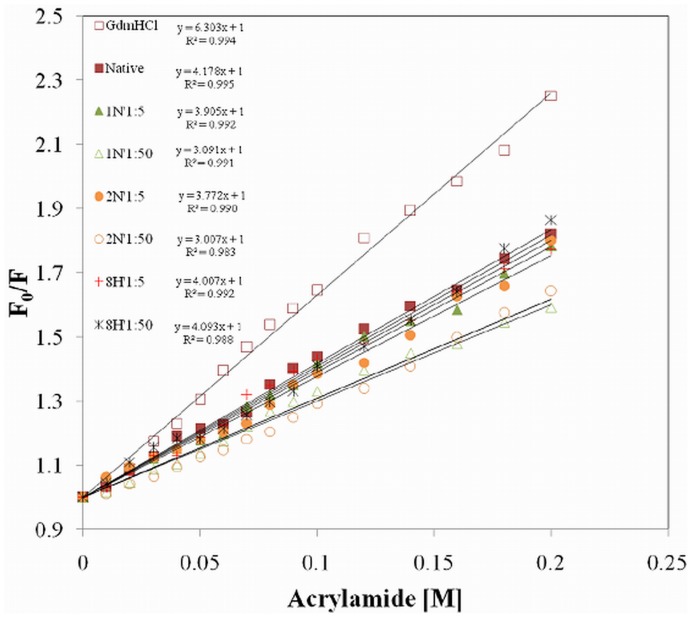
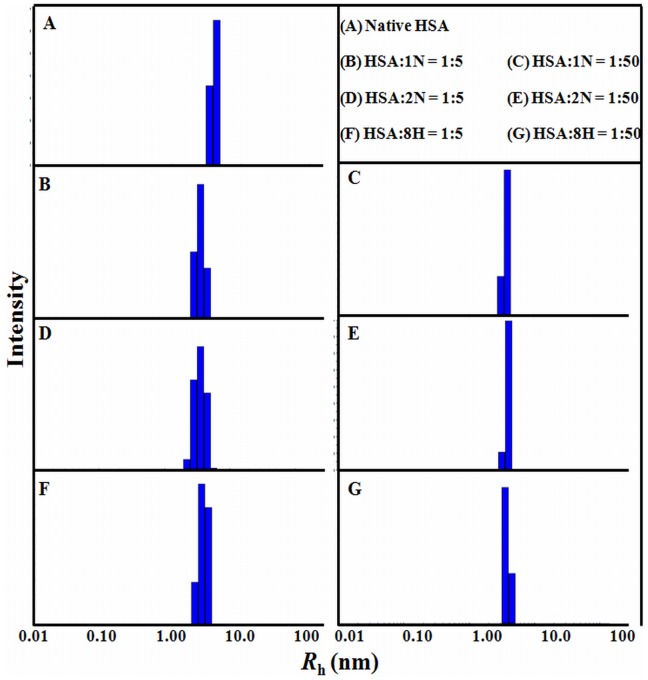
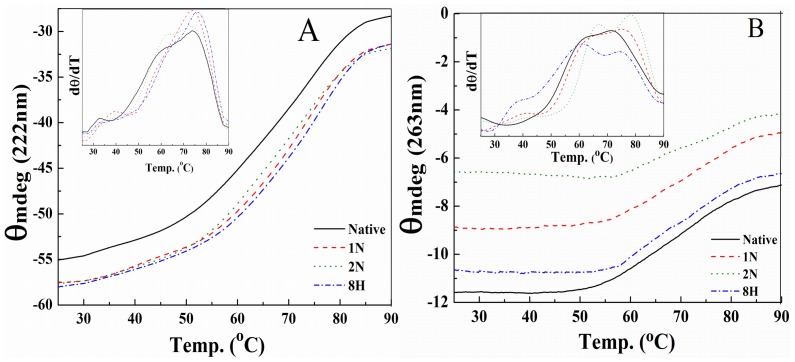
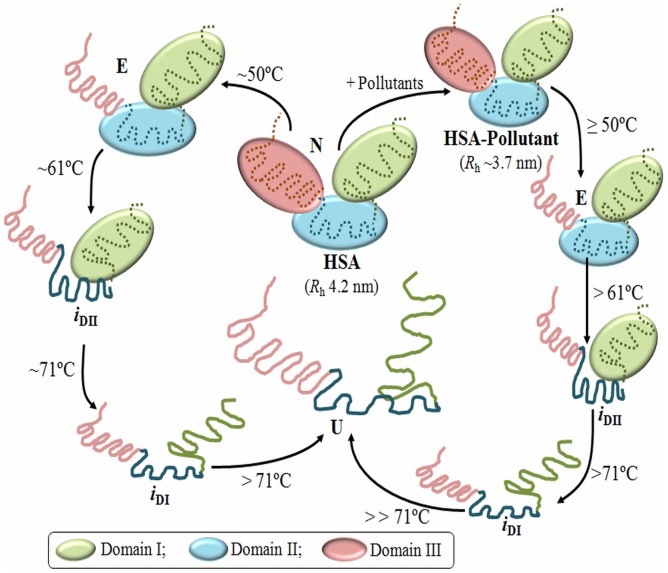
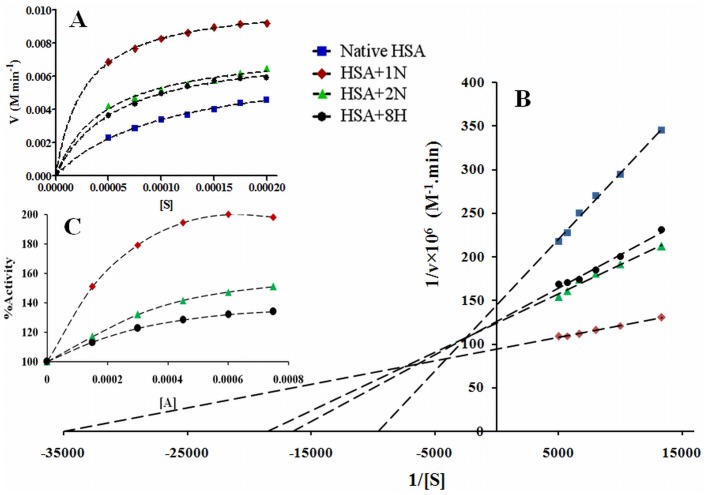
Structural changes in human serum albumin (HSA) induced by the pollutants 1-naphthol, 2-naphthol and 8-quinolinol were analyzed by circular dichroism, fluorescence spectroscopy and dynamic light scattering. The alteration in protein conformational stability was determined by helical content induction (from 55 to 75%) upon protein-pollutant interactions. Domain plasticity is responsible for the temperature-mediated unfolding of HSA. These findings were compared to HSA-hydrolase activity. We found that though HSA is a monomeric protein, it shows heterotropic allostericity for β-lactamase activity in the presence of pollutants, which act as K- and V-type non-essential activators. Pollutants cause conformational changes and catalytic modifications of the protein (increase in β-lactamase activity from 100 to 200%). HSA-pollutant interactions mediate other protein-ligand interactions, such as HSA-nitrocefin. Therefore, this protein can exist in different conformations with different catalytic properties depending on activator binding. This is the first report to demonstrate the catalytic allostericity of HSA through a mechanistic approach. We also show a correlation with non-microbial drug resistance as HSA is capable of self-hydrolysis of β-lactam drugs, which is further potentiated by pollutants due to conformational changes in HSA.
采用圆二色性、荧光光谱和动态光散射分析了污染物 1-萘酚、2-萘酚和 8-羟基喹啉对人血清白蛋白(HSA)的结构变化。通过蛋白质-污染物相互作用诱导的螺旋含量增加(从 55%增加到 75%),确定了蛋白质构象稳定性的改变。结构域的可塑性是 HSA 温度介导解折叠的原因。将这些发现与 HSA 水解酶活性进行了比较。我们发现,尽管 HSA 是一种单体蛋白,但在污染物存在下,它表现出对β-内酰胺酶活性的异源变构作用,污染物作为 K 型和 V 型非必需激活剂。污染物会引起蛋白质构象变化和催化修饰(β-内酰胺酶活性从 100%增加到 200%)。HSA-污染物相互作用介导其他蛋白质-配体相互作用,如 HSA-硝基头孢菌素。因此,这种蛋白质可以根据激活剂的结合存在于具有不同催化特性的不同构象中。这是首次通过机制方法证明 HSA 的催化变构作用的报告。我们还展示了与非微生物药物耐药性的相关性,因为 HSA 能够自身水解β-内酰胺类药物,而污染物会通过 HSA 的构象变化进一步增强这种作用。