Stem Cell Biology Unit, German Primate Center, Leibniz Institute for Primate Research, Kellnerweg 4, D-37077 Göttingen, Germany.
Mol Hum Reprod. 2012 Oct;18(10):477-88. doi: 10.1093/molehr/gas025. Epub 2012 Jun 11.
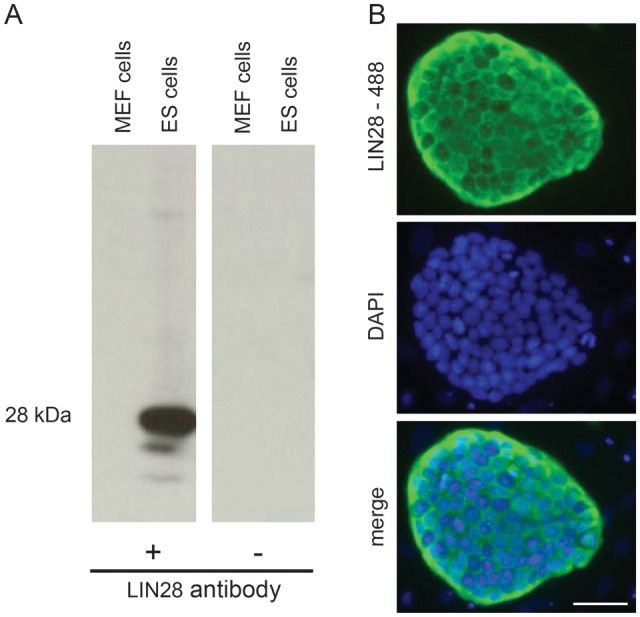
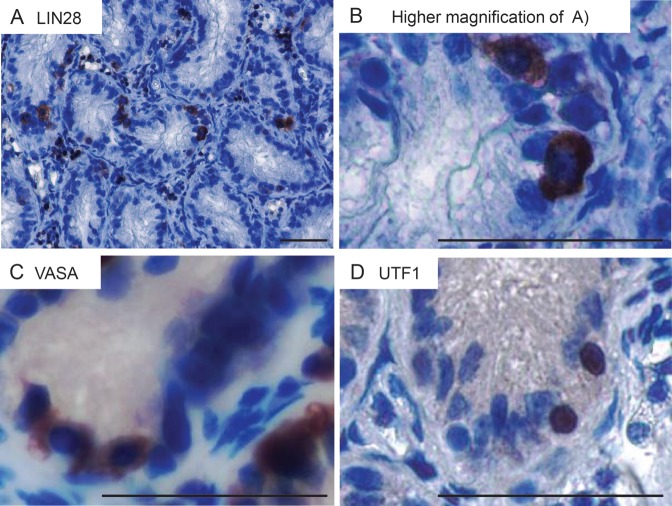
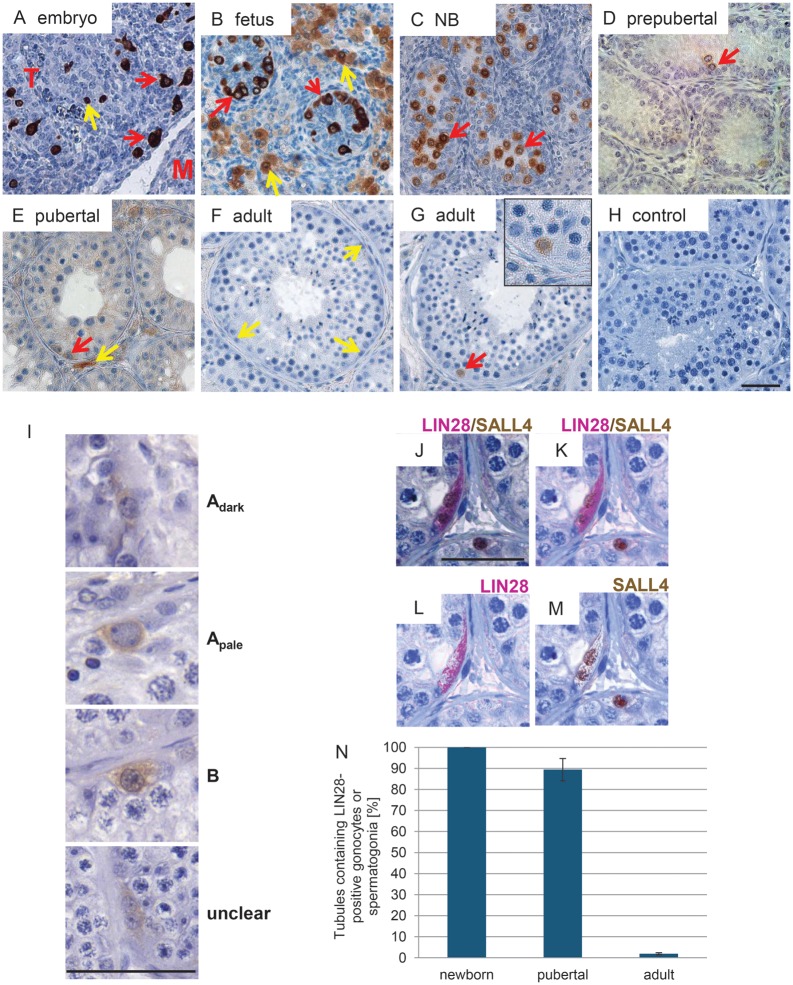
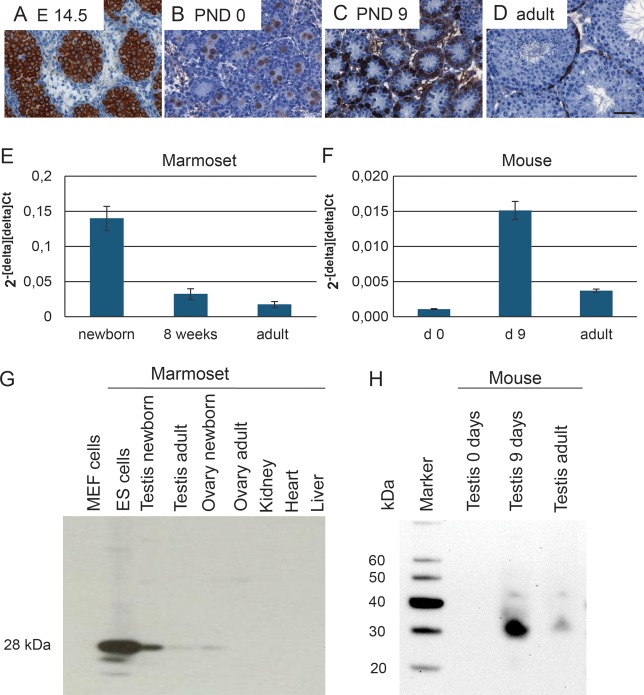
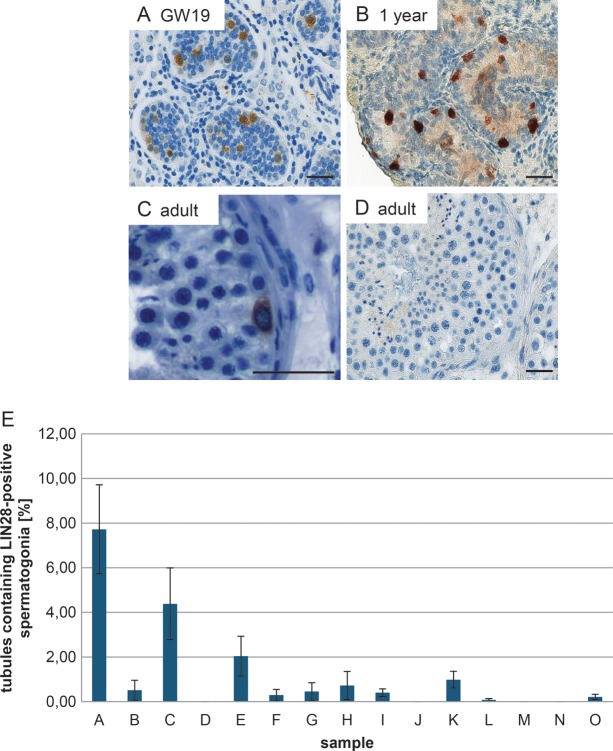
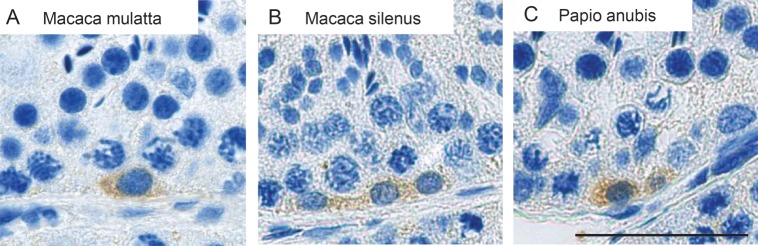
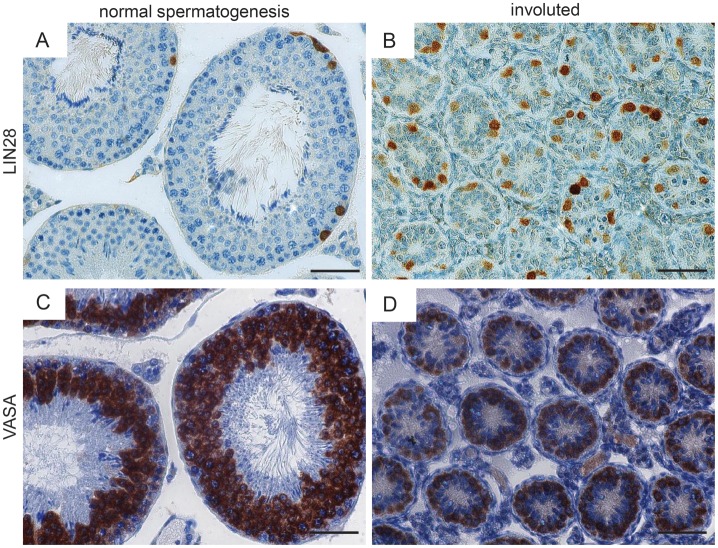
Mammalian spermatogenesis is maintained by spermatogonial stem cells (SSCs). However, since evidentiary assays and unequivocal markers are still missing in non-human primates (NHPs) and man, the identity of primate SSCs is unknown. In contrast, in mice, germ cell transplantation studies have functionally demonstrated the presence of SSCs. LIN28 is an RNA-binding pluripotent stem cell factor, which is also strongly expressed in undifferentiated mouse spermatogonia. By contrast, two recent reports indicated that LIN28 is completely absent from adult human testes. Here, we analyzed LIN28 expression in marmoset monkey (Callithrix jacchus) and human testes during development and adulthood and compared it with that in mice. In the marmoset, LIN28 was strongly expressed in migratory primordial germ cells and gonocytes. Strikingly, we found a rare LIN28-positive subpopulation of spermatogonia also in adult marmoset testis. This was corroborated by western blotting and quantitative RT-PCR. Importantly, in contrast to previous publications, we found LIN28-positive spermatogonia also in normal adult human and additional adult NHP testes. Some seasonal breeders exhibit a degenerated (involuted) germinal epithelium consisting only of Sertoli cells and SSCs during their non-breeding season. The latter re-initiate spermatogenesis prior to the next breeding-season. Fully involuted testes from a seasonal hamster and NHP (Lemur catta) exhibited numerous LIN28-positive spermatogonia, indicating an SSC identity of the labeled cells. We conclude that LIN28 is differentially expressed in mouse and NHP spermatogonia and might be a marker for a rare SSC population in NHPs and man. Further characterization of the LIN28-positive population is required.
哺乳动物的精子发生是由精原干细胞(SSC)维持的。然而,由于在非人类灵长类动物(NHP)和人类中仍然缺乏证据检测和明确的标记物,因此灵长类 SSC 的身份尚不清楚。相比之下,在小鼠中,生殖细胞移植研究已经从功能上证明了 SSC 的存在。LIN28 是一种 RNA 结合的多能干细胞因子,在未分化的小鼠精原细胞中也强烈表达。相比之下,最近的两项研究报告表明,LIN28 在成人睾丸中完全不存在。在这里,我们分析了食蟹猴(Callithrix jacchus)和人类睾丸在发育和成年过程中 LIN28 的表达,并将其与小鼠进行了比较。在食蟹猴中,LIN28 在迁移的原始生殖细胞和性母细胞中强烈表达。引人注目的是,我们还在成年食蟹猴睾丸中发现了一个罕见的 LIN28 阳性精原细胞亚群。Western blot 和定量 RT-PCR 验证了这一点。重要的是,与之前的出版物相比,我们还在正常成年人和其他成年 NHP 睾丸中发现了 LIN28 阳性精原细胞。一些季节性繁殖者在非繁殖季节会出现退化(萎缩)的生殖上皮,仅由支持细胞和 SSC 组成。后者在下次繁殖季节前重新开始精子发生。季节性仓鼠和 NHP(Lemur catta)的完全萎缩睾丸中存在许多 LIN28 阳性精原细胞,表明标记细胞具有 SSC 身份。我们得出结论,LIN28 在小鼠和 NHP 精原细胞中的表达不同,可能是 NHP 和人类中罕见 SSC 群体的标记物。需要进一步对 LIN28 阳性群体进行特征描述。