Bessa Sahar Saad El-Din, Mohamed Ali Ehab Mostafa, Abd El-Wahab Abeer El-Sayed, Nor El-Din Sherif Abd El-Monem
Department of Internal Medicine, Faculty of Medicine, Tanta University, Tanta, Egypt.
Hepat Mon. 2012 Apr;12(4):278-85. doi: 10.5812/hepatmon.846. Epub 2012 Apr 30.
Chronic liver disease (CLD) is a global medical problem. This disease is associated with increased hepatic oxidative stress. One of the antioxidant enzymes that protect cells against this stress is heme oxygenase-1 (HO-1).
This study aimed to investigate the mRNA expression of HO-1 in Egyptian patients with CLD and its relation to oxidative stress biomarkers.
Levels of serum ferritin, carboxyhemoglobin, malondialdehyde (MDA), and erythrocyte-reduced glutathione (GSH) were measured, and HO-1 mRNA expression was detected in 45 CLD patients (15 with nonalcoholic steatohepatitis [NASH], 15 with chronic hepatitis C, and 15 with liver cirrhosis) and 15 healthy controls.
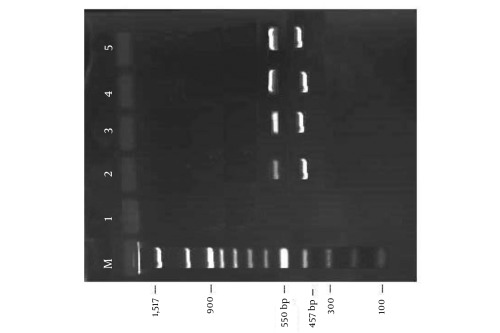
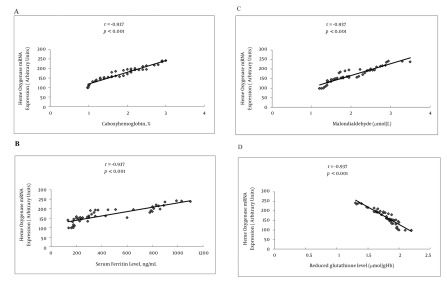
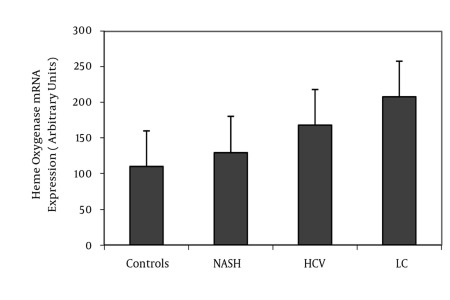
HO-1 mRNA expression was increased in patients with NASH, chronic hepatitis C, and liver cirrhosis compared to controls. The expression in cirrhotic patients was significantly higher than that in patients with NASH and chronic hepatitis C. Compared to controls, patients with NASH, chronic hepatitis C, and liver cirrhosis had higher levels of ferritin, carboxyhemoglobin, and MDA and lower levels of GSH. HO-1 mRNA expression was positively correlated with levels of carboxyhemoglobin, serum ferritin, and serum MDA and negatively correlated with levels of erythrocyte GSH in CLD patients.
HO-1 mRNA expression was significantly increased in CLD patients, and the increase reflected the severity of the disease. The significant relationship between the increased HO-1 expression and oxidative stress biomarkers in patients with CLD suggests that HO-1 may play an important role in protecting the liver from oxidative stress-dependent damage. Therefore, induction of HO-1 could be a novel therapeutic option for CLD.
慢性肝病(CLD)是一个全球性的医学问题。这种疾病与肝脏氧化应激增加有关。血红素加氧酶-1(HO-1)是保护细胞免受这种应激的抗氧化酶之一。
本研究旨在调查埃及CLD患者中HO-1的mRNA表达及其与氧化应激生物标志物的关系。
测量了45例CLD患者(15例非酒精性脂肪性肝炎[NASH]、15例慢性丙型肝炎和15例肝硬化)和15例健康对照者的血清铁蛋白、碳氧血红蛋白、丙二醛(MDA)和红细胞还原型谷胱甘肽(GSH)水平,并检测了HO-1 mRNA表达。
与对照组相比,NASH、慢性丙型肝炎和肝硬化患者的HO-1 mRNA表达增加。肝硬化患者的表达明显高于NASH和慢性丙型肝炎患者。与对照组相比,NASH、慢性丙型肝炎和肝硬化患者的铁蛋白、碳氧血红蛋白和MDA水平较高,GSH水平较低。在CLD患者中,HO-1 mRNA表达与碳氧血红蛋白、血清铁蛋白和血清MDA水平呈正相关,与红细胞GSH水平呈负相关。
CLD患者的HO-1 mRNA表达显著增加,这种增加反映了疾病的严重程度。CLD患者中HO-1表达增加与氧化应激生物标志物之间的显著关系表明,HO-1可能在保护肝脏免受氧化应激依赖性损伤中起重要作用。因此,诱导HO-1可能是CLD的一种新的治疗选择。