Lyke Kirsten E, Wang Amy, Dabo Abdoulaye, Arama Charles, Daou Modibo, Diarra Issa, Plowe Christopher V, Doumbo Ogobara K, Sztein Marcelo B
Center for Vaccine Development, University of Maryland School of Medicine, Baltimore, Maryland, United States of America.
PLoS One. 2012;7(6):e37868. doi: 10.1371/journal.pone.0037868. Epub 2012 Jun 5.
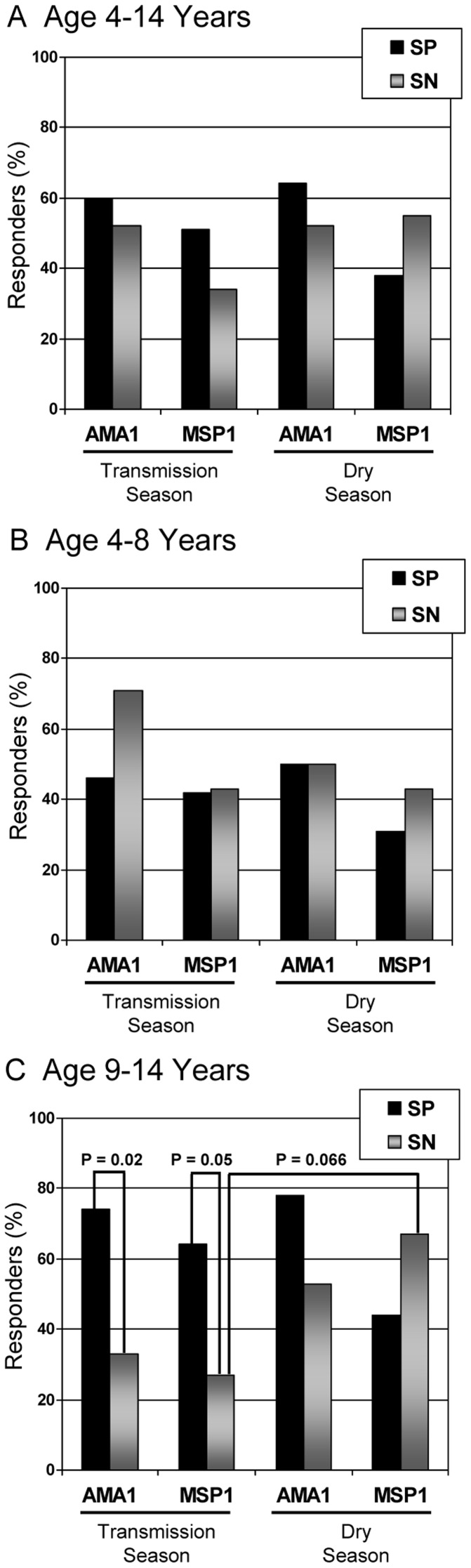
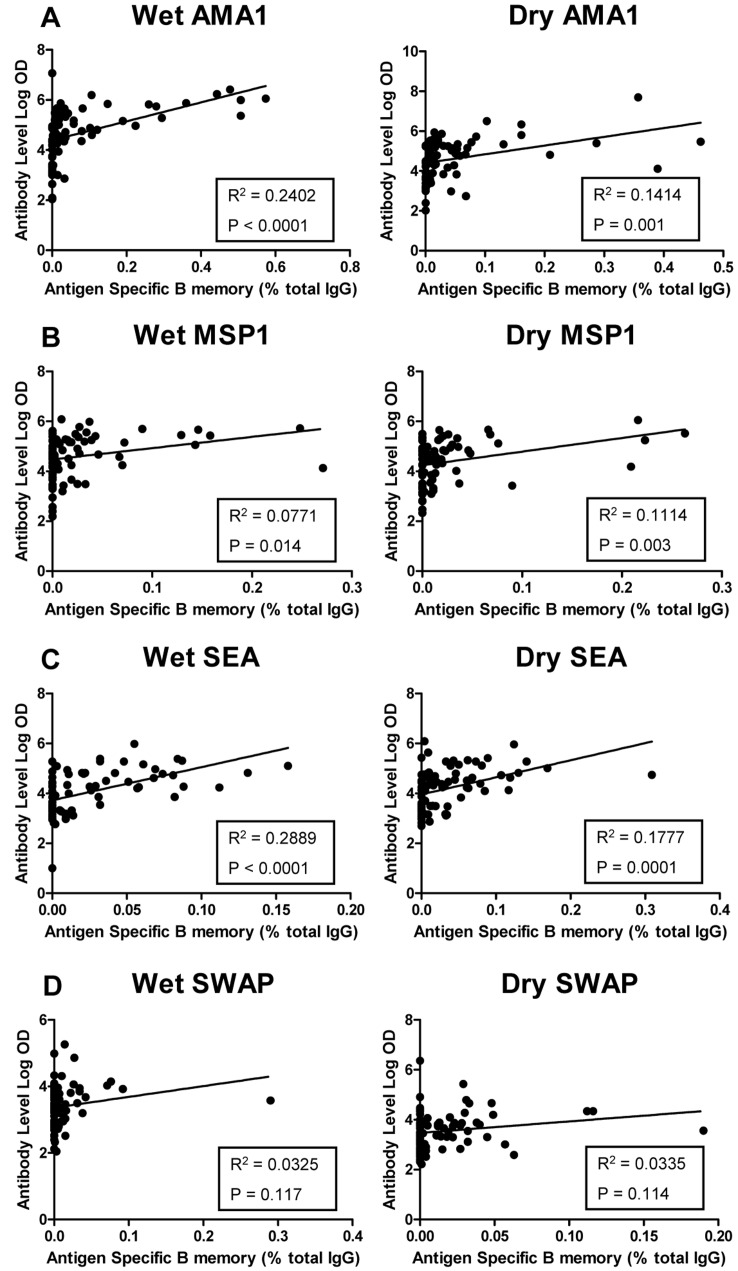
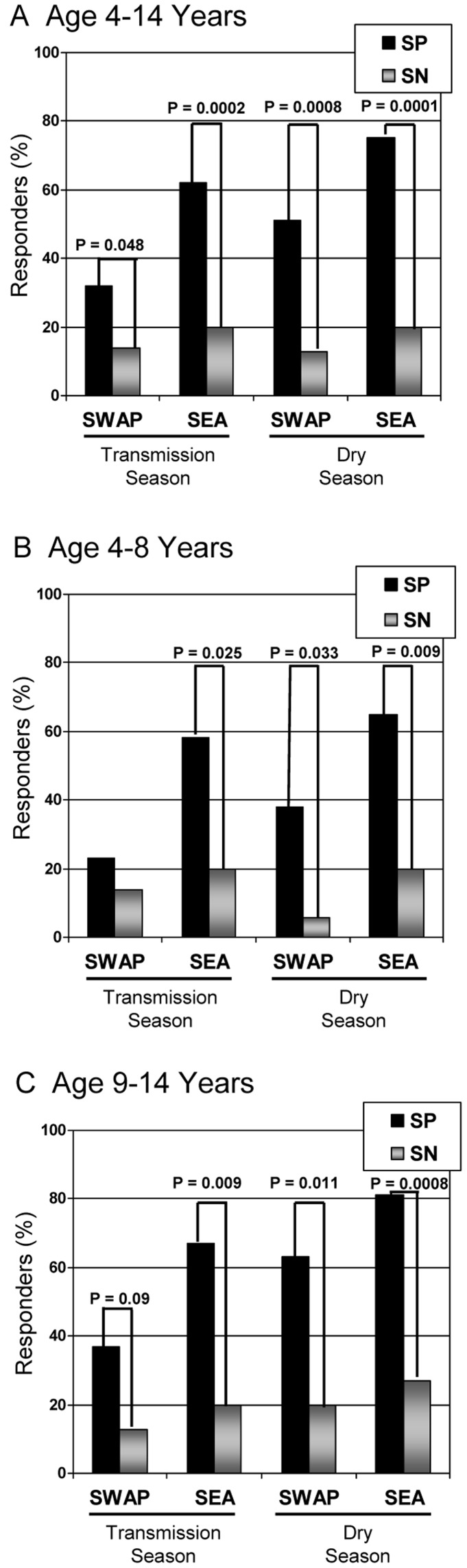
Polyparasitism is common in the developing world. We have previously demonstrated that schistosomiasis-positive (SP) Malian children have age-dependent protection from malaria compared to matched schistosomiasis-negative (SN) children. Evidence of durable immunologic memory to malaria antigens is conflicting, particularly in young children and the effect of concomitant schistomiasis upon acquisition of memory is unknown. We examined antigen-specific B memory cell (MBC) frequencies (expressed as percentage of total number of IgG-secreting cells) in 84 Malian children aged 4-14 to malaria blood-stage antigens, apical membrane antigen 1 (AMA-1) and merozoite surface protein 1 (MSP-1) and to schistosomal antigens, Soluble Worm Antigenic Preparation (SWAP) and Schistosoma Egg Antigen (SEA), at a time point during the malaria transmission season and a follow-up dry season visit. We demonstrate, for the first time, MBC responses to S. haematobium antigens in Malian children with urinary egg excretion and provide evidence of seasonal acquisition of immunologic memory, age-associated differences in MBC acquisition, and correlation with circulating S. haematobium antibody. Moreover, the presence of a parasitic co-infection resulted in older children, aged 9-14 years, with underlying S. haematobium infection having significantly more MBC response to malaria antigens (AMA1 and MSP1) than their age-matched SN counterparts. We conclude that detectable MBC response can be measured against both malaria and schistosomal antigens and that the presence of S. haematobium may be associated with enhanced MBC induction in an age-specific manner.
多重寄生虫感染在发展中世界很常见。我们之前已经证明,与配对的血吸虫病阴性(SN)儿童相比,血吸虫病阳性(SP)的马里儿童对疟疾有年龄依赖性的保护作用。对疟疾抗原产生持久免疫记忆的证据存在矛盾,尤其是在幼儿中,同时感染血吸虫病对记忆获得的影响尚不清楚。我们检测了84名4至14岁马里儿童针对疟疾血液期抗原顶膜抗原1(AMA-1)和裂殖子表面蛋白1(MSP-1)以及血吸虫抗原可溶性虫体抗原制剂(SWAP)和血吸虫虫卵抗原(SEA)的抗原特异性B记忆细胞(MBC)频率(以分泌IgG细胞总数的百分比表示),检测时间点为疟疾传播季节的某个时刻以及后续旱季的随访。我们首次证明了有尿卵排泄的马里儿童对埃及血吸虫抗原的MBC反应,并提供了免疫记忆季节性获得、MBC获得的年龄相关差异以及与循环埃及血吸虫抗体相关性的证据。此外,寄生虫合并感染导致9至14岁的大龄儿童,潜在感染埃及血吸虫的儿童对疟疾抗原(AMA-1和MSP-1)的MBC反应明显多于年龄匹配的SN儿童。我们得出结论,针对疟疾和血吸虫抗原均可检测到MBC反应,并且埃及血吸虫的存在可能以年龄特异性方式与增强的MBC诱导相关。