Ghent University, Faculty of Veterinary Medicine, Department of Pathology, Bacteriology and Avian Diseases, Salisburylaan 133, 9820, Merelbeke, Belgium.
Vet Res. 2012 Jun 13;43(1):52. doi: 10.1186/1297-9716-43-52.
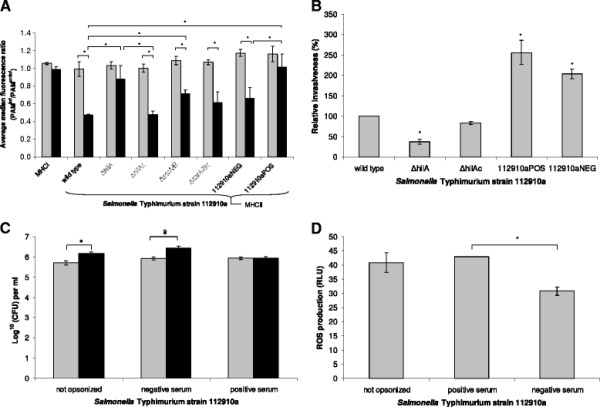
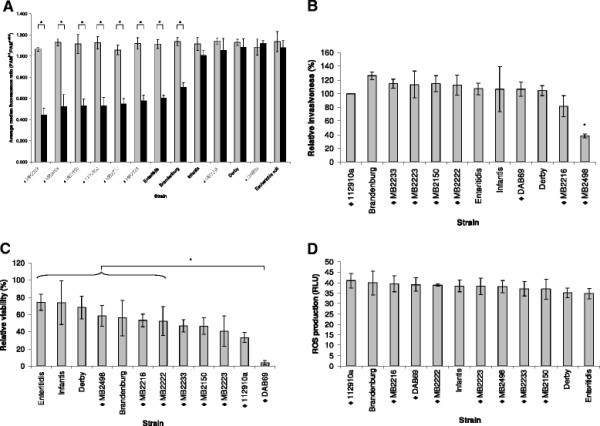
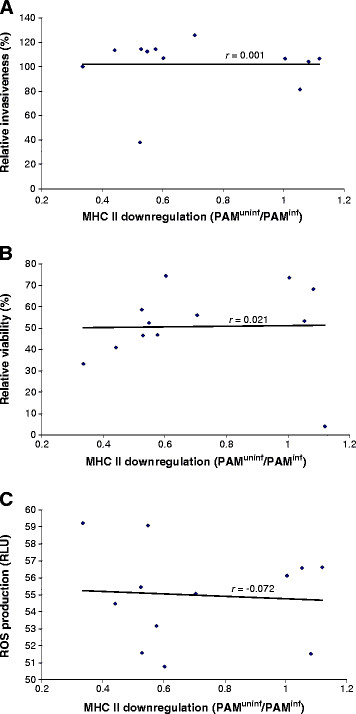
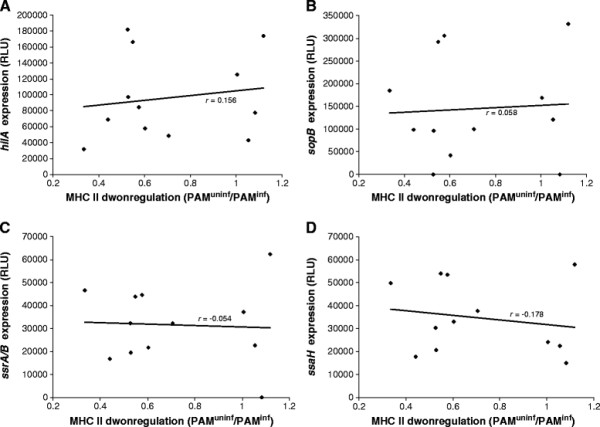
Foodborne salmonellosis is one of the most important bacterial zoonotic diseases worldwide. Salmonella Typhimurium is the serovar most frequently isolated from persistently infected slaughter pigs in Europe. Circumvention of the host's immune system by Salmonella might contribute to persistent infection of pigs. In the present study, we found that Salmonella Typhimurium strain 112910a specifically downregulated MHC II, but not MHC I, expression on porcine alveolar macrophages in a Salmonella pathogenicity island (SPI)-1 and SPI-2 dependent way. Salmonella induced downregulation of MHC II expression and intracellular proliferation of Salmonella in macrophages were significantly impaired after opsonization with Salmonella specific antibodies prior to inoculation. Furthermore, the capacity to downregulate MHC II expression on macrophages differed significantly among Salmonella strains, independently of strain specific differences in invasion capacity, Salmonella induced cytotoxicity and altered macrophage activation status. The fact that strain specific differences in MHC II downregulation did not correlate with the extent of in vitro SPI-1 or SPI-2 gene expression indicates that other factors are involved in MHC II downregulation as well. Since Salmonella strain dependent interference with the pig's immune response through downregulation of MHC II expression might indicate that certain Salmonella strains are more likely to escape serological detection, our findings are of major interest for Salmonella monitoring programs primarily based on serology.
食源性沙门氏菌病是全球最重要的细菌性人畜共患病之一。在欧洲,从持续感染的屠宰猪中分离出的血清型沙门氏菌血清型鼠伤寒沙门氏菌最为常见。沙门氏菌逃避宿主免疫系统可能有助于猪的持续感染。在本研究中,我们发现沙门氏菌 Typhimurium 菌株 112910a 特异性地以沙门氏菌致病性岛 (SPI)-1 和 SPI-2 依赖的方式下调猪肺泡巨噬细胞中的 MHC II,但不下调 MHC I 的表达。在接种前用沙门氏菌特异性抗体调理后,沙门氏菌诱导的 MHC II 表达下调和巨噬细胞内沙门氏菌的增殖明显受损。此外,在巨噬细胞上下调 MHC II 表达的能力在不同的沙门氏菌菌株之间存在显著差异,而与入侵能力、沙门氏菌诱导的细胞毒性和改变的巨噬细胞激活状态的菌株特异性差异无关。MHC II 下调的菌株特异性差异与体外 SPI-1 或 SPI-2 基因表达的程度无关表明,其他因素也参与了 MHC II 的下调。由于通过下调 MHC II 表达而导致的沙门氏菌菌株特异性干扰猪的免疫反应可能表明某些沙门氏菌菌株更有可能逃避血清学检测,因此我们的研究结果对于主要基于血清学的沙门氏菌监测计划具有重要意义。