Neuropsychopharmacology and Toxicology Program, College of PharmacyKangwon National University, Chunchon 200-701, South Korea.
J Neuroinflammation. 2012 Jun 13;9:124. doi: 10.1186/1742-2094-9-124.
The striato-nigral projecting pathway contains the highest concentrations of dynorphin in the brain. The functional role of this opioid peptide in the regulation of mesencephalic dopaminergic (DAergic) neurons is not clear. We reported previously that exogenous dynorphin exerts potent neuroprotective effects against inflammation-induced dopaminergic neurodegeneration in vitro. The present study was performed to investigate whether endogenous dynorphin has neuroprotective roles in vivo.
1-Methyl-4-phenyl-1,2,3,6-tetrahydropyridine (MPTP) and methamphetamine (MA), two commonly used neurotoxins in rodent models of Parkinson's disease, were administered to wild-type (Dyn⁺/⁺) and prodynorphin-deficient mice (Dyn⁻/⁻). We examined dopaminergic neurotoxicity by using an automated video tracking system, HPLC, immunocytochemistry, and reverse transcription and polymerase chain reaction (RT-PCR).
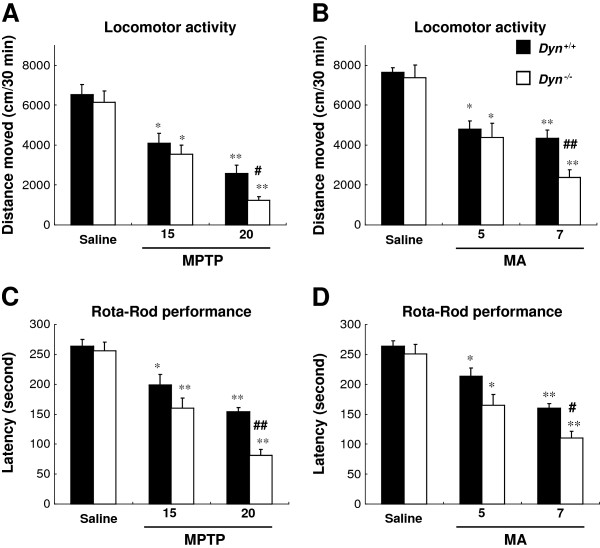
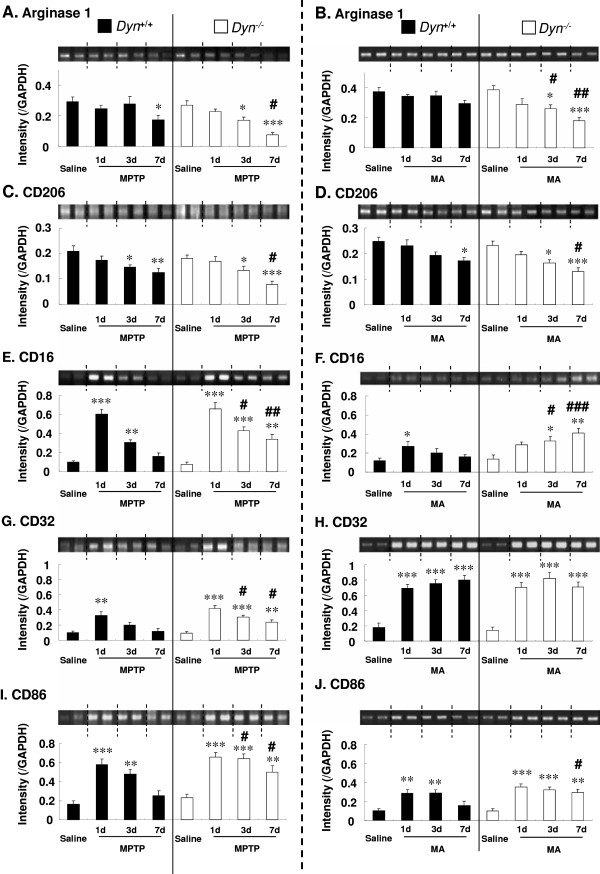
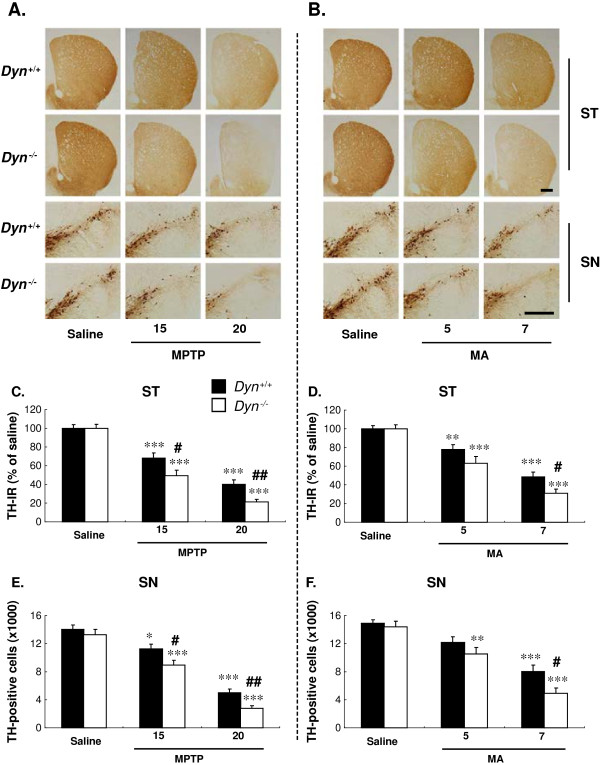
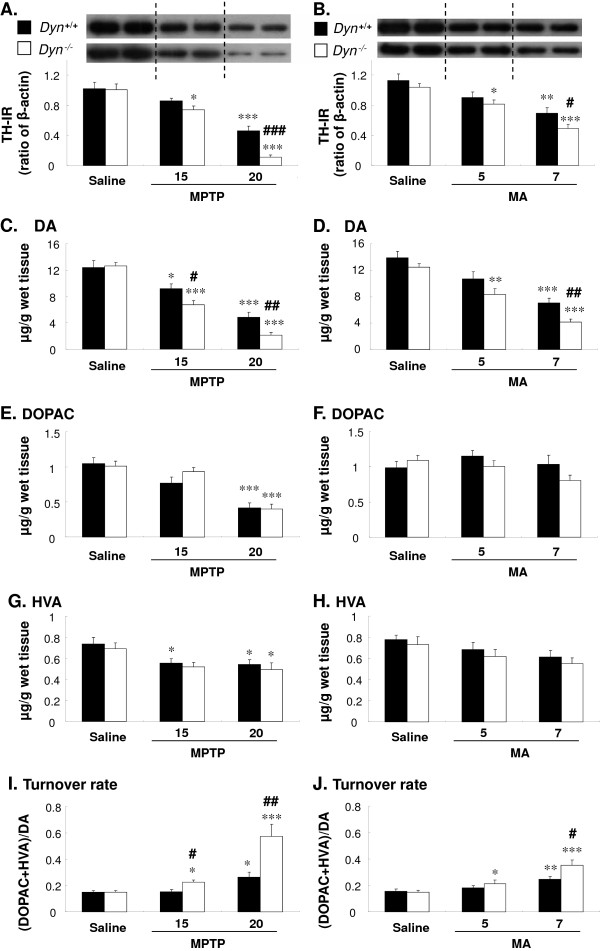
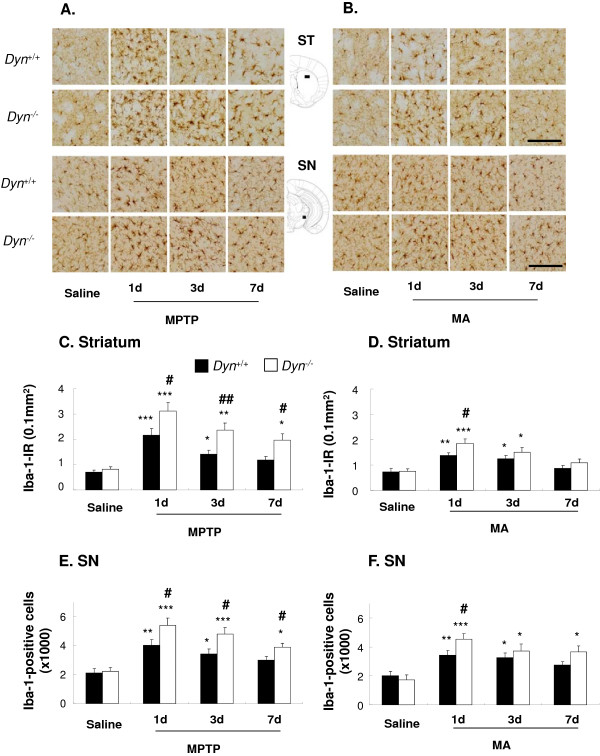
Treatment with MPTP resulted in behavioral impairments in both strains. However, these impairments were more pronounced in Dyn-l- than in Dyn⁺/⁺. Dyn⁻/⁻ showed more severe MPTP-induced dopaminergic neuronal loss in the substantia nigra and striatum than Dyn⁺/⁺. Similarly, the levels of dopamine and its metabolites in the striatum were depleted to a greater extent in Dyn⁻/⁻ than in Dyn⁺/⁺. Additional mechanistic studies revealed that MPTP treatment caused a higher degree of microglial activation and M1 phenotype differentiation in Dyn⁻/⁻ than in Dyn⁺/⁺. Consistent with these observations, prodynorphin deficiency also exacerbated neurotoxic effects induced by MA, although this effect was less pronounced than that of MPTP.
The in vivo results presented here extend our previous in vitro findings and further indicate that endogenous dynorphin plays a critical role in protecting dopaminergic neurons through its anti-inflammatory effects.
纹状体-黑质投射通路含有大脑中最高浓度的强啡肽。这种阿片肽在调节中脑多巴胺能(DAergic)神经元中的功能作用尚不清楚。我们之前报道过,外源性强啡肽对体外炎症诱导的多巴胺能神经退行性变具有强大的神经保护作用。本研究旨在探讨内源性强啡肽是否在体内具有神经保护作用。
1-甲基-4-苯基-1,2,3,6-四氢吡啶(MPTP)和 methamphetamine(MA),是两种常用于帕金森病啮齿动物模型的神经毒素,被给予野生型(Dyn⁺/⁺)和前强啡肽缺陷小鼠(Dyn⁻/⁻)。我们使用自动视频跟踪系统、HPLC、免疫细胞化学和逆转录聚合酶链反应(RT-PCR)来检测多巴胺能神经毒性。
MPTP 处理导致两种品系的行为障碍。然而,在 Dyn-l-中比在 Dyn⁺/⁺中更为明显。Dyn⁻/⁻显示出比 Dyn⁺/⁺更严重的 MPTP 诱导的黑质和纹状体多巴胺能神经元丢失。同样,纹状体中的多巴胺及其代谢物水平在 Dyn⁻/⁻中比在 Dyn⁺/⁺中消耗得更为严重。进一步的机制研究表明,MPTP 处理导致 Dyn⁻/⁻中比 Dyn⁺/⁺中更高程度的小胶质细胞激活和 M1 表型分化。与这些观察结果一致,前强啡肽缺陷也加剧了 MA 诱导的神经毒性作用,尽管这种作用不如 MPTP 明显。
这里提出的体内结果扩展了我们之前的体外发现,并进一步表明内源性强啡肽通过其抗炎作用在保护多巴胺能神经元中发挥关键作用。