Department of Chemistry, School of Science, Tokai University, Kitakaname, Hiratsuka-shi, Kanagawa 259-1292, Japan.
Molecules. 2012 Jun 13;17(6):7266-83. doi: 10.3390/molecules17067266.
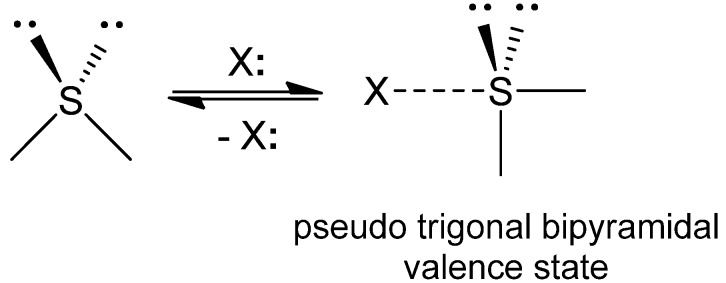
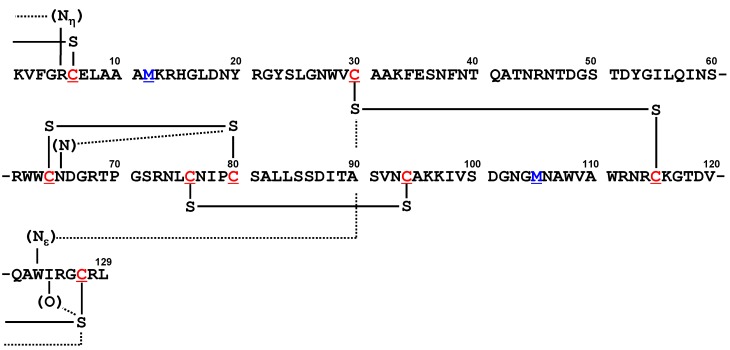
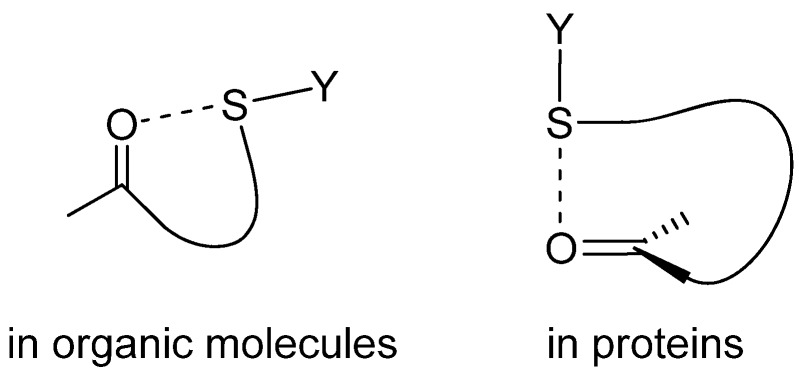
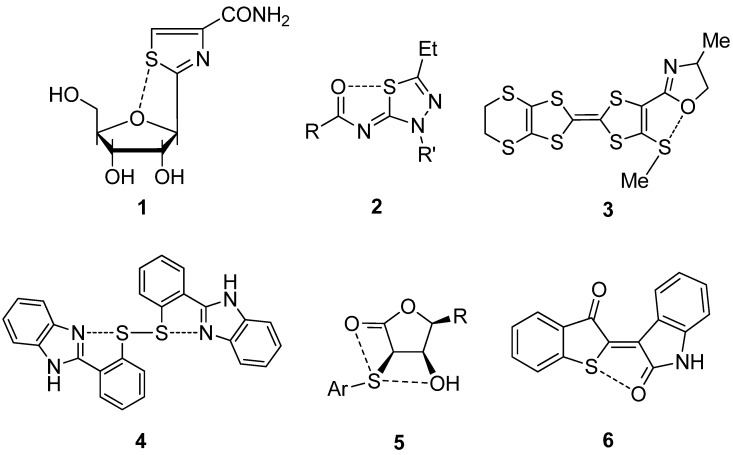
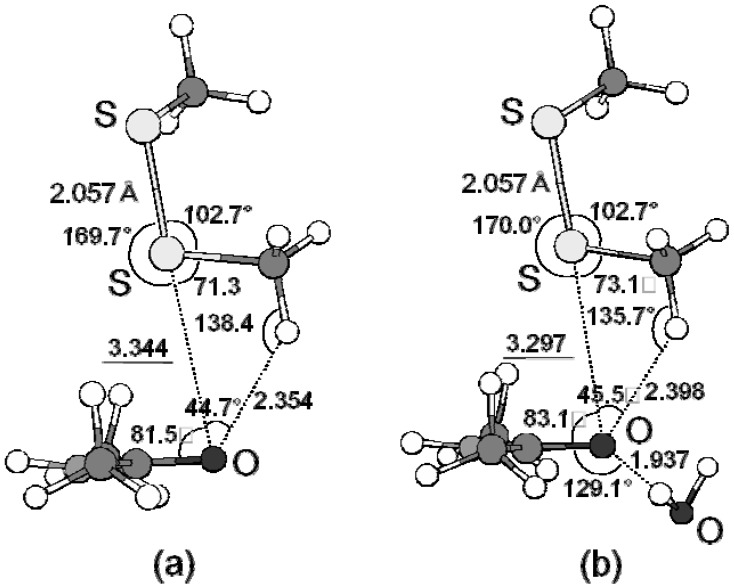
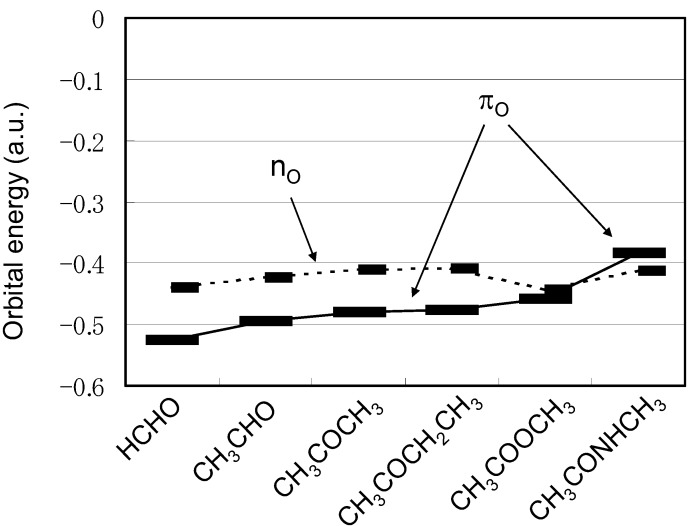
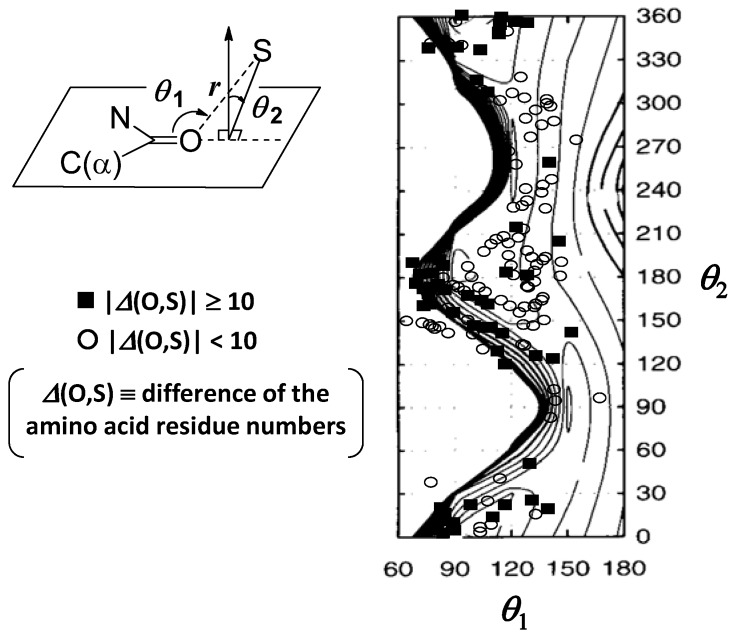
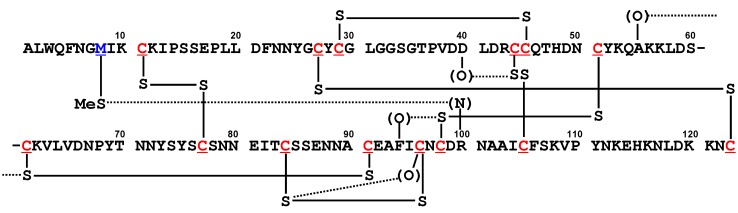
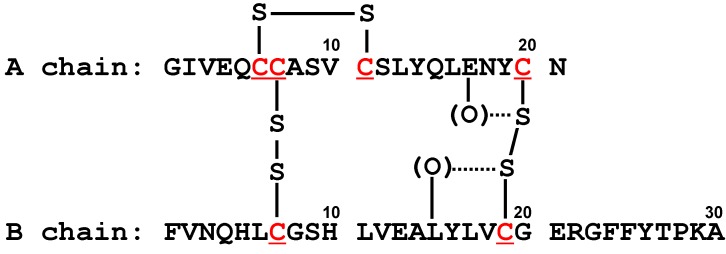
In organic molecules a divalent sulfur atom sometimes adopts weak coordination to a proximate heteroatom (X). Such hypervalent nonbonded S···X interactions can control the molecular structure and chemical reactivity of organic molecules, as well as their assembly and packing in the solid state. In the last decade, similar hypervalent interactions have been demonstrated by statistical database analysis to be present in protein structures. In this review, weak interactions between a divalent sulfur atom and an oxygen or nitrogen atom in proteins are highlighted with several examples. S···O interactions in proteins showed obviously different structural features from those in organic molecules (i.e., π(o) → σ(s)* versus n(o) → σ(s)* directionality). The difference was ascribed to the HOMO of the amide group, which expands in the vertical direction (π(o)) rather than in the plane (n(o)). S···X interactions in four model proteins, phospholipase A₂ (PLA₂), ribonuclease A (RNase A), insulin, and lysozyme, have also been analyzed. The results suggested that S···X interactions would be important factors that control not only the three-dimensional structure of proteins but also their functions to some extent. Thus, S···X interactions will be useful tools for protein engineering and the ligand design.
在有机分子中,二价硫原子有时会与邻近的杂原子(X)弱配位。这种超价非键合 S···X 相互作用可以控制有机分子的结构和化学反应性,以及它们在固态中的组装和堆积。在过去的十年中,统计数据库分析表明,类似的超价相互作用也存在于蛋白质结构中。在这篇综述中,通过几个例子强调了蛋白质中二价硫原子与氧原子或氮原子之间的弱相互作用。蛋白质中的 S···O 相互作用与有机分子中的相互作用具有明显不同的结构特征(即 π(o) → σ(s)*与 n(o) → σ(s)*方向性)。这种差异归因于酰胺基团的 HOMO,它在垂直方向(π(o))扩展,而不是在平面(n(o))扩展。还分析了四种模型蛋白(磷脂酶 A₂(PLA₂)、核糖核酸酶 A(RNase A)、胰岛素和溶菌酶)中的 S···X 相互作用。结果表明,S···X 相互作用将是控制蛋白质三维结构及其功能的重要因素。因此,S···X 相互作用将是蛋白质工程和配体设计的有用工具。