Institute for Complex Systems (ICS-5: Molecular Biophysics), Forschungszentrum Jülich, Jülich, Germany.
J R Soc Interface. 2012 Nov 7;9(76):2845-55. doi: 10.1098/rsif.2012.0364. Epub 2012 Jun 13.
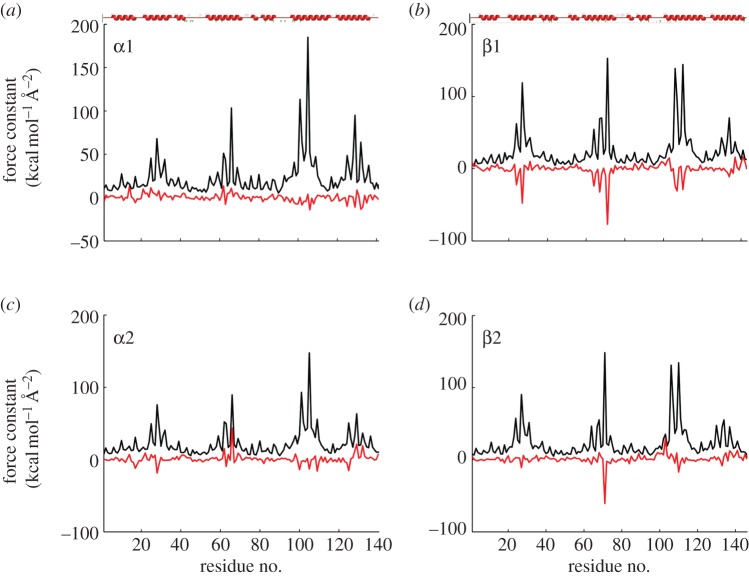
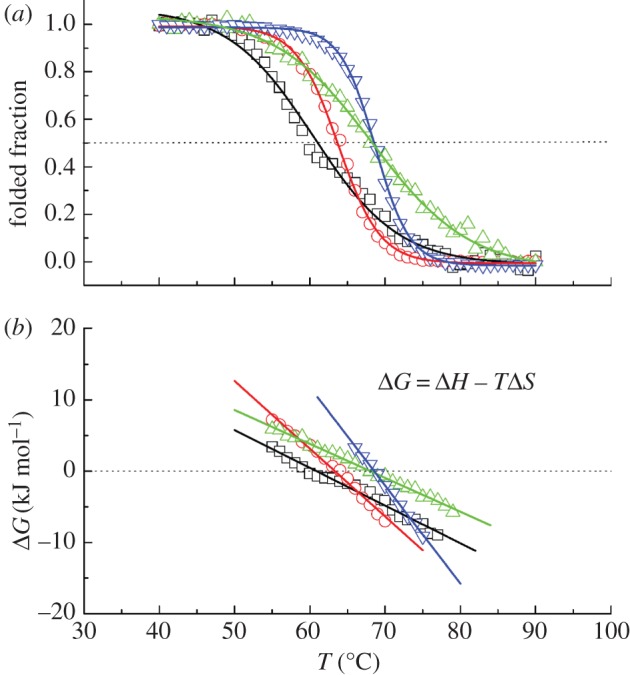
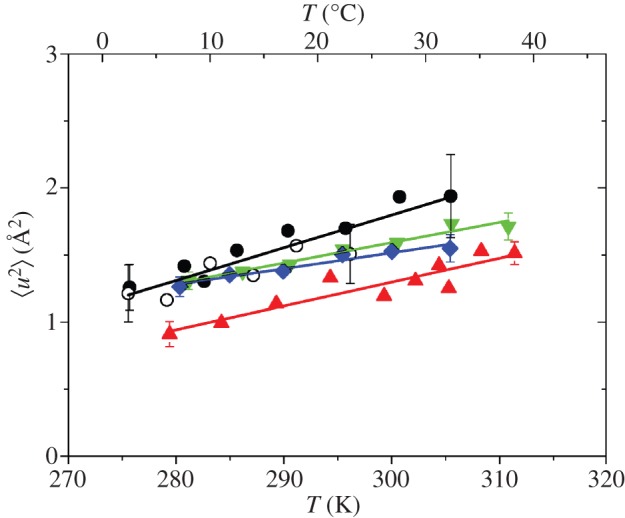
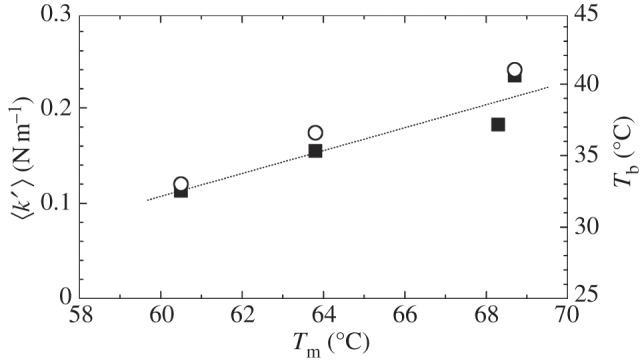
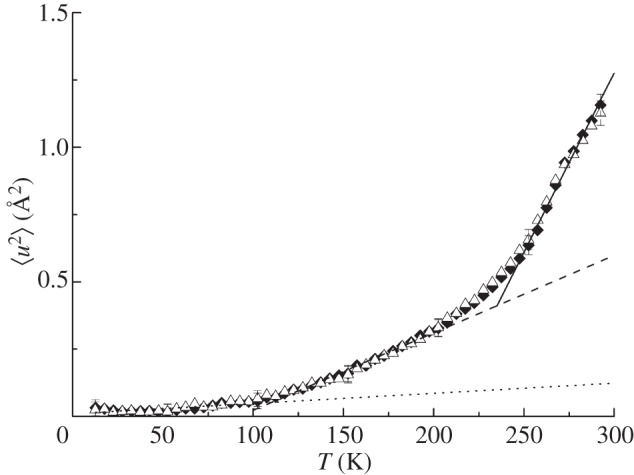
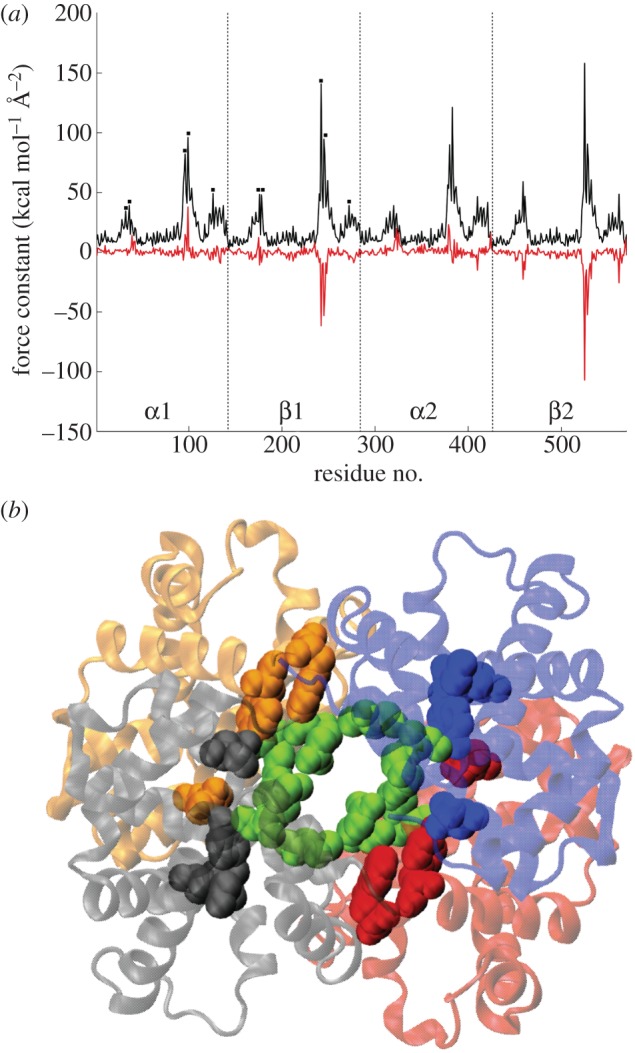
Thermodynamic stability, configurational motions and internal forces of haemoglobin (Hb) of three endotherms (platypus, Ornithorhynchus anatinus; domestic chicken, Gallus gallus domesticus and human, Homo sapiens) and an ectotherm (salt water crocodile, Crocodylus porosus) were investigated using circular dichroism, incoherent elastic neutron scattering and coarse-grained Brownian dynamics simulations. The experimental results from Hb solutions revealed a direct correlation between protein resilience, melting temperature and average body temperature of the different species on the 0.1 ns time scale. Molecular forces appeared to be adapted to permit conformational fluctuations with a root mean square displacement close to 1.2 Å at the corresponding average body temperature of the endotherms. Strong forces within crocodile Hb maintain the amplitudes of motion within a narrow limit over the entire temperature range in which the animal lives. In fully hydrated powder samples of human and chicken, Hb mean square displacements and effective force constants on the 1 ns time scale showed no differences over the whole temperature range from 10 to 300 K, in contrast to the solution case. A complementary result of the study, therefore, is that one hydration layer is not sufficient to activate all conformational fluctuations of Hb in the pico- to nanosecond time scale which might be relevant for biological function. Coarse-grained Brownian dynamics simulations permitted to explore residue-specific effects. They indicated that temperature sensing of human and chicken Hb occurs mainly at residues lining internal cavities in the β-subunits.
使用圆二色性、非相干弹性中子散射和粗粒布朗动力学模拟研究了三种恒温动物(鸭嘴兽、Ornithorhynchus anatinus;家鸡、Gallus gallus domesticus 和人类、Homo sapiens)和一种变温动物(咸水鳄、Crocodylus porosus)的血红蛋白(Hb)的热力学稳定性、构象运动和内力。Hb 溶液的实验结果表明,在 0.1 ns 时间尺度上,蛋白质弹性、熔点和不同物种的平均体温之间存在直接相关性。分子力似乎适应于允许构象波动,在相应的恒温动物的平均体温下,均方根位移接近 1.2 Å。在整个鳄鱼 Hb 所处的温度范围内,分子内的强作用力将运动幅度维持在一个狭窄的范围内。在人类和鸡的完全水合粉末样品中,在 1 ns 时间尺度上的 Hb 均方根位移和有效力常数在整个温度范围内(从 10 到 300 K)没有差异,与溶液情况相反。因此,研究的一个补充结果是,一层水合层不足以在皮秒到纳秒时间尺度上激活 Hb 的所有构象波动,这可能与生物学功能有关。粗粒布朗动力学模拟允许探索残基特异性效应。它们表明,人类和鸡的 Hb 的温度感应主要发生在β亚基内部腔的边缘残基上。