Macherla Chitralekha, Sanchez David A, Ahmadi Mohammed S, Vellozzi Ernestine M, Friedman Adam J, Nosanchuk Joshua D, Martinez Luis R
Department of Biomedical Sciences, Long Island University, Brookville NY, USA.
Front Microbiol. 2012 Jun 8;3:193. doi: 10.3389/fmicb.2012.00193. eCollection 2012.
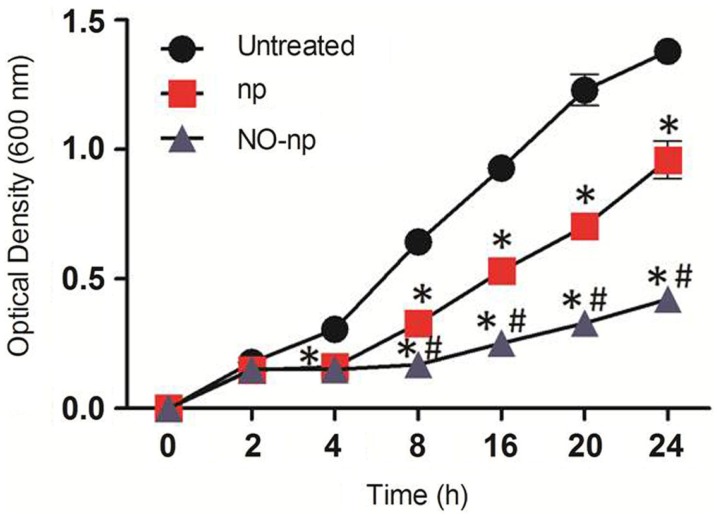
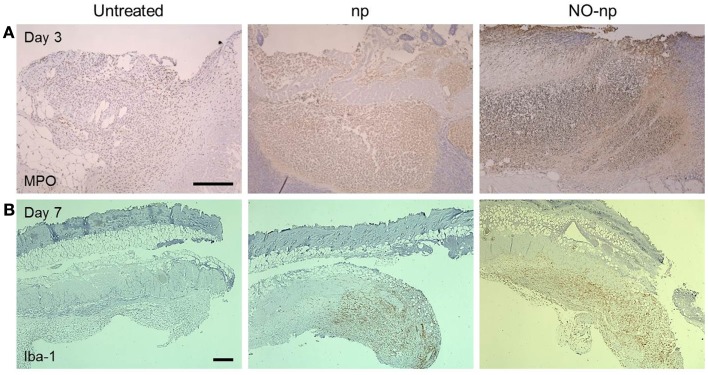
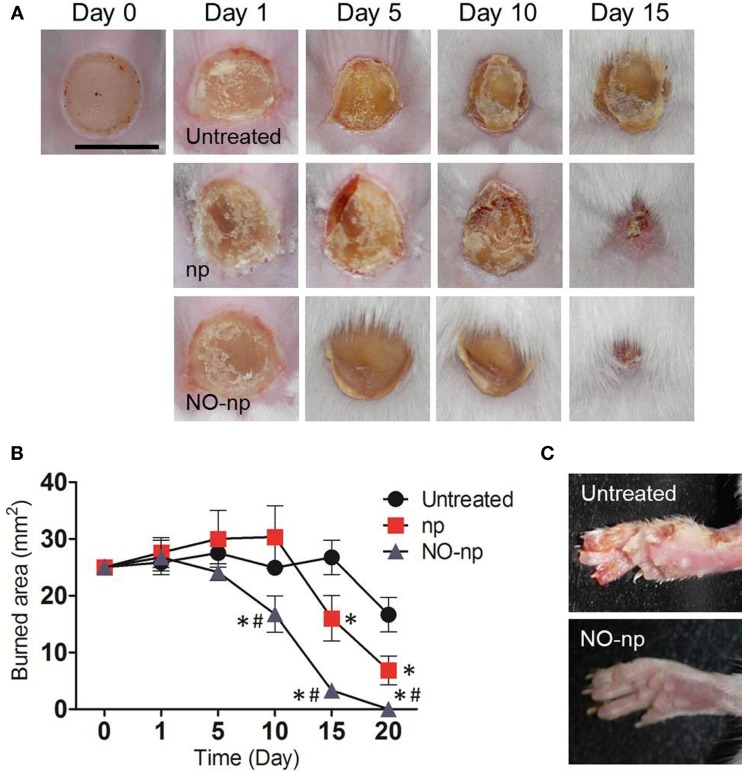
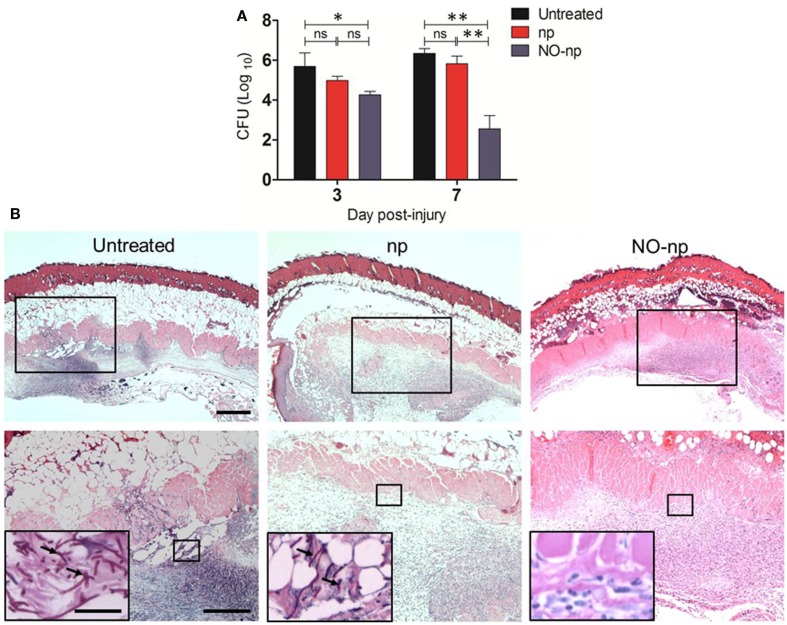
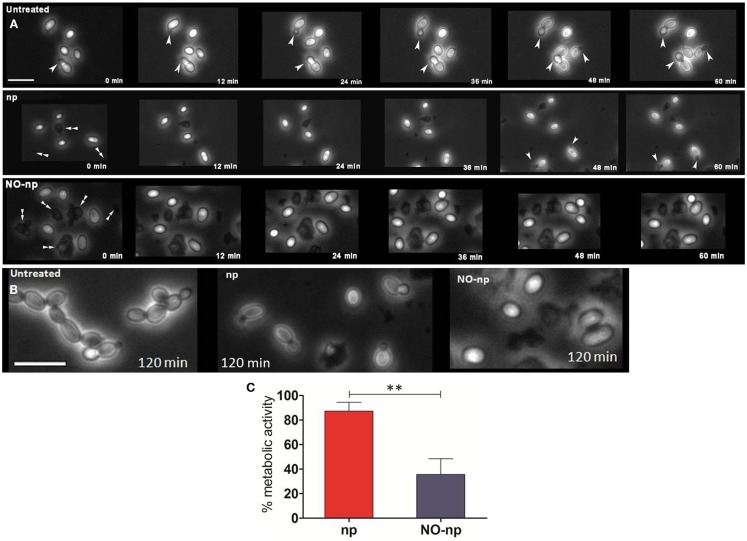
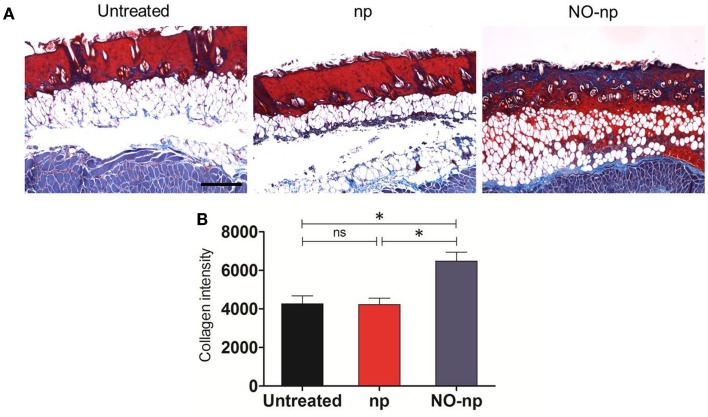
Candida albicans is a leading fungal cause of burn infections in hospital settings, and sepsis is one of the principle causes of death after a severe burn. The prevalence of invasive candidiasis in burn cases varies widely, but it accounts for 3-23% of severe infection with a mortality rate ranging from 14 to 70%. Therefore, it is imperative that we develop innovative therapeutics to which this fungus is unlikely to evolve resistance, thus curtailing the associated morbidity and mortality and ultimately improving our capacity to treat these infections. An inexpensive and stable nitric oxide (NO)-releasing nanoparticle (NO-np) platform has been recently developed. NO is known to have direct antifungal activity, modulate host immune responses and significantly regulate wound healing. In this study, we hypothesized that NO-np would be an effective therapy in the treatment of C. albicans burn infections. Using a murine burn model, NO-np demonstrated antifungal activity against C. albicans in vivo, most likely by arresting its growth and morphogenesis as demonstrated in vitro. NO-np demonstrated effective antimicrobial activity against yeast and filamentous forms of the fungus. Moreover, we showed that NO-np significantly accelerated the rate of wound healing in cutaneous burn infections when compared to controls. The histological evaluation of the affected tissue revealed that NO-np treatment modified leukocyte infiltration, minimized the fungal burden, and reduced collagen degradation, thus providing potential mechanisms for the therapeutics' biological activity. Together, these data suggest that NO-np have the potential to serve as a novel topical antifungal which can be used for the treatment of cutaneous burn infections and wounds.
白色念珠菌是医院环境中烧伤感染的主要真菌病因,而败血症是严重烧伤后主要的死亡原因之一。烧伤病例中侵袭性念珠菌病的患病率差异很大,但它占严重感染的3%-23%,死亡率在14%至70%之间。因此,我们必须开发创新疗法,使这种真菌不太可能产生耐药性,从而减少相关的发病率和死亡率,并最终提高我们治疗这些感染的能力。最近开发了一种廉价且稳定的释放一氧化氮(NO)的纳米颗粒(NO-np)平台。已知NO具有直接抗真菌活性,可调节宿主免疫反应并显著调节伤口愈合。在本研究中,我们假设NO-np将是治疗白色念珠菌烧伤感染的有效疗法。使用小鼠烧伤模型,NO-np在体内对白色念珠菌表现出抗真菌活性,很可能是通过抑制其生长和形态发生,这与体外实验结果一致。NO-np对真菌的酵母型和丝状型均表现出有效的抗菌活性。此外,我们表明,与对照组相比,NO-np显著加速了皮肤烧伤感染的伤口愈合速度。对受影响组织的组织学评估显示,NO-np治疗改变了白细胞浸润,使真菌负荷最小化,并减少了胶原蛋白降解,从而为该疗法的生物学活性提供了潜在机制。总之,这些数据表明NO-np有潜力作为一种新型局部抗真菌药物,可用于治疗皮肤烧伤感染和伤口。