Seo Kyoung-won, Lee Jong-bok, Ahn Jin-Ok, Lee Hee-woo, Hwang Cheol-yong, Youn Hwa-young, Lee Chang-woo
Department of Veterinary Internal Medicine, College of Veterinary Medicine, Chungnam National University, Daejeon 305-764, Korea.
J Vet Sci. 2012 Jun;13(2):179-85. doi: 10.4142/jvs.2012.13.2.179.
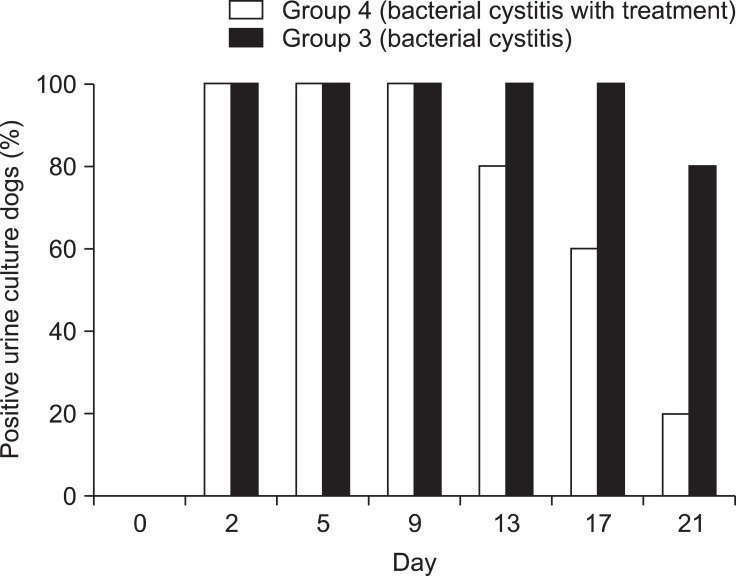
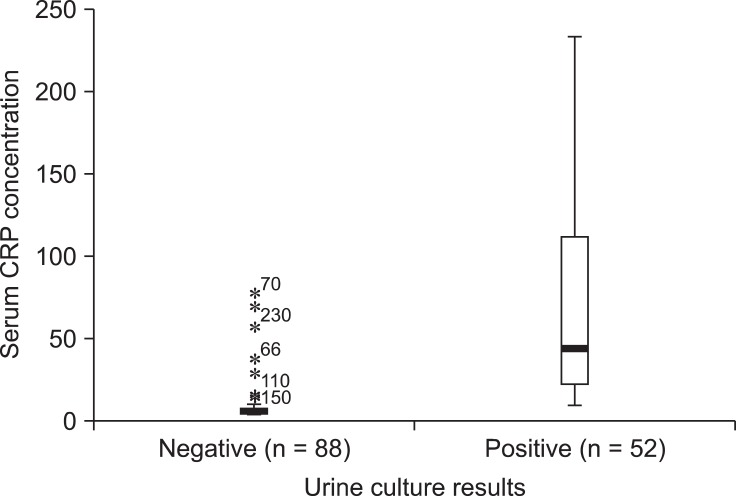
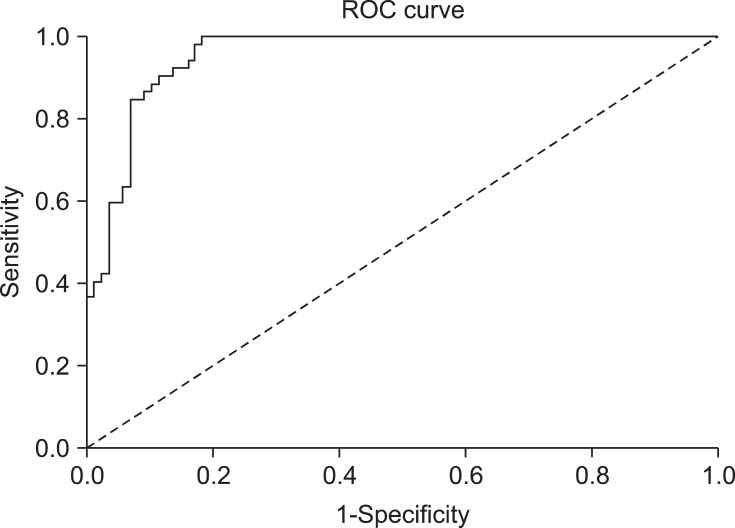
The aim of this study was to demonstrate and assess C-reactive protein (CRP) changes in dogs with induced bacterial cystitis with or without antibiotics. We also evaluated availability of CRP levels to serve as an indicator for monitoring or diagnosing bacterial cystitis. Serial CRP concentrations in dogs with induced bacterial cystitis were higher than those of controls (p < 0.001). CRP concentrations peaked on day 7 and gradually decreased thereafter. In the treatment group, CRP concentrations decreased after medication compared to the untreated group (p = 0.032). CRP levels had a linear correlation with urine white blood cell counts among all groups (r = 0.837, p < 0.001, n = 140). Compared to the negative urine culture group, dogs with positive urine culture results had higher CRP concentrations (median 43.8 mg/L vs. 5.9 mg/L; p < 0.001). Area under the receiver operating characteristic curve was 0.955; when cut-off value was 12.2 mg/L, CRP measurements were found to have a sensitivity of 92.3% and specificity of 86.4%. This result indicates that rapid increases of CRP occurred after inducing bacterial cystitis and CRP may be a useful indicator for monitoring or diagnosing canine bacterial cystitis together with sediment urinalysis and urine bacterial culture.
本研究的目的是证明和评估诱导性细菌性膀胱炎犬在使用或不使用抗生素情况下C反应蛋白(CRP)的变化。我们还评估了CRP水平作为监测或诊断细菌性膀胱炎指标的可用性。诱导性细菌性膀胱炎犬的系列CRP浓度高于对照组(p < 0.001)。CRP浓度在第7天达到峰值,此后逐渐下降。在治疗组中,用药后CRP浓度与未治疗组相比有所下降(p = 0.032)。所有组中CRP水平与尿白细胞计数呈线性相关(r = 0.837,p < 0.001,n = 140)。与尿培养阴性组相比,尿培养结果为阳性的犬CRP浓度更高(中位数43.8 mg/L对5.9 mg/L;p < 0.001)。受试者工作特征曲线下面积为0.955;当临界值为12.2 mg/L时,发现CRP测量的灵敏度为92.3%,特异性为86.4%。这一结果表明,诱导细菌性膀胱炎后CRP迅速升高,CRP可能是与尿沉渣分析和尿细菌培养一起用于监测或诊断犬细菌性膀胱炎的有用指标。