Section for Science of Complex Systems, Medical University of Vienna, Spitalgasse 23, 1090 Vienna, Austria.
Sci Rep. 2012;2:457. doi: 10.1038/srep00457. Epub 2012 Jun 14.
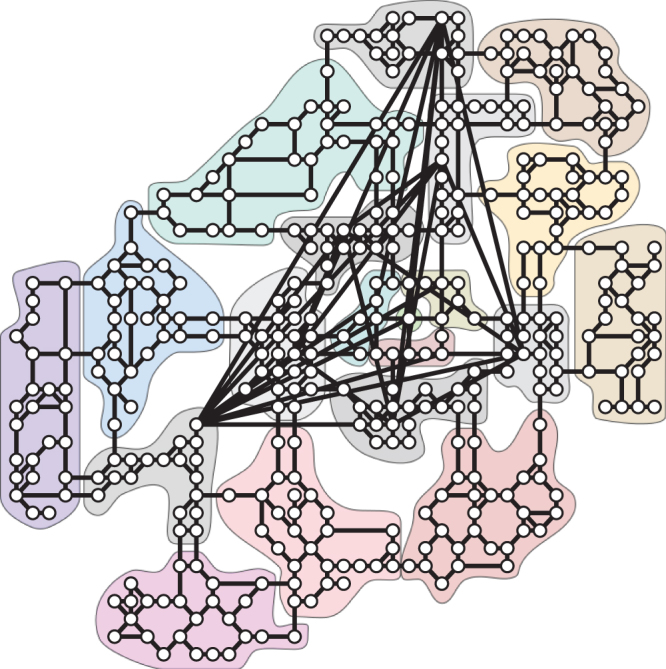
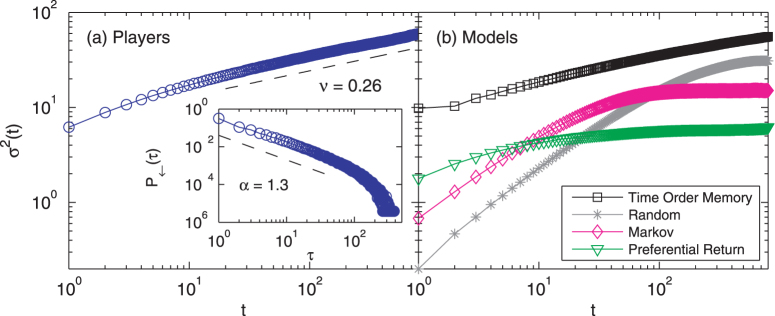
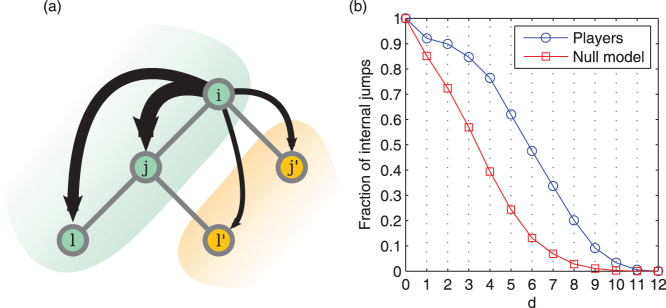
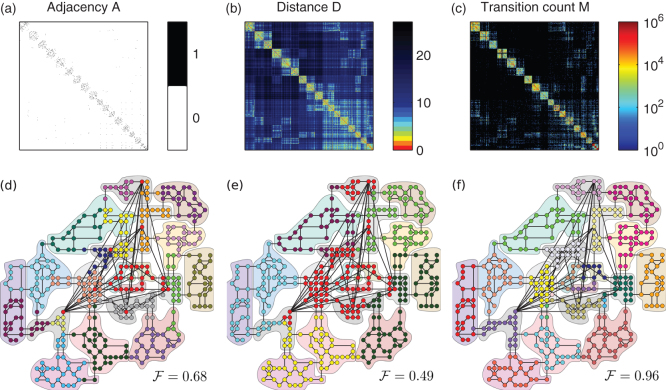
Despite the recent availability of large data sets on human movements, a full understanding of the rules governing motion within social systems is still missing, due to incomplete information on the socio-economic factors and to often limited spatio-temporal resolutions. Here we study an entire society of individuals, the players of an online-game, with complete information on their movements in a network-shaped universe and on their social and economic interactions. Such a "socio-economic laboratory" allows to unveil the intricate interplay of spatial constraints, social and economic factors, and patterns of mobility. We find that the motion of individuals is not only constrained by physical distances, but also strongly shaped by the presence of socio-economic areas. These regions can be recovered perfectly by community detection methods solely based on the measured human dynamics. Moreover, we uncover that long-term memory in the time-order of visited locations is the essential ingredient for modeling the trajectories.
尽管最近有大量关于人类运动的数据集可用,但由于对社会经济因素的信息不完全,以及时空分辨率往往有限,人们仍然无法完全理解社会系统中运动的规则。在这里,我们研究了一个完整的个体社会,即在线游戏的玩家,他们在网络状宇宙中的运动以及他们的社会和经济互动都有完整的信息。这样一个“社会经济实验室”可以揭示空间限制、社会经济因素以及移动模式之间错综复杂的相互作用。我们发现,个体的运动不仅受到物理距离的限制,还受到社会经济区域的强烈影响。这些区域可以通过仅基于测量的人类动态的社区检测方法完美地恢复。此外,我们发现,访问地点的时间顺序中的长期记忆是建模轨迹的基本要素。