• 文献检索
  • 文档翻译
  • 深度研究
  • 学术资讯
  • Suppr Zotero 插件Zotero 插件
  • 邀请有礼
  • 套餐&价格
  • 历史记录
应用&插件
Suppr Zotero 插件Zotero 插件浏览器插件Mac 客户端Windows 客户端微信小程序
定价
高级版会员购买积分包购买API积分包
服务
文献检索文档翻译深度研究API 文档MCP 服务
关于我们
关于 Suppr公司介绍联系我们用户协议隐私条款
关注我们

Suppr 超能文献

核心技术专利:CN118964589B侵权必究
粤ICP备2023148730 号-1Suppr @ 2026

文献检索

告别复杂PubMed语法,用中文像聊天一样搜索,搜遍4000万医学文献。AI智能推荐,让科研检索更轻松。

立即免费搜索

文件翻译

保留排版,准确专业,支持PDF/Word/PPT等文件格式,支持 12+语言互译。

免费翻译文档

深度研究

AI帮你快速写综述,25分钟生成高质量综述,智能提取关键信息,辅助科研写作。

立即免费体验

个体人类移动的时空如何塑造疾病传播动力学。

How the individual human mobility spatio-temporally shapes the disease transmission dynamics.

机构信息

Biophysics Group, Department of Physics, Faculty of Science, Mahidol University, Bangkok, 10400, Thailand.

Institut Laue-Langevin, 71 Avenue des Martyrs, 38042, Grenoble, France.

出版信息

Sci Rep. 2020 Jul 9;10(1):11325. doi: 10.1038/s41598-020-68230-9.

DOI:10.1038/s41598-020-68230-9
PMID:32647225
原文链接:https://pmc.ncbi.nlm.nih.gov/articles/PMC7347872/
Abstract

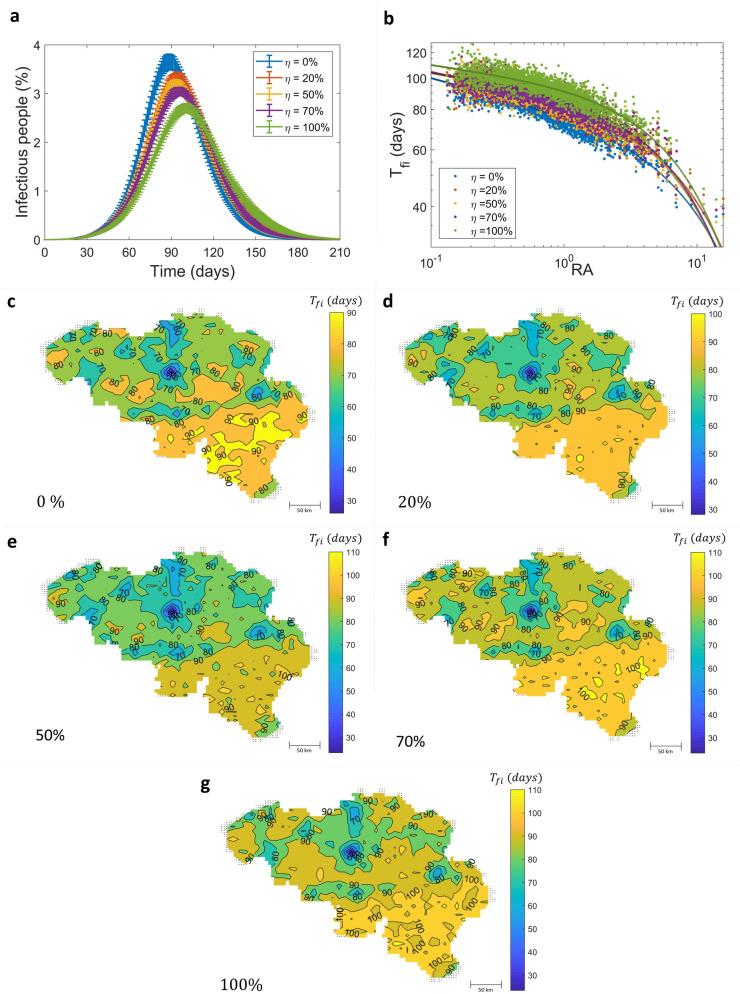
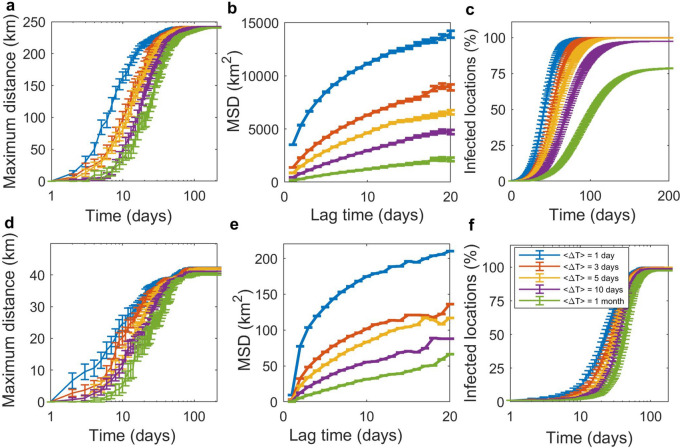
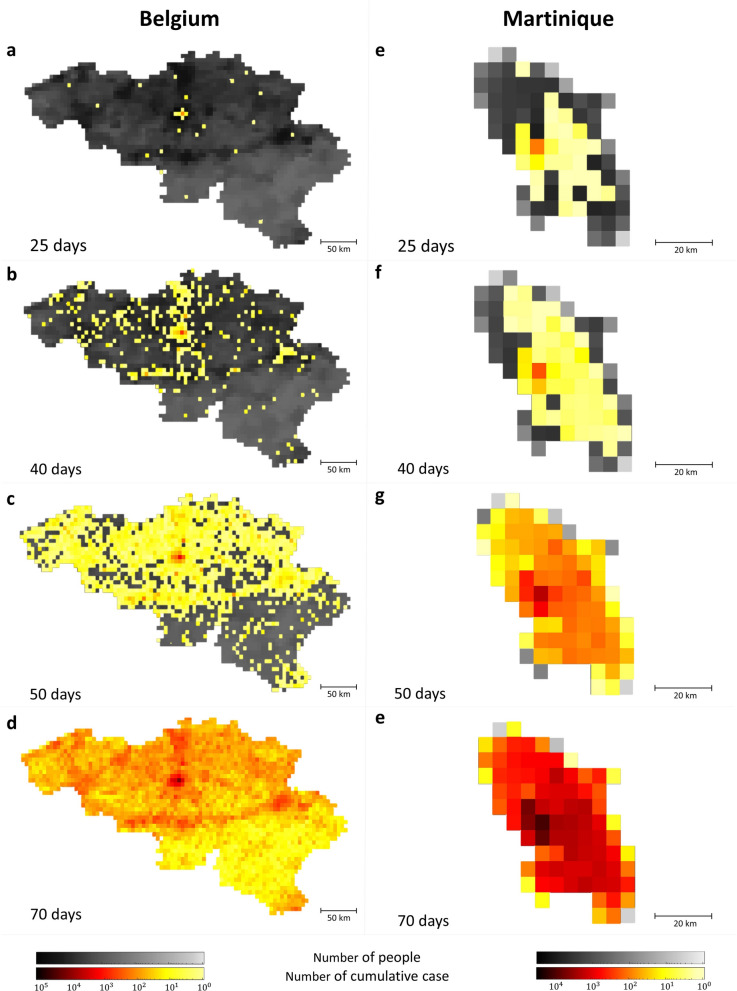
Human mobility plays a crucial role in the temporal and spatial spreading of infectious diseases. During the past few decades, researchers have been extensively investigating how human mobility affects the propagation of diseases. However, the mechanism of human mobility shaping the spread of epidemics is still elusive. Here we examined the impact of human mobility on the infectious disease spread by developing the individual-based SEIR model that incorporates a model of human mobility. We considered the spread of human influenza in two contrasting countries, namely, Belgium and Martinique, as case studies, to assess the specific roles of human mobility on infection propagation. We found that our model can provide a geo-temporal spreading pattern of the epidemics that cannot be captured by a traditional homogenous epidemic model. The disease has a tendency to jump to high populated urban areas before spreading to more rural areas and then subsequently spread to all neighboring locations. This heterogeneous spread of the infection can be captured by the time of the first arrival of the infection [Formula: see text], which relates to the landscape of the human mobility characterized by the relative attractiveness. These findings can provide insights to better understand and forecast the disease spreading.

摘要

人类移动性在传染病的时空传播中起着至关重要的作用。在过去的几十年中,研究人员一直在广泛研究人类移动性如何影响疾病的传播。然而,人类移动性塑造传染病传播的机制仍然难以捉摸。在这里,我们通过开发个体为基础的 SEIR 模型来研究人类移动性对传染病传播的影响,该模型纳入了人类移动性模型。我们以比利时和马提尼克两个对比国家的人类流感传播为例,评估了人类移动性对感染传播的具体作用。我们发现,我们的模型可以提供传染病的地理和时间传播模式,而传统的均匀传染病模型无法捕捉到这一模式。疾病在传播到更偏远的农村地区之前,有倾向于先传播到人口稠密的城市地区,然后再传播到所有邻近的地区。这种感染的异质传播可以通过感染的首次到达时间 [Formula: see text] 来捕捉,这与以相对吸引力为特征的人类移动性景观有关。这些发现可以为更好地理解和预测疾病传播提供一些思路。
https://cdn.ncbi.nlm.nih.gov/pmc/blobs/6b86/7347872/fedb1c5b8b70/41598_2020_68230_Fig5_HTML.jpg
https://cdn.ncbi.nlm.nih.gov/pmc/blobs/6b86/7347872/69687909e2d1/41598_2020_68230_Fig1_HTML.jpg
https://cdn.ncbi.nlm.nih.gov/pmc/blobs/6b86/7347872/dc2961fa370a/41598_2020_68230_Fig3_HTML.jpg
https://cdn.ncbi.nlm.nih.gov/pmc/blobs/6b86/7347872/fedb1c5b8b70/41598_2020_68230_Fig5_HTML.jpg
https://cdn.ncbi.nlm.nih.gov/pmc/blobs/6b86/7347872/69687909e2d1/41598_2020_68230_Fig1_HTML.jpg
https://cdn.ncbi.nlm.nih.gov/pmc/blobs/6b86/7347872/dc2961fa370a/41598_2020_68230_Fig3_HTML.jpg
https://cdn.ncbi.nlm.nih.gov/pmc/blobs/6b86/7347872/fedb1c5b8b70/41598_2020_68230_Fig5_HTML.jpg

相似文献

1
How the individual human mobility spatio-temporally shapes the disease transmission dynamics.个体人类移动的时空如何塑造疾病传播动力学。
Sci Rep. 2020 Jul 9;10(1):11325. doi: 10.1038/s41598-020-68230-9.
2
Epidemiological implications of mobility between a large urban centre and smaller satellite cities.大城市中心与较小卫星城之间人口流动的流行病学影响。
J Math Biol. 2015 Nov;71(5):1243-65. doi: 10.1007/s00285-014-0854-z. Epub 2015 Jan 14.
3
On the use of human mobility proxies for modeling epidemics.利用人类移动代理进行传染病建模。
PLoS Comput Biol. 2014 Jul 10;10(7):e1003716. doi: 10.1371/journal.pcbi.1003716. eCollection 2014 Jul.
4
Human mobility and time spent at destination: impact on spatial epidemic spreading.人口流动与停留时间:对空间传染病传播的影响。
J Theor Biol. 2013 Dec 7;338:41-58. doi: 10.1016/j.jtbi.2013.08.032. Epub 2013 Sep 4.
5
Trip duration drives shift in travel network structure with implications for the predictability of spatial disease spread.旅行时间的长短会改变旅行网络结构,这对空间疾病传播的可预测性有影响。
PLoS Comput Biol. 2021 Aug 10;17(8):e1009127. doi: 10.1371/journal.pcbi.1009127. eCollection 2021 Aug.
6
Addressing population heterogeneity and distribution in epidemics models using a cellular automata approach.使用细胞自动机方法处理流行病模型中的种群异质性和分布。
BMC Res Notes. 2014 Apr 12;7:234. doi: 10.1186/1756-0500-7-234.
7
Commuter mobility and the spread of infectious diseases: application to influenza in France.通勤流动性与传染病传播:在法国流感中的应用
PLoS One. 2014 Jan 9;9(1):e83002. doi: 10.1371/journal.pone.0083002. eCollection 2014.
8
Interplay between epidemic spread and information propagation on metapopulation networks.异质种群网络上流行病传播与信息传播之间的相互作用。
J Theor Biol. 2017 May 7;420:18-25. doi: 10.1016/j.jtbi.2017.02.020. Epub 2017 Mar 1.
9
Epidemic spreading induced by diversity of agents' mobility.由主体移动性多样性引发的疫情传播。
Phys Rev E Stat Nonlin Soft Matter Phys. 2012 Aug;86(2 Pt 2):026115. doi: 10.1103/PhysRevE.86.026115. Epub 2012 Aug 27.
10
Human mobility and the spatial transmission of influenza in the United States.美国的人员流动与流感的空间传播
PLoS Comput Biol. 2017 Feb 10;13(2):e1005382. doi: 10.1371/journal.pcbi.1005382. eCollection 2017 Feb.

引用本文的文献

1
Machine Learning and Artificial Intelligence for Infectious Disease Surveillance, Diagnosis, and Prognosis.用于传染病监测、诊断和预后的机器学习与人工智能
Viruses. 2025 Jun 23;17(7):882. doi: 10.3390/v17070882.
2
Wastewater Surveillance for Group A in a Small City.小城市中A组的废水监测
Pathogens. 2025 Jul 3;14(7):658. doi: 10.3390/pathogens14070658.
3
Assessing the spatio-temporal risk of Aedes-borne arboviral diseases in non-endemic regions: The case of Northern Spain.评估非流行地区伊蚊传播虫媒病毒病的时空风险:以西班牙北部为例。

本文引用的文献

1
A human behavior integrated hierarchical model of airborne disease transmission in a large city.大城市空气传播疾病传播的人类行为综合分层模型。
Build Environ. 2018 Jan;127:211-220. doi: 10.1016/j.buildenv.2017.11.011. Epub 2017 Nov 9.
2
Infectious Disease Threats in the Twenty-First Century: Strengthening the Global Response.二十一世纪的传染病威胁:加强全球应对。
Front Immunol. 2019 Mar 28;10:549. doi: 10.3389/fimmu.2019.00549. eCollection 2019.
3
Forecasting the spatial transmission of influenza in the United States.预测美国流感的空间传播。
PLoS Negl Trop Dis. 2025 Jul 28;19(7):e0013325. doi: 10.1371/journal.pntd.0013325. eCollection 2025 Jul.
4
Critical mobility in policy making for epidemic containment.疫情防控政策制定中的关键灵活性。
Sci Rep. 2025 Jan 24;15(1):3055. doi: 10.1038/s41598-025-86759-5.
5
The impact of COVID-19 mobility restrictions on dengue transmission in urban areas.2019冠状病毒病出行限制对城市地区登革热传播的影响。
PLoS Negl Trop Dis. 2024 Nov 25;18(11):e0012644. doi: 10.1371/journal.pntd.0012644. eCollection 2024 Nov.
6
Model-inferred timing and infectious period of the chickenpox outbreak source.基于模型推断的水痘疫情源头的发病时间和传染期。
BMC Infect Dis. 2024 Nov 7;24(1):1257. doi: 10.1186/s12879-024-10127-3.
7
Online bilateral matching methodology for anti-epidemic resources based on spatial transmission risk.基于空间传播风险的抗疫资源在线双边匹配方法。
Sci Rep. 2024 Oct 18;14(1):24523. doi: 10.1038/s41598-024-75534-7.
8
Building a pathway to One Health surveillance and response in Asian countries.构建亚洲国家“同一健康”监测与应对的途径。
Sci One Health. 2024 Apr 2;3:100067. doi: 10.1016/j.soh.2024.100067. eCollection 2024.
9
Vaccination strategies impact the probability of outbreak extinction: A case study of COVID-19 transmission.疫苗接种策略影响疫情爆发终止的概率:以新冠病毒传播为例的研究
Heliyon. 2024 Mar 15;10(6):e28042. doi: 10.1016/j.heliyon.2024.e28042. eCollection 2024 Mar 30.
10
Exploring indoor and outdoor dust as a potential tool for detection and monitoring of COVID-19 transmission.探索室内外灰尘作为检测和监测新冠病毒传播的潜在工具。
iScience. 2024 Jan 26;27(3):109043. doi: 10.1016/j.isci.2024.109043. eCollection 2024 Mar 15.
Proc Natl Acad Sci U S A. 2018 Mar 13;115(11):2752-2757. doi: 10.1073/pnas.1708856115. Epub 2018 Feb 26.
4
Universal model of individual and population mobility on diverse spatial scales.通用个体和群体在不同空间尺度上的流动性模型。
Nat Commun. 2017 Nov 21;8(1):1639. doi: 10.1038/s41467-017-01892-8.
5
Human mobility and the spatial transmission of influenza in the United States.美国的人员流动与流感的空间传播
PLoS Comput Biol. 2017 Feb 10;13(2):e1005382. doi: 10.1371/journal.pcbi.1005382. eCollection 2017 Feb.
6
A stochastic model of randomly accelerated walkers for human mobility.随机加速步行者的随机模型用于人类移动性。
Nat Commun. 2016 Aug 30;7:12600. doi: 10.1038/ncomms12600.
7
Returners and explorers dichotomy in human mobility.人类流动性中的回归者与探索者二分法。
Nat Commun. 2015 Sep 8;6:8166. doi: 10.1038/ncomms9166.
8
Optimizing hybrid spreading in metapopulations.优化集合种群中的混合扩散
Sci Rep. 2015 Apr 29;5:9924. doi: 10.1038/srep09924.
9
Mitigation of infectious disease at school: targeted class closure vs school closure.学校传染病的缓解措施:针对性班级停课与学校停课
BMC Infect Dis. 2014 Dec 31;14:695. doi: 10.1186/s12879-014-0695-9.
10
On the use of human mobility proxies for modeling epidemics.利用人类移动代理进行传染病建模。
PLoS Comput Biol. 2014 Jul 10;10(7):e1003716. doi: 10.1371/journal.pcbi.1003716. eCollection 2014 Jul.