Fusari Corina M, Di Rienzo Julio A, Troglia Carolina, Nishinakamasu Verónica, Moreno María Valeria, Maringolo Carla, Quiroz Facundo, Alvarez Daniel, Escande Alberto, Hopp Esteban, Heinz Ruth, Lia Verónica V, Paniego Norma B
Instituto de Biotecnología, Centro Investigación en Ciencias Veterinarias y Agronómicas (CICVyA), Instituto Nacional de Tecnología Agropecuaria (INTA), Hurlingham, Buenos Aires, Argentina.
BMC Plant Biol. 2012 Jun 18;12:93. doi: 10.1186/1471-2229-12-93.
Sclerotinia Head Rot (SHR) is one of the most damaging diseases of sunflower in Europe, Argentina, and USA, causing average yield reductions of 10 to 20 %, but leading to total production loss under favorable environmental conditions for the pathogen. Association Mapping (AM) is a promising choice for Quantitative Trait Locus (QTL) mapping, as it detects relationships between phenotypic variation and gene polymorphisms in existing germplasm without development of mapping populations. This article reports the identification of QTL for resistance to SHR based on candidate gene AM.
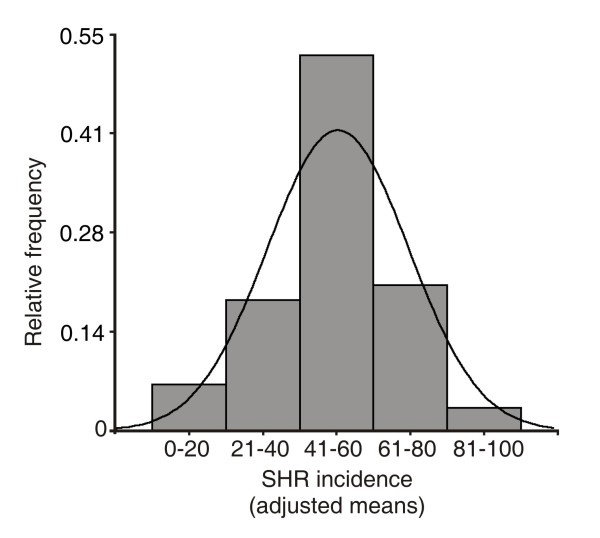
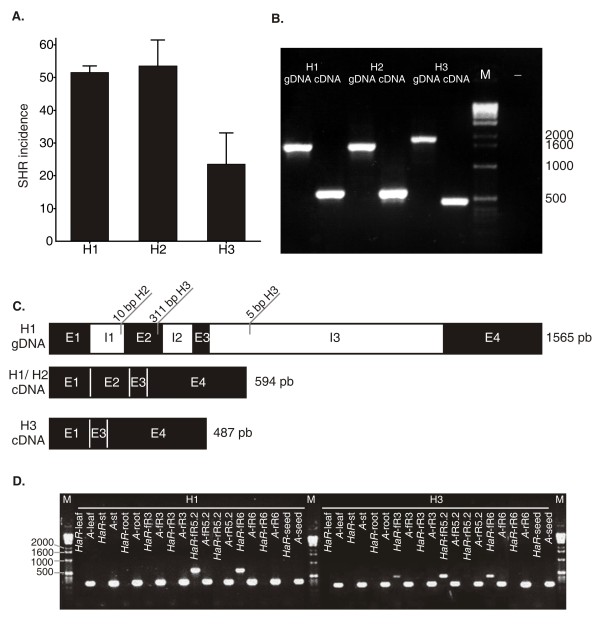
A collection of 94 sunflower inbred lines were tested for SHR under field conditions using assisted inoculation with the fungal pathogen Sclerotinia sclerotiorum. Given that no biological mechanisms or biochemical pathways have been clearly identified for SHR, 43 candidate genes were selected based on previous transcript profiling studies in sunflower and Brassica napus infected with S. sclerotiorum. Associations among SHR incidence and haplotype polymorphisms in 16 candidate genes were tested using Mixed Linear Models (MLM) that account for population structure and kinship relationships. This approach allowed detection of a significant association between the candidate gene HaRIC_B and SHR incidence (P < 0.01), accounting for a SHR incidence reduction of about 20 %.
These results suggest that AM will be useful in dissecting other complex traits in sunflower, thus providing a valuable tool to assist in crop breeding.
菌核病是欧洲、阿根廷和美国向日葵最具破坏性的病害之一,平均导致产量降低10%至20%,但在有利于病原菌生长的环境条件下会导致总产量损失。关联分析是进行数量性状基因座(QTL)定位的一种有前景的方法,因为它能在不构建定位群体的情况下,检测现有种质中表型变异与基因多态性之间的关系。本文报道了基于候选基因关联分析鉴定向日葵抗菌核病的QTL。
利用核盘菌对94个向日葵自交系进行田间辅助接种,检测其对菌核病的抗性。鉴于尚未明确鉴定出菌核病的生物学机制或生化途径,基于之前对感染核盘菌的向日葵和甘蓝型油菜的转录谱研究,选择了43个候选基因。使用考虑群体结构和亲缘关系的混合线性模型(MLM),检测16个候选基因的单倍型多态性与菌核病发病率之间的关联。该方法检测到候选基因HaRIC_B与菌核病发病率之间存在显著关联(P < 0.01),使菌核病发病率降低了约2%。
这些结果表明,关联分析将有助于解析向日葵的其他复杂性状,从而为作物育种提供有价值的工具。