Institute of Biochemistry, Department of Biology, Swiss Federal Institute of Technology Zürich, Zürich, Switzerland.
J Cell Biol. 2012 Jun 25;197(7):921-37. doi: 10.1083/jcb.201112117. Epub 2012 Jun 18.
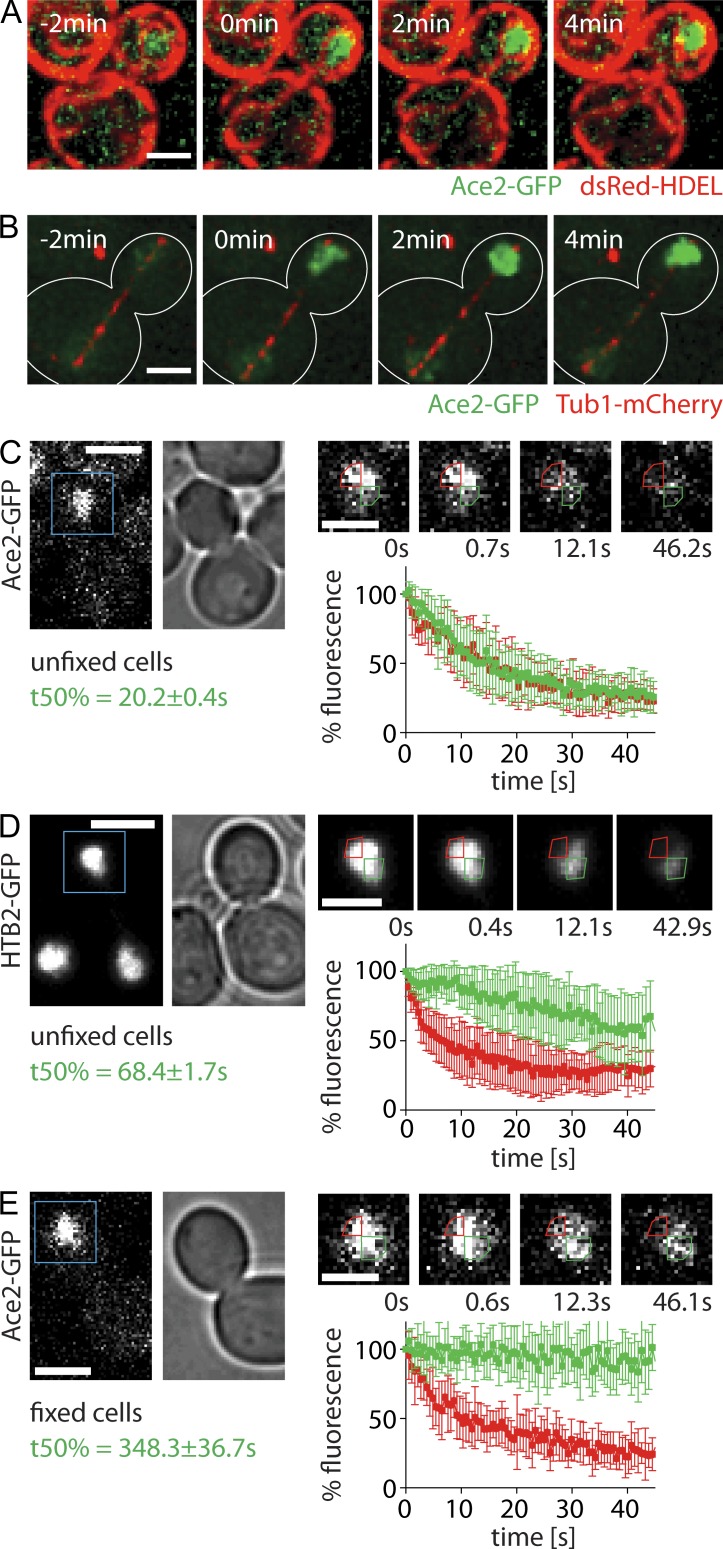
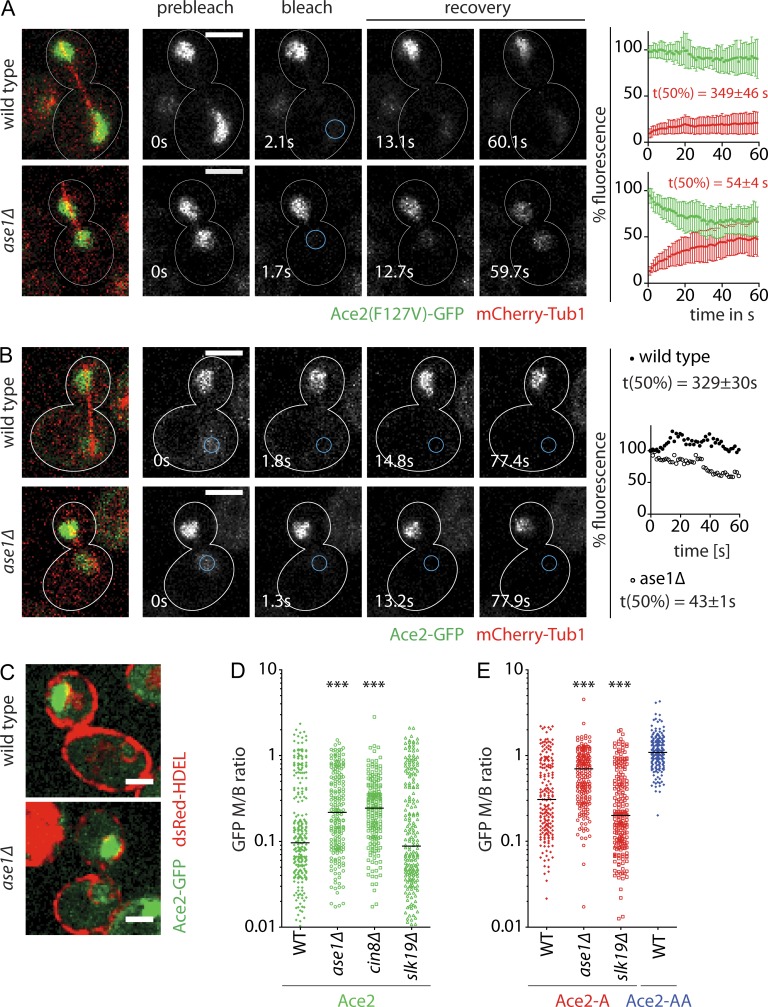
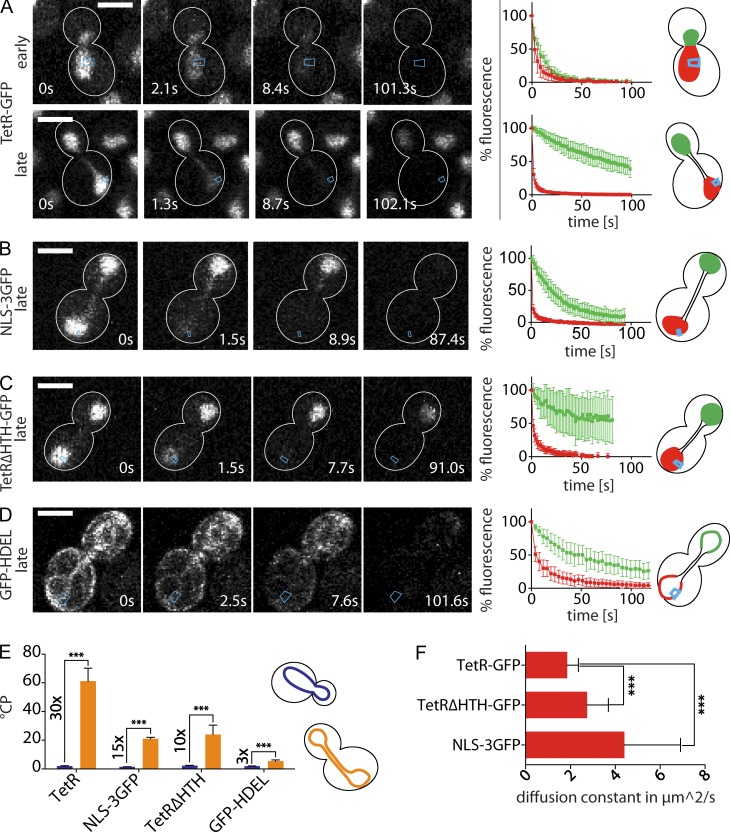
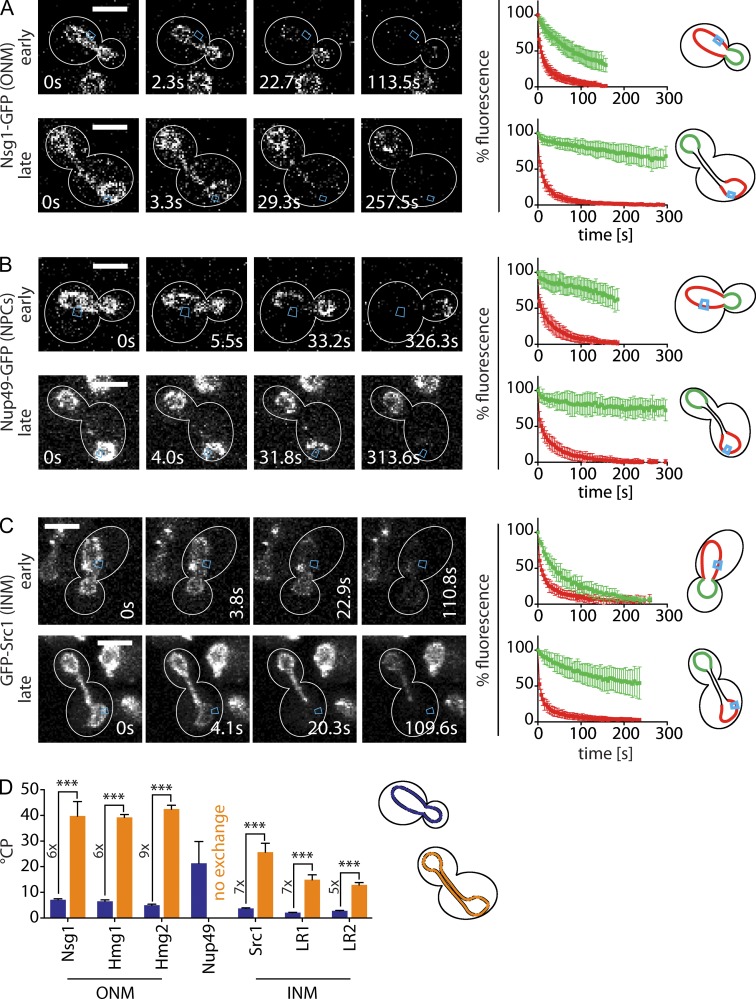
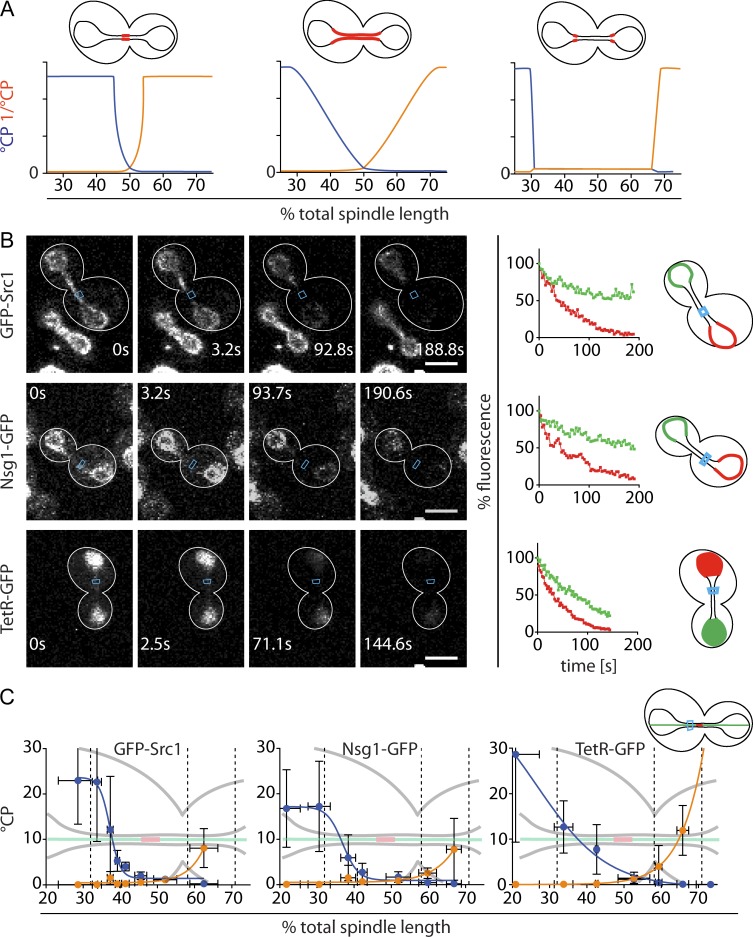
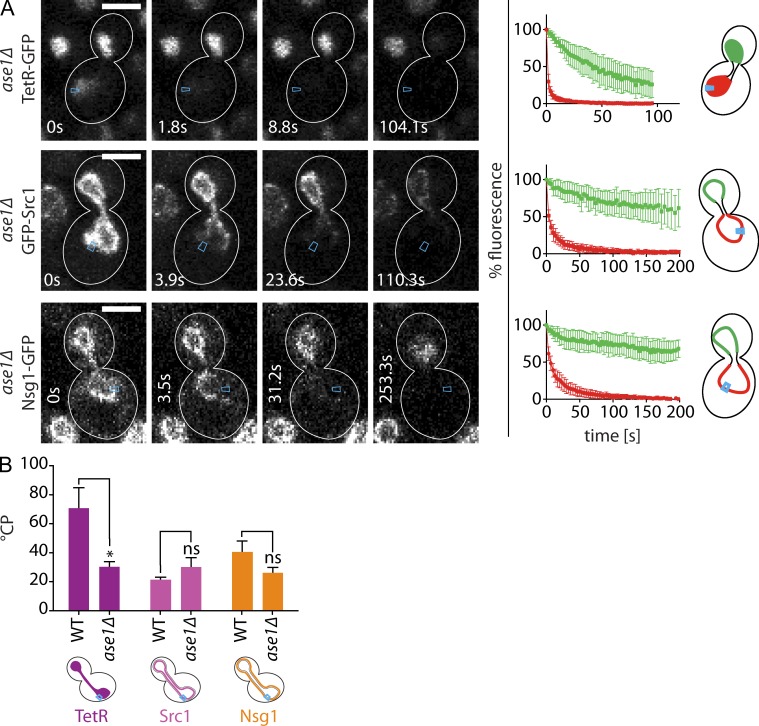
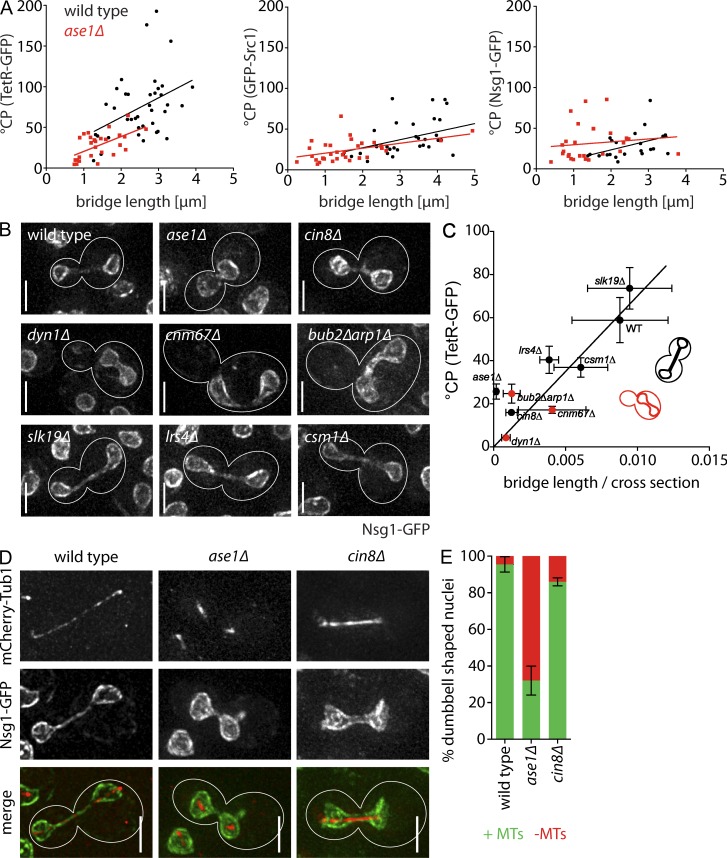
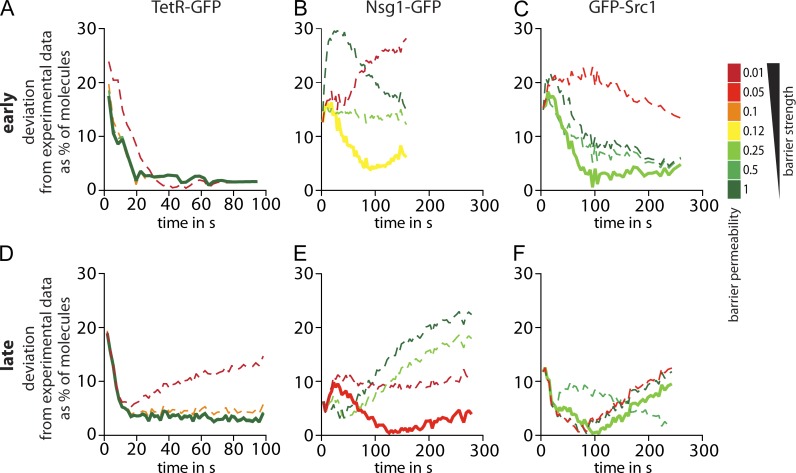
During vegetative growth, Saccharomyces cerevisiae cells divide asymmetrically: the mother cell buds to produce a smaller daughter cell. This daughter asymmetrically inherits the transcription factor Ace2, which activates daughter-specific transcriptional programs. In this paper, we investigate when and how this asymmetry is established and maintained. We show that Ace2 asymmetry is initiated in the elongated, but undivided, anaphase nucleus. At this stage, the nucleoplasm was highly compartmentalized; little exchange was observed for nucleoplasmic proteins between mother and bud. Using photobleaching and in silico modeling, we show that diffusion barriers compartmentalize the nuclear membranes. In contrast, the behavior of proteins in the nucleoplasm is well explained by the dumbbell shape of the anaphase nucleus. This compartmentalization of the nucleoplasm promoted Ace2 asymmetry in anaphase nuclei. Thus, our data indicate that yeast cells use the process of closed mitosis and the morphological constraints associated with it to asymmetrically segregate nucleoplasmic components.
在营养生长阶段,酿酒酵母细胞不对称分裂:母细胞出芽产生较小的子细胞。这个子细胞不对称地继承了转录因子 Ace2,后者激活了子细胞特异性的转录程序。在本文中,我们研究了这种不对称性是如何建立和维持的。我们发现 Ace2 不对称性是在拉长但未分裂的后期核中开始的。在这个阶段,核质高度分隔;母细胞和芽之间很少有核质蛋白交换。通过光漂白和计算机模拟,我们表明核膜的扩散屏障分隔了核质。相比之下,核质中蛋白质的行为可以很好地用后期核的哑铃形状来解释。这种核质的分隔促进了后期核中 Ace2 的不对称性。因此,我们的数据表明,酵母细胞利用有丝分裂末期的过程和与之相关的形态限制来不对称地分离核质成分。