Whiteley Louise, Sahani Maneesh
Gatsby Computational Neuroscience Unit, University College London London, UK.
Front Hum Neurosci. 2012 Jun 14;6:100. doi: 10.3389/fnhum.2012.00100. eCollection 2012.
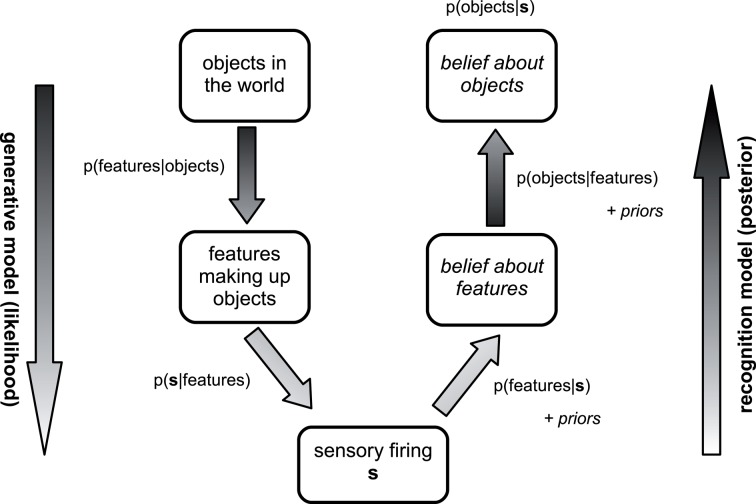
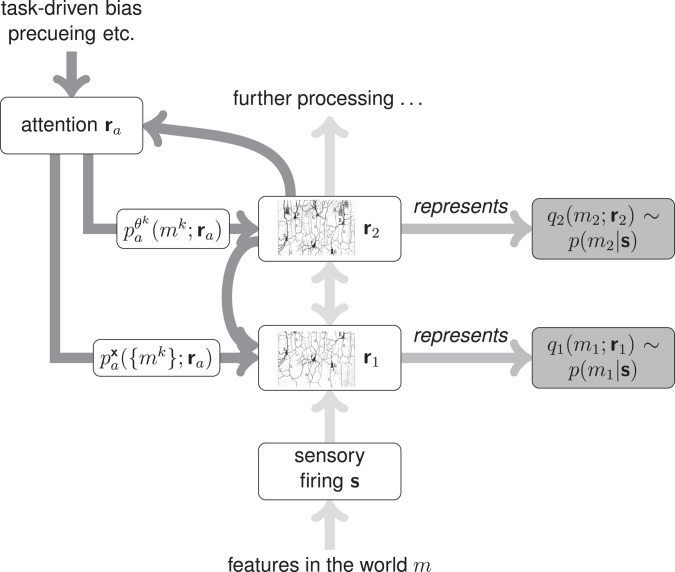
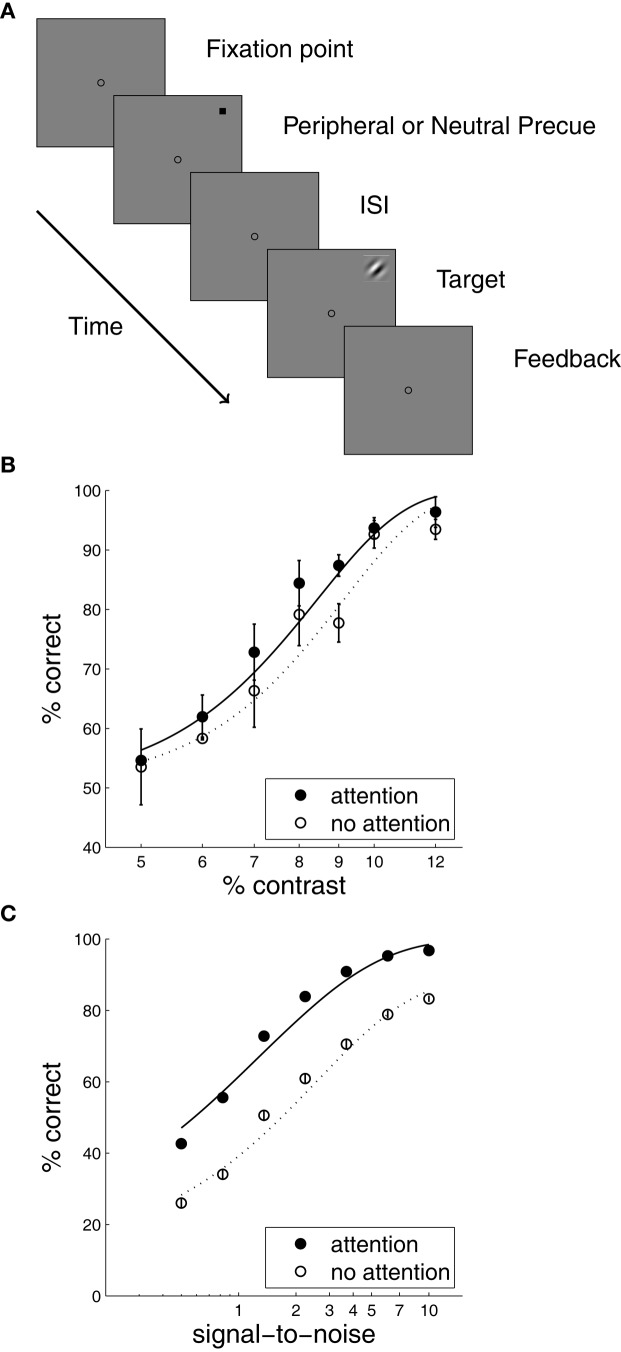
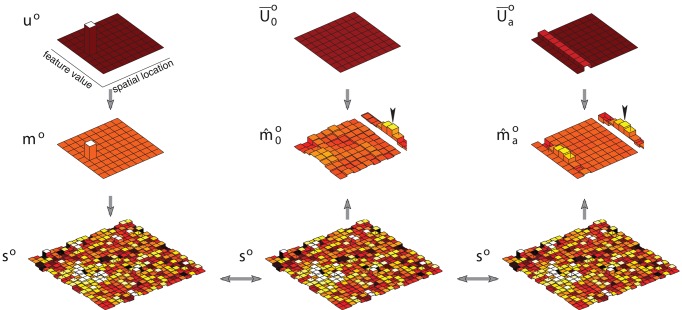
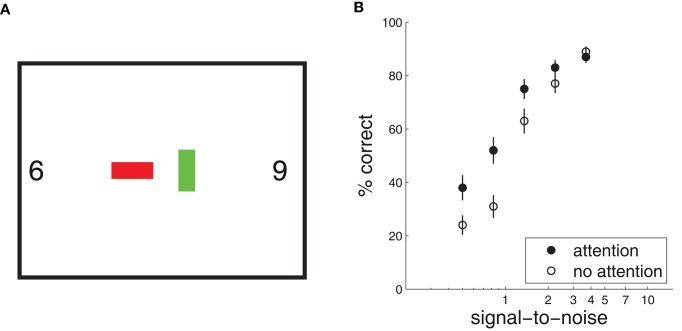
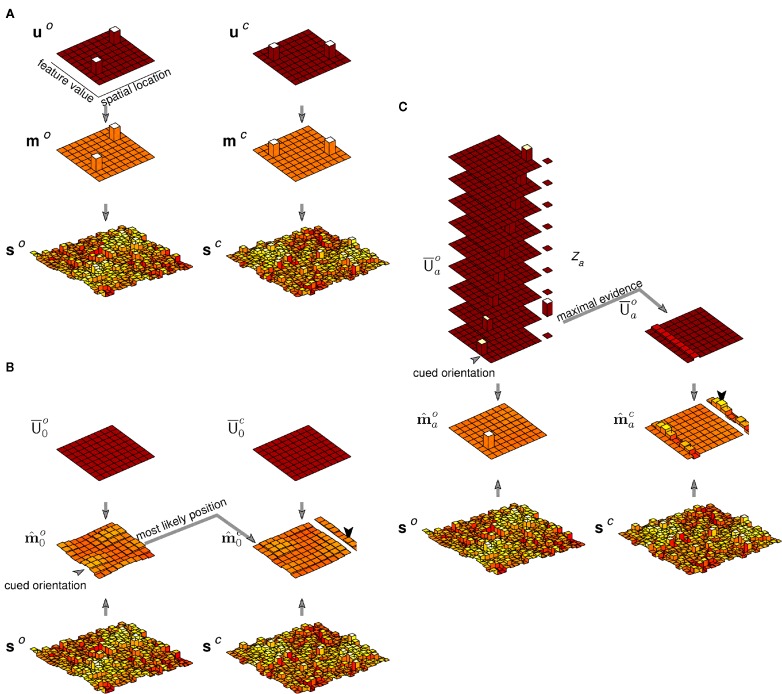
The behavioral phenomena of sensory attention are thought to reflect the allocation of a limited processing resource, but there is little consensus on the nature of the resource or why it should be limited. Here we argue that a fundamental bottleneck emerges naturally within Bayesian models of perception, and use this observation to frame a new computational account of the need for, and action of, attention - unifying diverse attentional phenomena in a way that goes beyond previous inferential, probabilistic and Bayesian models. Attentional effects are most evident in cluttered environments, and include both selective phenomena, where attention is invoked by cues that point to particular stimuli, and integrative phenomena, where attention is invoked dynamically by endogenous processing. However, most previous Bayesian accounts of attention have focused on describing relatively simple experimental settings, where cues shape expectations about a small number of upcoming stimuli and thus convey "prior" information about clearly defined objects. While operationally consistent with the experiments it seeks to describe, this view of attention as prior seems to miss many essential elements of both its selective and integrative roles, and thus cannot be easily extended to complex environments. We suggest that the resource bottleneck stems from the computational intractability of exact perceptual inference in complex settings, and that attention reflects an evolved mechanism for approximate inference which can be shaped to refine the local accuracy of perception. We show that this approach extends the simple picture of attention as prior, so as to provide a unified and computationally driven account of both selective and integrative attentional phenomena.
感觉注意的行为现象被认为反映了一种有限加工资源的分配,但对于该资源的性质以及为何它应该是有限的,几乎没有达成共识。在这里,我们认为在贝叶斯感知模型中自然会出现一个基本瓶颈,并利用这一观察结果构建一个关于注意的需求和作用的新计算解释——以一种超越先前的推理、概率和贝叶斯模型的方式统一各种注意现象。注意效应在杂乱的环境中最为明显,包括选择性现象(其中注意由指向特定刺激的线索引发)和整合性现象(其中注意由内源性加工动态引发)。然而,以前大多数关于注意的贝叶斯解释都集中在描述相对简单的实验设置上,在这些设置中,线索塑造了对少量即将到来的刺激的预期,从而传达了关于明确界定对象的“先验”信息。虽然在操作上与它试图描述的实验一致,但这种将注意视为先验的观点似乎遗漏了其选择性和整合性作用的许多基本要素,因此不容易扩展到复杂环境。我们认为资源瓶颈源于复杂环境中精确感知推理的计算难处理性,并且注意反映了一种用于近似推理的进化机制,这种机制可以被塑造以提高感知的局部准确性。我们表明,这种方法扩展了将注意视为先验的简单图景,从而为选择性和整合性注意现象提供了一个统一的、由计算驱动的解释。