Health Systems and Social Science Research, KEMRI-Wellcome Trust Research Programme, Kilifi, Kenya.
PLoS One. 2012;7(6):e38636. doi: 10.1371/journal.pone.0038636. Epub 2012 Jun 13.
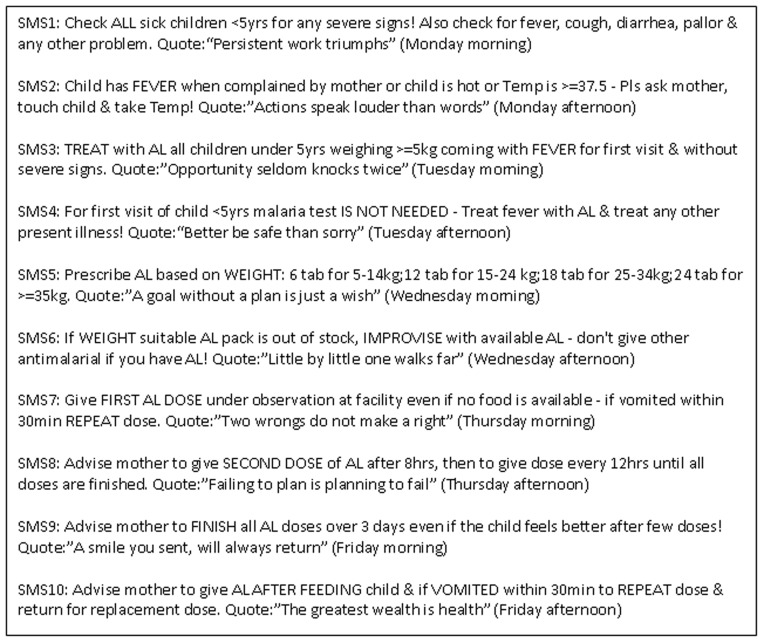
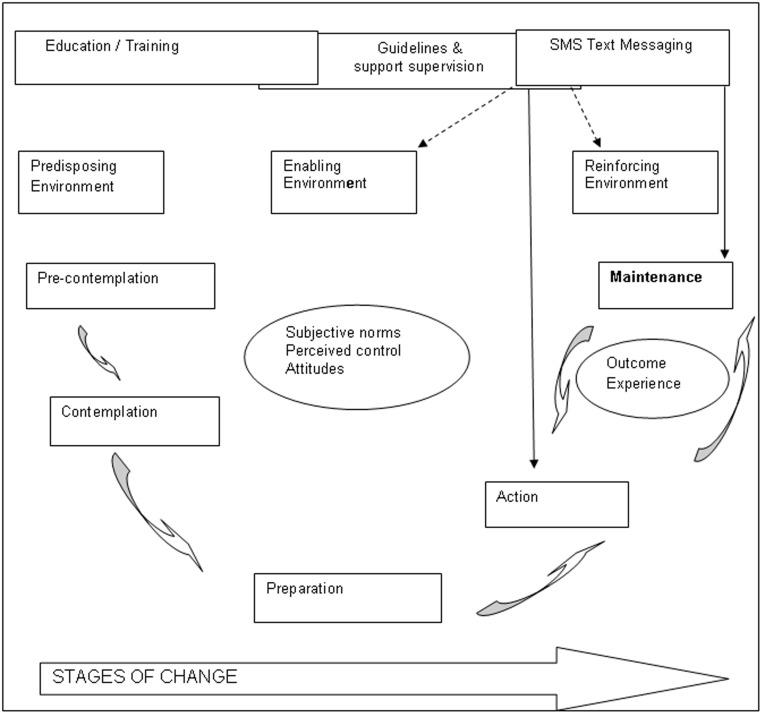
This paper presents the results of a qualitative study to investigate the perceptions and experiences of health workers involved in a a cluster-randomized controlled trial of a novel intervention to improve health worker malaria case-management in 107 government health facilities in Kenya. The intervention involved sending text-messages about paediatric outpatient malaria case-management accompanied by "motivating" quotes to health workers' mobile phones. Ten malaria messages were developed reflecting recommendations from the Kenyan national guidelines. Two messages were delivered per day for 5 working days and the process was repeated for 26 weeks (May to October 2009). The accompanying quotes were unique to each message. The intervention was delivered to 119 health workers and there were significant improvements in correct artemether-lumefantrine (AL) management both immediately after the intervention (November 2009) and 6 months later (May 2010). In-depth interviews with 24 health workers were undertaken to investigate the possible drivers of this change. The results suggest high acceptance of all components of the intervention, with the active delivery of information in an on the job setting, the ready availability of new and stored text messages and the perception of being kept 'up to date' as important factors influencing practice. Applying the construct of stages of change we infer that in this intervention the SMS messages were operating primarily at the action and maintenance stages of behaviour change achieving their effect by creating an enabling environment and providing a prompt to action for the implementation of case management practices that had already been accepted as the clinical norm by the health workers. Future trials testing the effectiveness of SMS reminders in creating an enabling environment for the establishment of new norms in clinical practice as well as in providing a prompt to action for the implementation of the new case-management guidelines are justified.
本文呈现了一项定性研究的结果,该研究旨在调查参与一项新干预措施的卫生工作者的看法和经验,该干预措施旨在改善肯尼亚 107 家政府卫生机构中卫生工作者的疟疾病例管理,这是一项集群随机对照试验。该干预措施包括向卫生工作者的手机发送关于儿科门诊疟疾病例管理的短信,并附有“激励”引语。制定了 10 条疟疾短信,反映了肯尼亚国家指南的建议。每天发送两条短信,共发送 5 个工作日,整个过程重复 26 周(2009 年 5 月至 10 月)。每条短信都有独特的引语。该干预措施共覆盖了 119 名卫生工作者,在干预结束后(2009 年 11 月)和 6 个月后(2010 年 5 月),正确使用青蒿素-本芴醇(AL)的管理均有显著改善。通过对 24 名卫生工作者进行深入访谈,研究了这一变化的可能驱动因素。结果表明,干预措施的所有组成部分都得到了高度接受,信息的主动传递、新的和存储的短信的随时可用以及被认为是最新的观念被视为影响实践的重要因素。运用行为改变的阶段理论,我们推断,在这项干预措施中,短信主要作用于行为改变的行动和维持阶段,通过创造有利环境和提供实施病例管理实践的提示,从而产生效果,这些实践已经被卫生工作者接受为临床规范。未来的试验测试短信提醒在为建立新的临床实践规范创造有利环境以及为实施新的病例管理指南提供行动提示方面的有效性是合理的。