Department of Biology, University of Crete, Haraklio, Greece.
PLoS Negl Trop Dis. 2012;6(6):e1692. doi: 10.1371/journal.pntd.0001692. Epub 2012 Jun 12.
Pyrethroid insecticides are widely utilized in dengue control. However, the major vector, Aedes aegypti, is becoming increasingly resistant to these insecticides and this is impacting on the efficacy of control measures. The near complete transcriptome of two pyrethroid resistant populations from the Caribbean was examined to explore the molecular basis of this resistance.
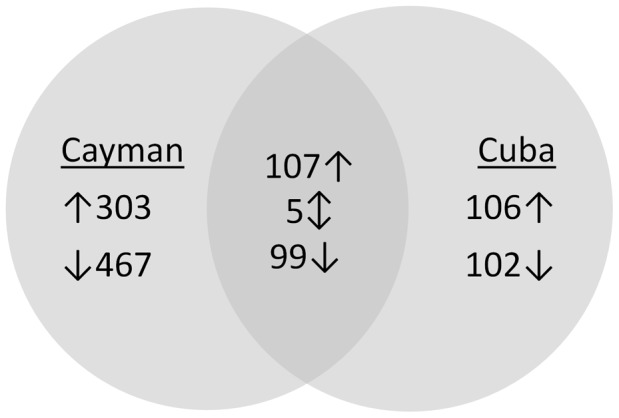
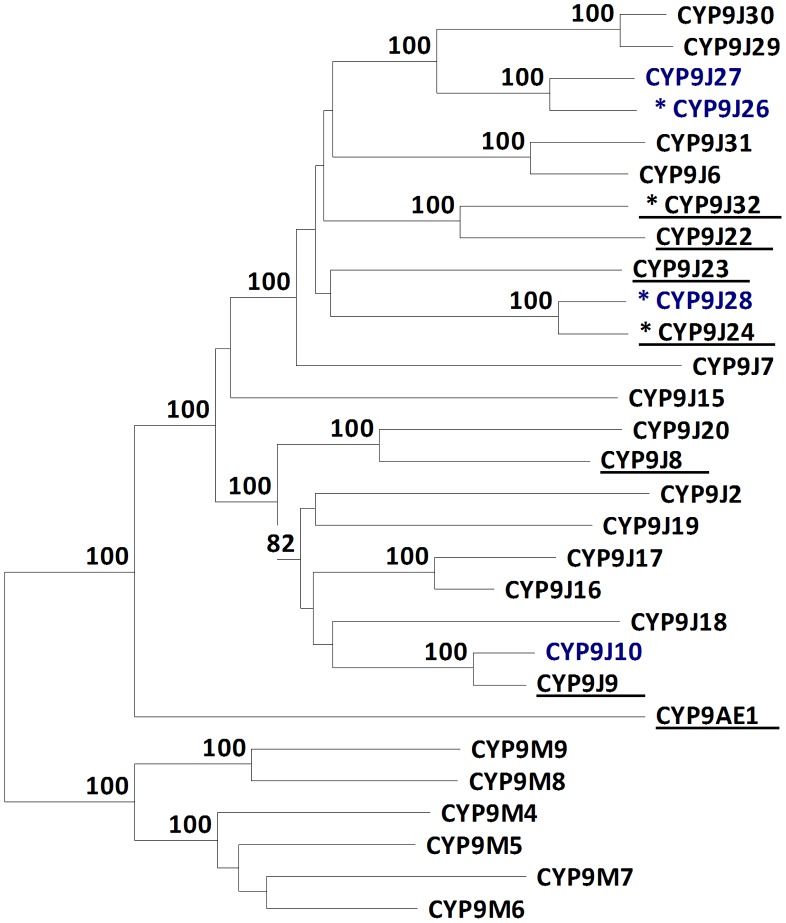
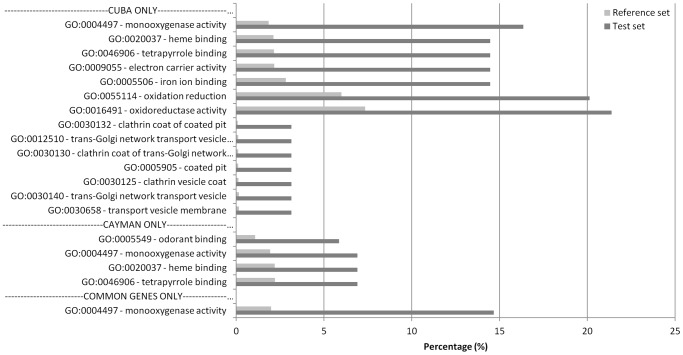
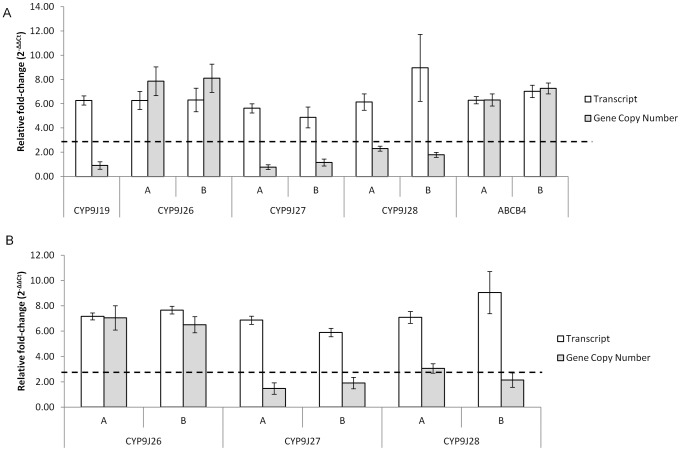
Two previously described target site mutations, 1016I and 1534C were detected in pyrethroid resistant populations from Grand Cayman and Cuba. In addition between two and five per cent of the Ae. aegypti transcriptome was differentially expressed in the resistant populations compared to a laboratory susceptible population. Approximately 20 per cent of the genes over-expressed in resistant mosquitoes were up-regulated in both Caribbean populations (107 genes). Genes with putative monooxygenase activity were significantly over represented in the up-regulated subset, including five CYP9 P450 genes. Quantitative PCR was used to confirm the higher transcript levels of multiple cytochrome P450 genes from the CYP9J family and an ATP binding cassette transporter. Over expression of two genes, CYP9J26 and ABCB4, is due, at least in part, to gene amplification.
These results, and those from other studies, strongly suggest that increases in the amount of the CYP9J cytochrome P450s are an important mechanism of pyrethroid resistance in Ae. aegypti. The genetic redundancy resulting from the expansion of this gene family makes it unlikely that a single gene or mutation responsible for pyrethroid resistance will be identified in this mosquito species. However, the results from this study do pave the way for the development of new pyrethroid synergists and improved resistance diagnostics. The role of copy number polymorphisms in detoxification and transporter genes in providing protection against insecticide exposure requires further investigation.
拟除虫菊酯杀虫剂被广泛用于登革热的防治。然而,主要媒介埃及伊蚊对这些杀虫剂的抗性越来越强,这影响了控制措施的效果。对来自加勒比地区的两个拟除虫菊酯抗性种群的近乎完整的转录组进行了检查,以探讨这种抗性的分子基础。
在来自大开曼岛和古巴的拟除虫菊酯抗性种群中检测到了两个先前描述的靶标位点突变,1016I 和 1534C。此外,与实验室敏感种群相比,抗性种群中有 2%至 5%的埃及伊蚊转录本差异表达。在抗性蚊子中过表达的大约 20%的基因在两个加勒比种群中都上调(107 个基因)。具有单加氧酶活性的基因在上调亚组中显著过表达,包括五个 CYP9 P450 基因。定量 PCR 用于确认 CYP9J 家族和 ABC 转运体中多个细胞色素 P450 基因的转录水平更高。CYP9J26 和 ABCB4 两个基因的过表达至少部分归因于基因扩增。
这些结果以及其他研究的结果强烈表明,CYP9J 细胞色素 P450 数量的增加是埃及伊蚊对拟除虫菊酯抗性的重要机制。由于这个基因家族的扩张导致的遗传冗余,使得在这种蚊子中不太可能确定一个单一的基因或突变是导致拟除虫菊酯抗性的原因。然而,这项研究的结果确实为开发新的拟除虫菊酯增效剂和改进的抗性诊断铺平了道路。需要进一步研究解毒和转运体基因中拷贝数多态性在提供对杀虫剂暴露的保护方面的作用。