Division of Intramural Research, National Heart Lung and Blood Institute, National Institutes of Health, Bethesda, MD 20892, USA.
J Cardiovasc Magn Reson. 2012 Jun 21;14(1):38. doi: 10.1186/1532-429X-14-38.
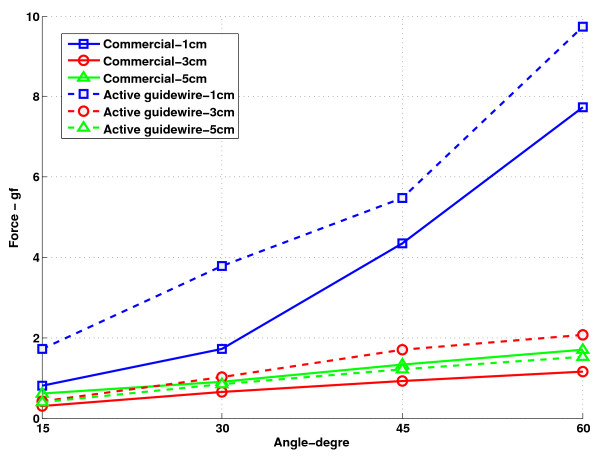
The field of interventional cardiovascular MRI is hampered by the unavailability of active guidewires that are both safe and conspicuous. Heating of conductive guidewires is difficult to predict in vivo and disruptive to measure using external probes. We describe a clinical-grade 0.035" (0.89 mm) guidewire for MRI right and left heart catheterization at 1.5 T that has an internal probe to monitor temperature in real-time, and that has both tip and shaft visibility as well as suitable flexibility.
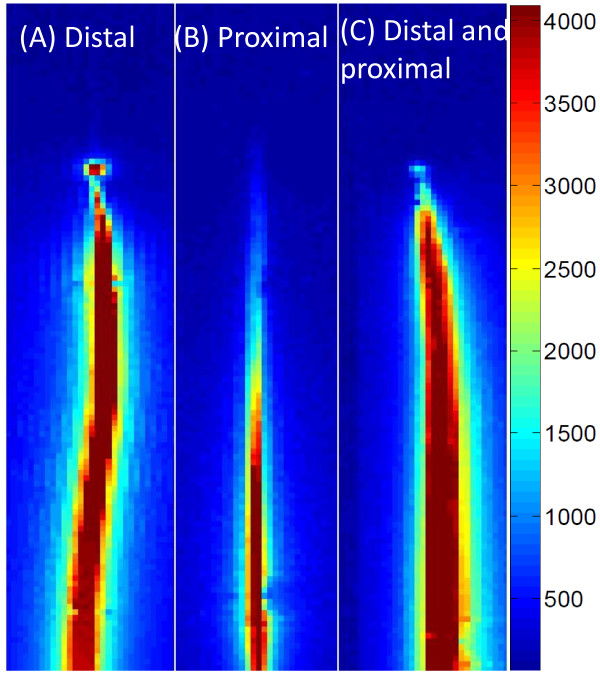
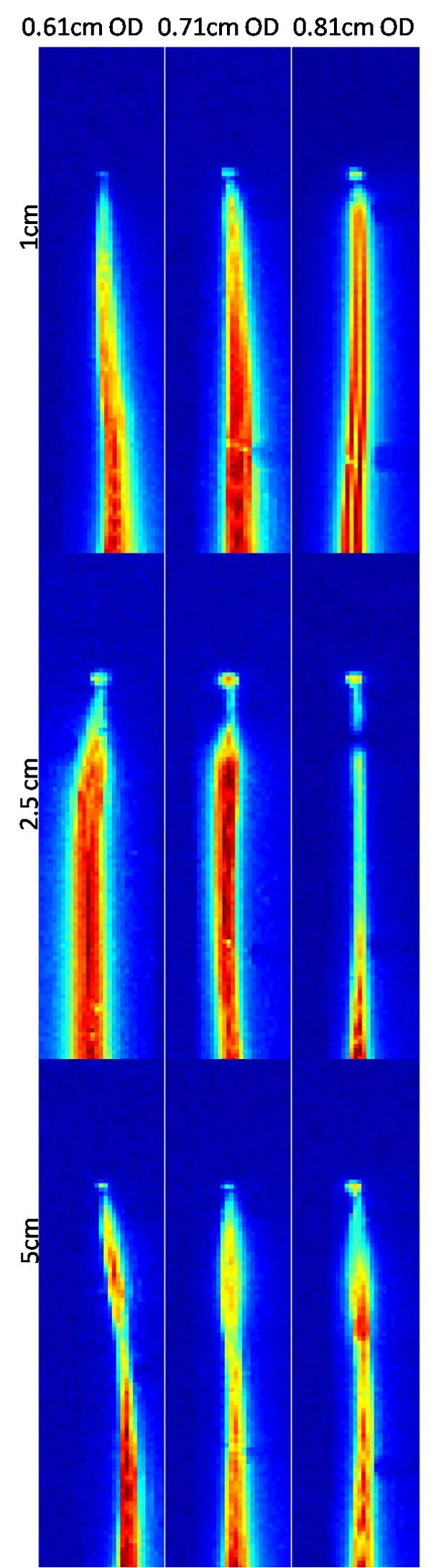
The design has an internal fiberoptic temperature probe, as well as a distal solenoid to enhance tip visibility on a loopless antenna. We tested different tip-solenoid configurations to balance heating and signal profiles. We tested mechanical performance in vitro and in vivo in comparison with a popular clinical nitinol guidewire.
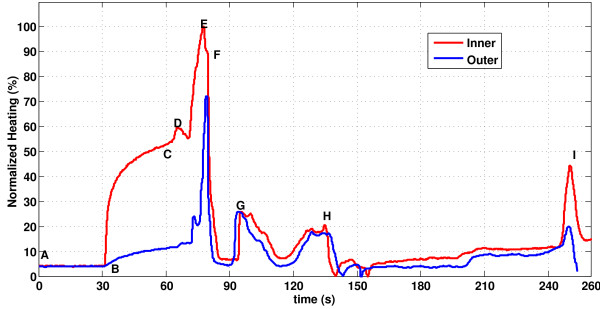
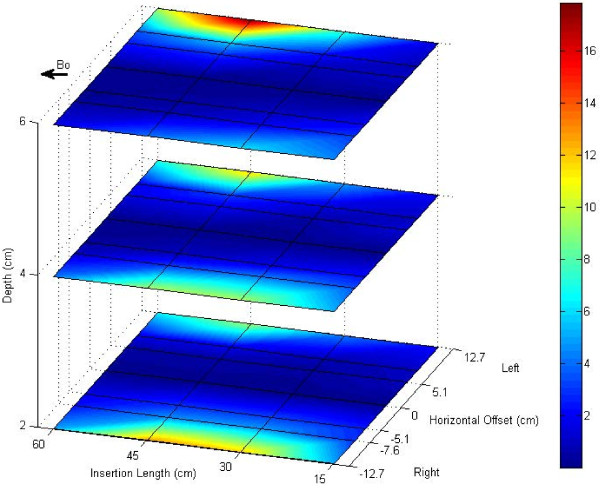
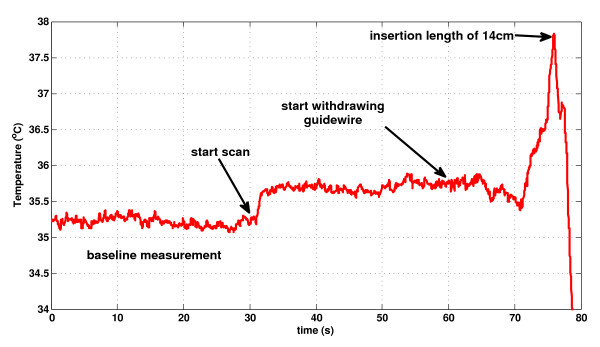
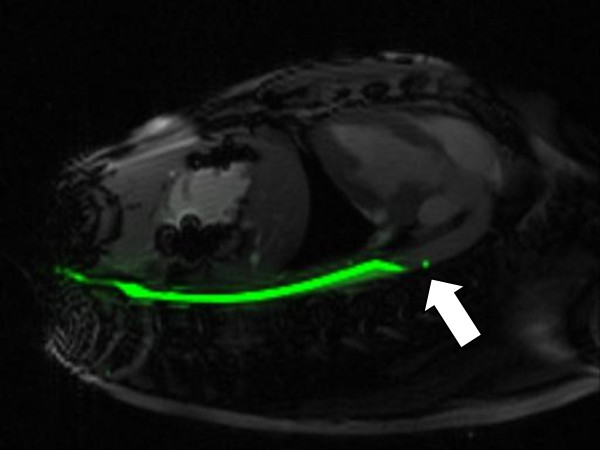
The solenoid displaced the point of maximal heating ("hot spot") from the tip to a more proximal location where it can be measured without impairing guidewire flexion. Probe pullback allowed creation of lengthwise guidewire temperature maps that allowed rapid evaluation of design prototypes. Distal-only solenoid attachment offered the best compromise between tip visibility and heating among design candidates. When fixed at the hot spot, the internal probe consistently reflected the maximum temperature compared external probes.Real-time temperature monitoring was performed during porcine left heart catheterization. Heating was negligible using normal operating parameters (flip angle, 45°; SAR, 1.01 W/kg); the temperature increased by 4.2°C only during high RF power mode (flip angle, 90°; SAR, 3.96 W/kg) and only when the guidewire was isolated from blood cooling effects by an introducer sheath. The tip flexibility and in vivo performance of the final guidewire design were similar to a popular commercial guidewire.
We integrated a fiberoptic temperature probe inside a 0.035" MRI guidewire. Real-time monitoring helps detect deleterious heating during use, without impairing mechanical guidewire operation, and without impairing MRI visibility. We therefore need not rely on prediction to ensure safe clinical operation. Future implementations may modulate specific absorption rate (SAR) based on temperature feedback.
介入心血管 MRI 领域受到安全且显眼的主动导丝可用性的限制。在体内很难预测传导导丝的加热情况,并且使用外部探头进行干扰测量也很困难。我们描述了一种临床级 0.035"(0.89 毫米)导丝,可用于 1.5T 的 MRI 右心和左心导管检查,它具有内部探头可实时监测温度,并且具有尖端和轴可见度以及合适的柔韧性。
该设计具有内部光纤温度探头,以及一个远端螺线管,以在无环天线增强尖端的可见度。我们测试了不同的尖端-螺线管配置,以平衡加热和信号曲线。我们在体外和体内与一种流行的临床用镍钛合金导丝进行了机械性能测试。
螺线管将最大加热点(“热点”)从尖端移到更靠近近端的位置,在不影响导丝弯曲的情况下可以进行测量。探头回缩允许创建导丝温度的纵向图,从而可以快速评估设计原型。在设计候选者中,仅在远端安装螺线管提供了最佳的尖端可见度和加热之间的折衷方案。当固定在热点时,内部探头始终反映出与外部探头相比的最大温度。实时温度监测在猪左心导管检查期间进行。使用正常操作参数(翻转角,45°;SAR,1.01W/kg)时,加热可忽略不计;仅在高 RF 功率模式(翻转角,90°;SAR,3.96W/kg)下,并且仅当导丝被引入器护套隔离血液冷却效果时,温度才会升高 4.2°C。最终导丝设计的尖端柔韧性和体内性能与一种流行的商业导丝相似。
我们在 0.035"MRI 导丝内部集成了光纤温度探头。实时监测有助于在使用过程中检测有害加热,而不会影响机械导丝操作,也不会影响 MRI 可见度。因此,我们不必依赖预测来确保安全的临床操作。未来的实施可能会根据温度反馈来调节特定吸收率 (SAR)。