Department of Developmental Biology, Washington University School of Medicine, St. Louis, MO 63110, USA.
Neuron. 2012 Jun 21;74(6):1015-22. doi: 10.1016/j.neuron.2012.04.028.
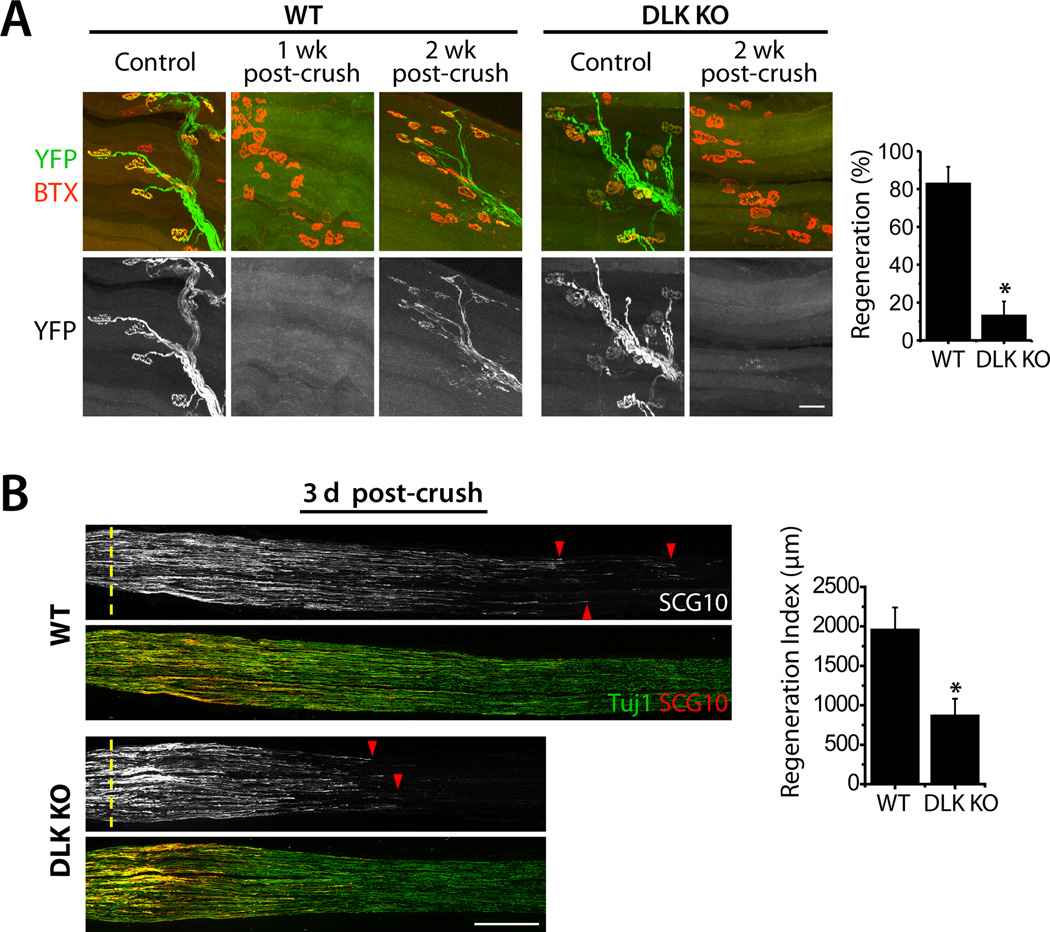
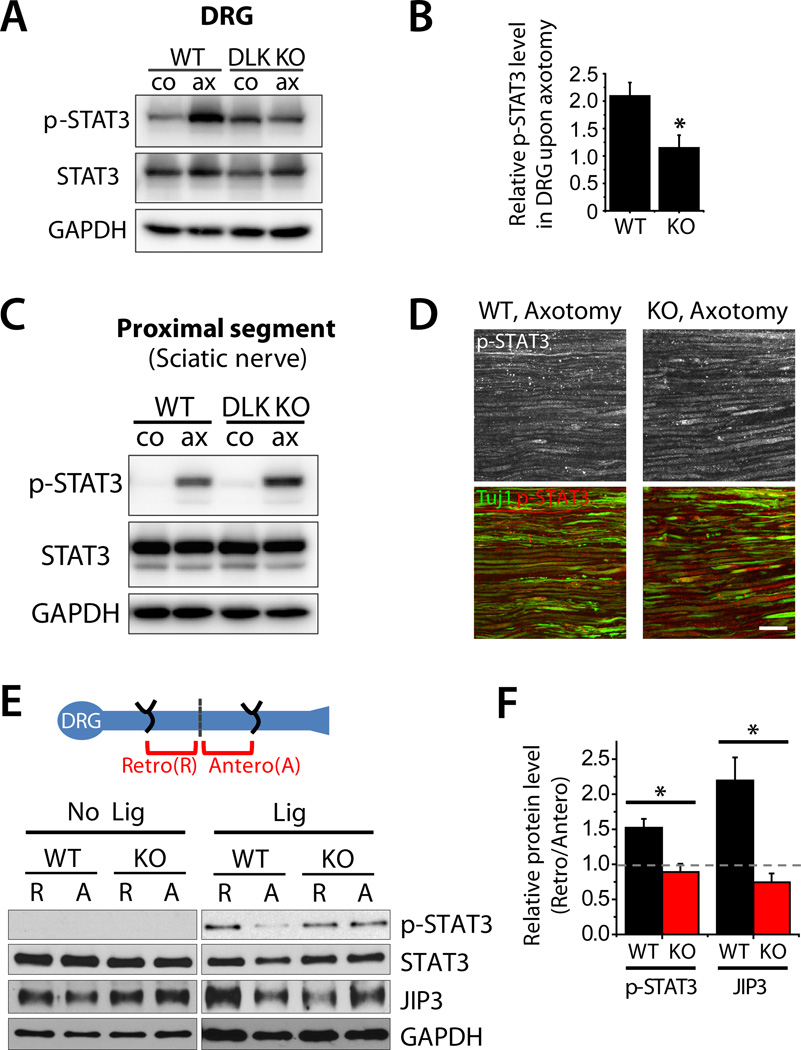
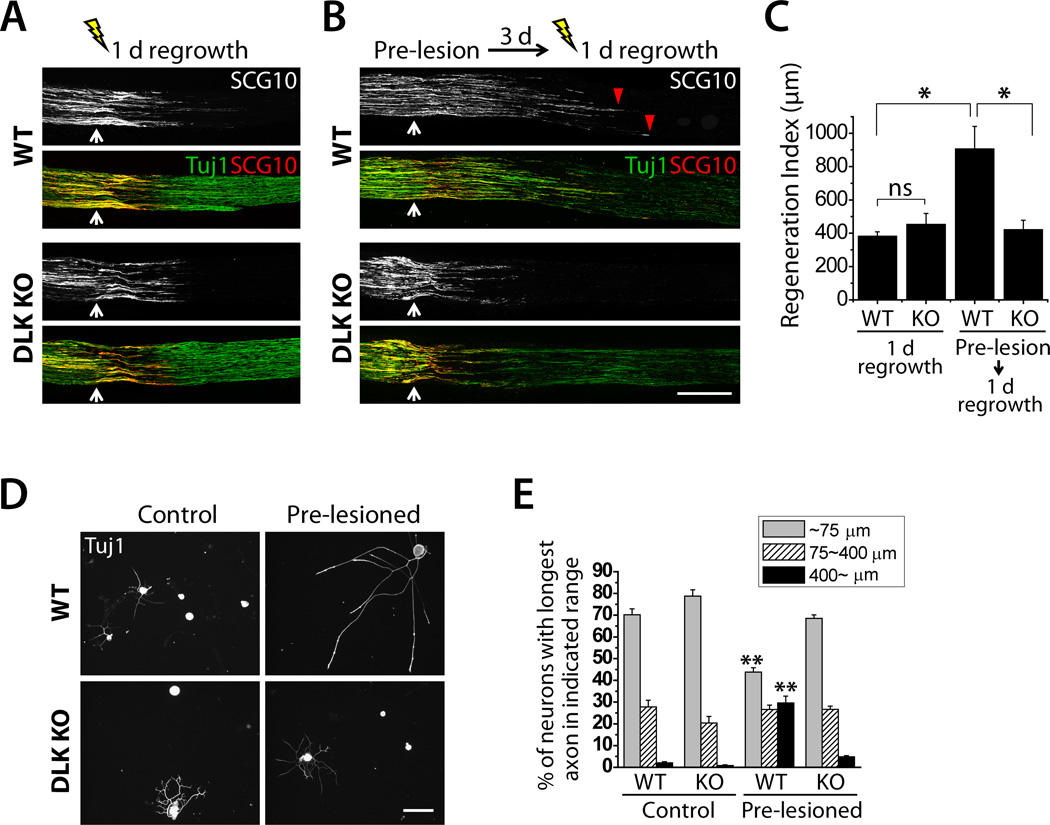
Here we demonstrate that the dual leucine zipper kinase (DLK) promotes robust regeneration of peripheral axons after nerve injury in mice. Peripheral axon regeneration is accelerated by prior injury; however, DLK KO neurons do not respond to a preconditioning lesion with enhanced regeneration in vivo or in vitro. Assays for activation of transcription factors in injury-induced proregenerative pathways reveal that loss of DLK abolishes upregulation of p-STAT3 and p-cJun in the cell body after axonal injury. DLK is not required for the phosphorylation of STAT3 at the site of nerve injury but is necessary for retrograde transport of p-STAT3 to the cell body. These data demonstrate that DLK enhances regeneration by promoting a retrograde injury signal that is required for the activation of the neuronal proregenerative program.
在这里,我们证明双亮氨酸拉链激酶 (DLK) 可促进小鼠神经损伤后周围轴突的强烈再生。周围轴突的再生会被先前的损伤所加速;然而,DLK KO 神经元不会对预处理损伤做出反应,导致体内或体外的再生增强。对损伤诱导的促再生途径中转录因子激活的检测表明,DLK 的缺失会消除轴突损伤后胞体中 p-STAT3 和 p-cJun 的上调。DLK 不参与神经损伤部位 STAT3 的磷酸化,但对于 p-STAT3 向胞体的逆行运输是必需的。这些数据表明,DLK 通过促进逆行损伤信号来增强再生,该信号对于神经元促再生程序的激活是必需的。